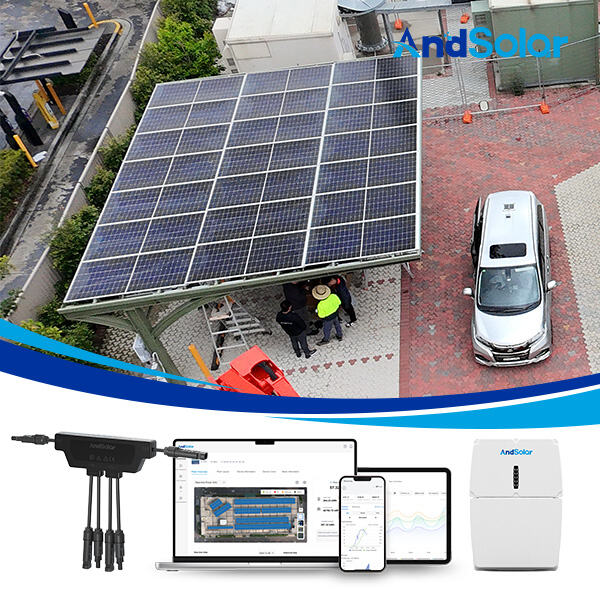
The solar energy industry has evolved far beyond simple panel installation and passive energy generation. Today's commercial and industrial solar installations demand sophisticated oversight to maximize performance, minimize downtime, and deliver the return on investment that stakeholders expect. Without comprehensive solar monitoring and analytics, even the most advanced photovoltaic systems operate in a blind state, leaving critical performance issues undetected and efficiency gains unrealized. The integration of robust monitoring platforms transforms solar installations from static assets into dynamically optimized energy systems that respond to real-time conditions and provide actionable intelligence for decision-makers.
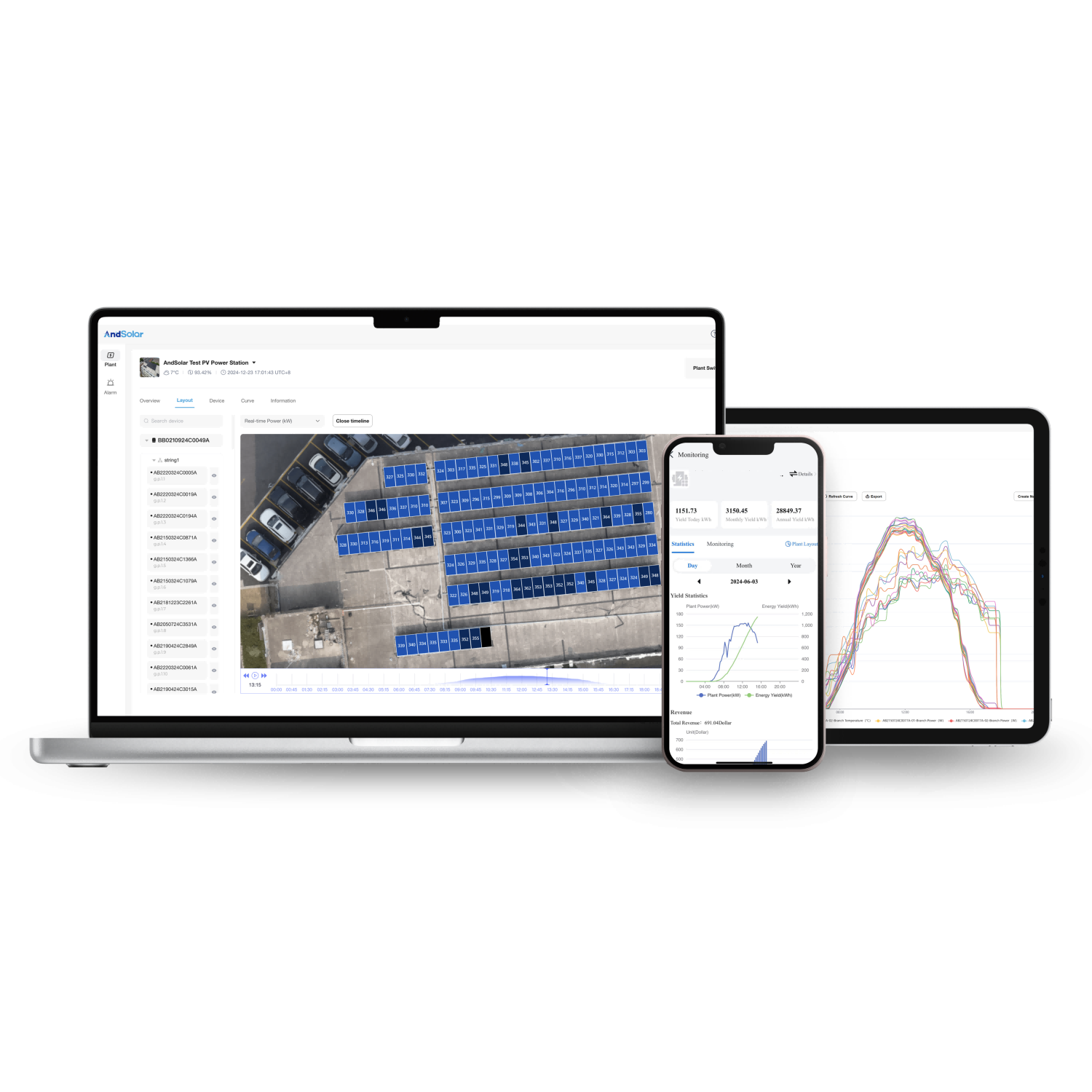
The business case for incorporating solar monitoring and analytics extends across operational, financial, and strategic dimensions. Organizations that deploy solar energy systems without adequate monitoring capabilities frequently discover performance degradation only after months of suboptimal generation, resulting in substantial revenue losses and extended payback periods. In contrast, systems equipped with comprehensive analytics platforms enable proactive maintenance, immediate fault detection, and continuous optimization that directly impacts the bottom line. This article examines the compelling reasons why solar monitoring and analytics should be considered an essential component of any serious solar investment, exploring the tangible benefits that justify this critical infrastructure from multiple operational and strategic perspectives.
The Financial Impact of Visibility and Performance Optimization
Quantifying Energy Production Losses Without Monitoring
Solar installations operating without comprehensive monitoring systems typically experience undetected performance degradation that accumulates into significant financial losses over time. Research from the photovoltaic industry indicates that unmonitored systems can lose between eight and fifteen percent of their potential energy production annually due to soiling, shading changes, inverter malfunctions, and module-level failures that go unnoticed for extended periods. For a commercial installation generating five hundred megawatt-hours annually, this translates to forty to seventy-five megawatt-hours of lost production, representing substantial revenue foregone across the system's operational lifetime. The absence of solar monitoring and analytics creates an information vacuum where operators cannot distinguish between expected seasonal variations and actual performance problems requiring intervention.
The economic consequences extend beyond immediate generation losses to encompass extended payback periods and reduced lifetime value. When solar systems underperform without detection, the financial models that justified the initial investment begin to diverge from reality, potentially transforming projects with five-year payback expectations into seven or eight-year timelines. This erosion of financial performance particularly affects organizations that financed their installations through power purchase agreements or solar leases, where generation shortfalls directly impact revenue streams and contractual obligations. Comprehensive solar monitoring and analytics platforms prevent these scenarios by establishing baseline performance expectations and immediately flagging deviations that indicate problems requiring attention.
Maximizing Return Through Proactive Maintenance Strategies
The transition from reactive to proactive maintenance represents one of the most compelling financial arguments for implementing robust solar monitoring and analytics infrastructure. Traditional maintenance approaches rely on scheduled inspections that may miss intermittent problems or fail to prioritize the most impactful issues. Advanced monitoring systems continuously analyze performance data across individual components, identifying specific underperforming modules, failing optimizers, or degraded connections that warrant immediate attention. This targeted approach reduces maintenance costs by directing technician resources toward verified problems rather than speculative troubleshooting, while simultaneously minimizing generation losses through faster problem resolution.
The predictive capabilities enabled by sophisticated analytics platforms further enhance financial outcomes by forecasting component failures before they occur. Machine learning algorithms analyze historical performance patterns, environmental conditions, and degradation trends to identify components approaching end-of-life or exhibiting pre-failure signatures. This foresight allows maintenance teams to schedule interventions during periods of low generation potential or combine multiple repairs into single site visits, reducing both direct maintenance expenses and the opportunity cost of system downtime. Organizations utilizing predictive maintenance strategies enabled by solar monitoring and analytics typically report fifteen to twenty-five percent reductions in maintenance expenditures compared to reactive approaches, while simultaneously improving overall system availability and generation performance.
Warranty Compliance and Performance Guarantee Validation
Most commercial solar installations include manufacturer warranties covering panel performance degradation, inverter functionality, and system-level generation guarantees that extend across two to three decades. However, these warranties typically require documented evidence of performance issues and timely reporting of problems to remain valid. Without comprehensive solar monitoring and analytics, organizations lack the detailed performance records necessary to substantiate warranty claims or demonstrate that issues occurred within coverage periods. The result is frequently denied claims and absorbed replacement costs that should have been covered under existing warranties, representing preventable financial losses that undermine project economics.
Performance guarantees attached to solar installations create additional compliance requirements that necessitate continuous monitoring infrastructure. Many solar projects include contractual commitments regarding minimum annual generation levels, with financial penalties or compensation mechanisms triggered when actual production falls below guaranteed thresholds. Validating these guarantees requires granular production data that distinguishes between generation shortfalls caused by weather conditions versus system underperformance. Solar monitoring and analytics platforms provide the documentation trail necessary to defend against unfair penalty assessments while simultaneously identifying legitimate performance issues that warrant corrective action or compensation claims. This evidentiary function alone often justifies monitoring system investments through the risk mitigation and financial protection it provides across multi-decade operational timelines.
Operational Excellence Through Real-Time Intelligence
Immediate Fault Detection and Diagnostic Capabilities
The operational advantages of comprehensive solar monitoring and analytics begin with the ability to detect faults within minutes or hours rather than weeks or months. Advanced monitoring platforms continuously compare actual performance against expected generation based on current irradiance, temperature, and historical baselines. When discrepancies exceed predefined thresholds, automated alerts notify relevant personnel through multiple channels, ensuring rapid response regardless of whether issues occur during business hours or overnight. This immediate awareness transforms the operational paradigm from periodic discovery of accumulated problems to continuous vigilance that minimizes the duration and impact of each incident.
Beyond simple fault detection, sophisticated analytics capabilities provide diagnostic insights that accelerate problem resolution. Rather than simply indicating that generation has dropped, advanced systems identify the specific location and probable cause of issues through pattern analysis and component-level monitoring. An inverter failure presents a distinctly different signature than widespread soiling, and string-level faults create patterns that differ from individual module problems. This diagnostic intelligence allows operations teams to dispatch appropriately equipped technicians with correct replacement parts, reducing diagnostic time on-site and enabling first-visit resolution rates that minimize both labor costs and generation losses. The operational efficiency gained through these capabilities compounds across hundreds of potential fault scenarios over decades of system operation.
Performance Benchmarking and Continuous Improvement
Organizations operating multiple solar installations or managing portfolios of distributed generation assets require consistent performance metrics to identify top performers, diagnose underperforming sites, and implement continuous improvement initiatives. Solar monitoring and analytics platforms enable this benchmarking by normalizing performance data across diverse locations, system sizes, and technology configurations. Operators can compare specific performance ratio metrics, capacity factors, and availability statistics across their portfolio, identifying installations that exceed expectations and those requiring additional attention. This comparative visibility supports data-driven decision-making regarding maintenance resource allocation, technology selection for future projects, and identification of best practices worth replicating across the organization.
The continuous improvement mindset enabled by comprehensive analytics extends beyond simple performance comparison to encompass experimentation and optimization. Organizations can test different cleaning schedules, maintenance approaches, or operational parameters while measuring the precise impact on generation and financial outcomes. This empirical approach to optimization replaces guesswork and vendor recommendations with site-specific evidence regarding which interventions deliver measurable value. Over time, these incremental improvements accumulate into substantial performance gains that directly enhance financial returns. Organizations committed to operational excellence recognize that solar monitoring and analytics platforms provide the measurement infrastructure necessary to support systematic optimization rather than treating solar installations as static assets requiring only occasional attention.
Integration with Energy Management and Grid Services
Modern solar installations increasingly participate in broader energy management strategies that extend beyond simple self-consumption. Integration with battery storage systems, demand response programs, and grid services creates additional revenue opportunities while enhancing energy resilience. However, these advanced applications require precise generation forecasting, real-time production visibility, and coordinated control capabilities that depend fundamentally on comprehensive monitoring infrastructure. Solar monitoring and analytics platforms provide the data foundation that enables sophisticated energy management systems to optimize storage charging schedules, participate in frequency regulation markets, or coordinate generation with load management strategies.
The operational coordination required for these advanced applications illustrates why monitoring cannot be treated as an optional add-on to solar installations. Without accurate real-time generation data and short-term forecasting capabilities, battery systems cannot optimize their charge-discharge cycles, potentially degrading storage assets through suboptimal operation patterns. Similarly, participation in demand response or ancillary services markets requires verified generation capabilities and rapid response to dispatch signals that necessitate continuous monitoring and control infrastructure. Organizations planning to leverage their solar investments for grid services, virtual power plant participation, or sophisticated energy arbitrage recognize that solar monitoring and analytics represents enabling infrastructure rather than optional reporting functionality.
Strategic Decision Support and Asset Management
Long-Term Performance Trending and Investment Planning
The strategic value of solar monitoring and analytics extends across multi-decade timeframes as organizations track long-term performance trends, validate degradation assumptions, and plan system expansions or replacements. Photovoltaic modules typically degrade at rates between zero point five and one percent annually, but actual degradation varies significantly based on technology, climate conditions, and installation quality. Comprehensive monitoring data allows organizations to measure actual degradation rates for their specific installations rather than relying on industry averages or manufacturer specifications. This empirical evidence supports accurate financial modeling for existing systems while informing technology selection decisions for future projects based on demonstrated long-term performance rather than marketing claims.
Investment planning for system expansions, technology upgrades, or portfolio growth benefits substantially from the historical performance database created by monitoring infrastructure. Organizations can analyze how specific technologies performed under their actual operating conditions, which installation approaches delivered superior long-term results, and which maintenance strategies proved most cost-effective. This institutional knowledge, captured and preserved through solar monitoring and analytics platforms, becomes increasingly valuable as organizations mature their solar programs and seek to optimize subsequent investments based on proven experience rather than theoretical projections. The strategic decision-support capabilities enabled by comprehensive monitoring data often prove decisive in securing executive approval for continued solar investments by demonstrating quantified results from existing installations.
Regulatory Compliance and Sustainability Reporting
Corporate sustainability commitments and regulatory requirements increasingly demand verified renewable energy generation data with documentation standards that exceed simple utility meter readings. Organizations reporting under frameworks such as CDP, GRI, or TCFD require granular generation data, carbon offset calculations, and renewable energy certificate documentation that comprehensively monitored solar installations readily provide. The alternative approach of manual data collection and estimated calculations introduces errors, creates audit vulnerabilities, and consumes staff resources that comprehensive solar monitoring and analytics platforms eliminate through automated data aggregation and standardized reporting outputs.
Regulatory environments in multiple jurisdictions now include provisions for distributed generation interconnection standards, export limitations, and power quality requirements that necessitate continuous monitoring for compliance verification. Solar installations operating without adequate monitoring infrastructure may unknowingly violate interconnection agreements or power quality standards, creating regulatory exposure and potential financial penalties. Monitoring platforms that track power factor, voltage fluctuations, and export levels ensure ongoing compliance while providing the documentation necessary to respond to utility inquiries or regulatory audits. As renewable energy regulations continue evolving globally, the compliance assurance provided by solar monitoring and analytics becomes increasingly valuable in managing regulatory risk across multi-jurisdictional portfolios.
Asset Valuation and Transaction Support
Solar installations represent significant capital assets that appear on corporate balance sheets and factor into business valuations, merger and acquisition due diligence, and financing arrangements. Comprehensive performance documentation provided by monitoring systems directly influences asset valuations by demonstrating consistent generation history, maintenance quality, and operational management. Potential buyers or investors conducting due diligence on organizations with solar assets place substantial weight on monitoring data quality and historical performance records when assessing asset value and transaction risk. Installations lacking comprehensive monitoring documentation typically face valuation discounts reflecting uncertainty regarding actual performance and potential hidden maintenance liabilities.
Financial transactions involving solar assets, including refinancing, sale-leaseback arrangements, or portfolio acquisitions, require detailed performance data that meets institutional investor standards. Solar monitoring and analytics platforms that have captured years of generation data, maintenance history, and performance trends provide the documentation foundation that financial institutions require for asset underwriting. This documentation capability becomes particularly critical for organizations pursuing securitization of solar assets or seeking favorable financing terms based on demonstrated performance rather than projected generation models. The transaction-enabling function of comprehensive monitoring infrastructure adds strategic value that extends beyond operational benefits to encompass financial flexibility and capital optimization opportunities.
Technology Selection and Implementation Considerations
Critical Monitoring Capabilities and Data Granularity
Selecting appropriate solar monitoring and analytics technology requires careful evaluation of data granularity, reporting capabilities, and integration flexibility. Entry-level monitoring solutions typically provide only system-level generation data with limited diagnostic capabilities, while advanced platforms offer string-level monitoring, individual module performance tracking, and environmental sensor integration. The appropriate technology tier depends on installation size, complexity, and operational requirements. Large commercial installations with diverse orientations, complex shading patterns, or critical uptime requirements typically justify investment in more granular monitoring capabilities that enable rapid fault isolation and optimization. Smaller installations with simpler configurations may achieve adequate oversight with system-level monitoring supplemented by periodic professional inspections.
Data granularity directly influences diagnostic speed and maintenance efficiency, creating operational value that often justifies incremental monitoring technology investment. String-level monitoring enables operators to identify which specific string contains a problem, reducing diagnostic time from hours to minutes and allowing targeted interventions rather than whole-system investigations. Module-level monitoring provides even greater precision but introduces additional hardware costs and potential reliability concerns that require careful evaluation. Organizations should assess monitoring technology options by quantifying the expected value of faster fault detection and more precise diagnostics against incremental system costs, considering factors such as site accessibility, labor costs, and the financial impact of extended generation losses during diagnostic activities.
Platform Integration and Data Accessibility
Modern solar monitoring and analytics platforms function as components within broader facility management and enterprise systems rather than standalone applications. Integration capabilities with building management systems, energy management platforms, and enterprise resource planning software create operational efficiencies and enable sophisticated analysis that isolated monitoring systems cannot support. Organizations should evaluate monitoring platforms based on API availability, standard protocol support, and demonstrated integration success with their existing technology infrastructure. The ability to combine solar generation data with building load profiles, utility rate structures, and operational schedules enables optimization strategies that transcend simple solar performance monitoring to encompass comprehensive energy management.
Data accessibility and user interface design significantly influence whether monitoring systems deliver their theoretical value or remain underutilized by operations teams. Platforms with intuitive dashboards, mobile accessibility, and configurable alert thresholds encourage regular engagement and proactive management, while complex interfaces with steep learning curves often result in monitoring systems that collect data without driving operational action. Organizations should prioritize solar monitoring and analytics solutions that provide role-appropriate interfaces for different user groups, from executive summaries for leadership teams to detailed diagnostic tools for maintenance personnel. The human factors surrounding monitoring technology adoption often determine whether systems generate operational value or become expensive data repositories that fail to influence decision-making and operational practices.
Scalability and Future-Proofing Considerations
Organizations implementing solar installations should select monitoring infrastructure with consideration for future expansion, technology evolution, and changing operational requirements. Monitoring platforms designed for single-site applications may prove inadequate as organizations expand their solar portfolios, requiring costly platform migrations or parallel systems that complicate management. Scalable platforms that accommodate everything from single installations to multi-site portfolios provide growth flexibility while maintaining consistent user experience and consolidated reporting. This scalability consideration extends to supporting diverse solar technologies, including ground-mount systems, rooftop installations, carport structures, and potential future additions of battery storage or other distributed energy resources.
Future-proofing monitoring infrastructure requires attention to emerging capabilities such as artificial intelligence analytics, predictive maintenance algorithms, and advanced grid integration features. While current operational requirements may not demand these advanced capabilities, selecting platforms with demonstrated innovation roadmaps and regular feature enhancements protects monitoring investments against premature obsolescence. Organizations should evaluate vendor stability, user community size, and development activity as indicators of platform longevity and continued capability evolution. The solar monitoring and analytics landscape continues advancing rapidly, and platform selection decisions made today will influence operational capabilities and costs for decades as solar installations deliver long-term generation value.
FAQ
What is the typical cost range for implementing comprehensive solar monitoring and analytics systems?
Comprehensive solar monitoring and analytics system costs typically range from two to five percent of total solar installation costs, varying based on monitoring granularity, site complexity, and selected technology platform. Basic system-level monitoring may cost as little as one thousand to three thousand dollars for small commercial installations, while sophisticated string-level or module-level monitoring for large facilities can reach fifteen to thirty thousand dollars. These costs generally include hardware sensors, communication infrastructure, software licensing, and initial configuration. Organizations should evaluate monitoring costs against the expected value of improved performance, faster fault detection, and maintenance optimization, which typically deliver returns that exceed monitoring investment within two to three years through reduced generation losses and more efficient operations.
How quickly can monitoring systems detect and alert operators to performance issues?
Modern solar monitoring and analytics platforms typically detect significant performance deviations within five to fifteen minutes of occurrence, with alert delivery to designated personnel occurring almost immediately through email, SMS, or mobile application notifications. The detection speed depends on data polling intervals, which range from one-minute to fifteen-minute cycles for most commercial systems. Minor performance degradations that fall within normal variation thresholds may require several hours or days of data accumulation before triggering alerts, as monitoring algorithms distinguish between temporary fluctuations and persistent problems requiring intervention. Advanced platforms employ machine learning algorithms that continuously refine alert thresholds based on historical patterns, reducing false alarms while ensuring genuine issues receive prompt attention regardless of whether they occur during occupied hours or overnight periods.
Can existing solar installations be retrofitted with comprehensive monitoring capabilities?
Most existing solar installations can be retrofitted with comprehensive monitoring capabilities, though the complexity and cost vary significantly based on system design and desired monitoring granularity. System-level monitoring additions typically require only installing current sensors on inverter outputs and deploying communication hardware, representing relatively straightforward retrofits achievable in hours with minimal system disruption. String-level monitoring retrofits involve more extensive work, including installing sensors on individual string connections and potentially upgrading communication infrastructure, but remain feasible for most installations. Module-level monitoring retrofits prove most challenging, sometimes requiring installation of power optimizers or microinverters that fundamentally alter system architecture. Organizations considering monitoring retrofits should conduct professional assessments to determine appropriate monitoring levels based on existing system configuration, accessibility constraints, and the incremental value different monitoring tiers would provide for their specific installation.
What data security considerations apply to solar monitoring systems connected to enterprise networks?
Solar monitoring and analytics systems require careful cybersecurity consideration when connected to enterprise networks, as they represent potential entry points for cyber threats if inadequately protected. Best practices include deploying monitoring systems on isolated network segments or VLANs with restricted access to broader enterprise systems, implementing strong authentication requirements for platform access, and ensuring monitoring vendors follow secure development practices with regular security updates. Organizations should verify that monitoring platforms employ encrypted data transmission, maintain SOC 2 or ISO 27001 certifications, and provide audit logging capabilities that support security monitoring and compliance requirements. The remote access capabilities that make monitoring platforms valuable also create security exposure that demands attention to credential management, multi-factor authentication implementation, and regular security assessments to identify and address vulnerabilities before they enable unauthorized access to monitoring systems or connected enterprise infrastructure.
Table of Contents
- The Financial Impact of Visibility and Performance Optimization
- Operational Excellence Through Real-Time Intelligence
- Strategic Decision Support and Asset Management
- Technology Selection and Implementation Considerations
-
FAQ
- What is the typical cost range for implementing comprehensive solar monitoring and analytics systems?
- How quickly can monitoring systems detect and alert operators to performance issues?
- Can existing solar installations be retrofitted with comprehensive monitoring capabilities?
- What data security considerations apply to solar monitoring systems connected to enterprise networks?
