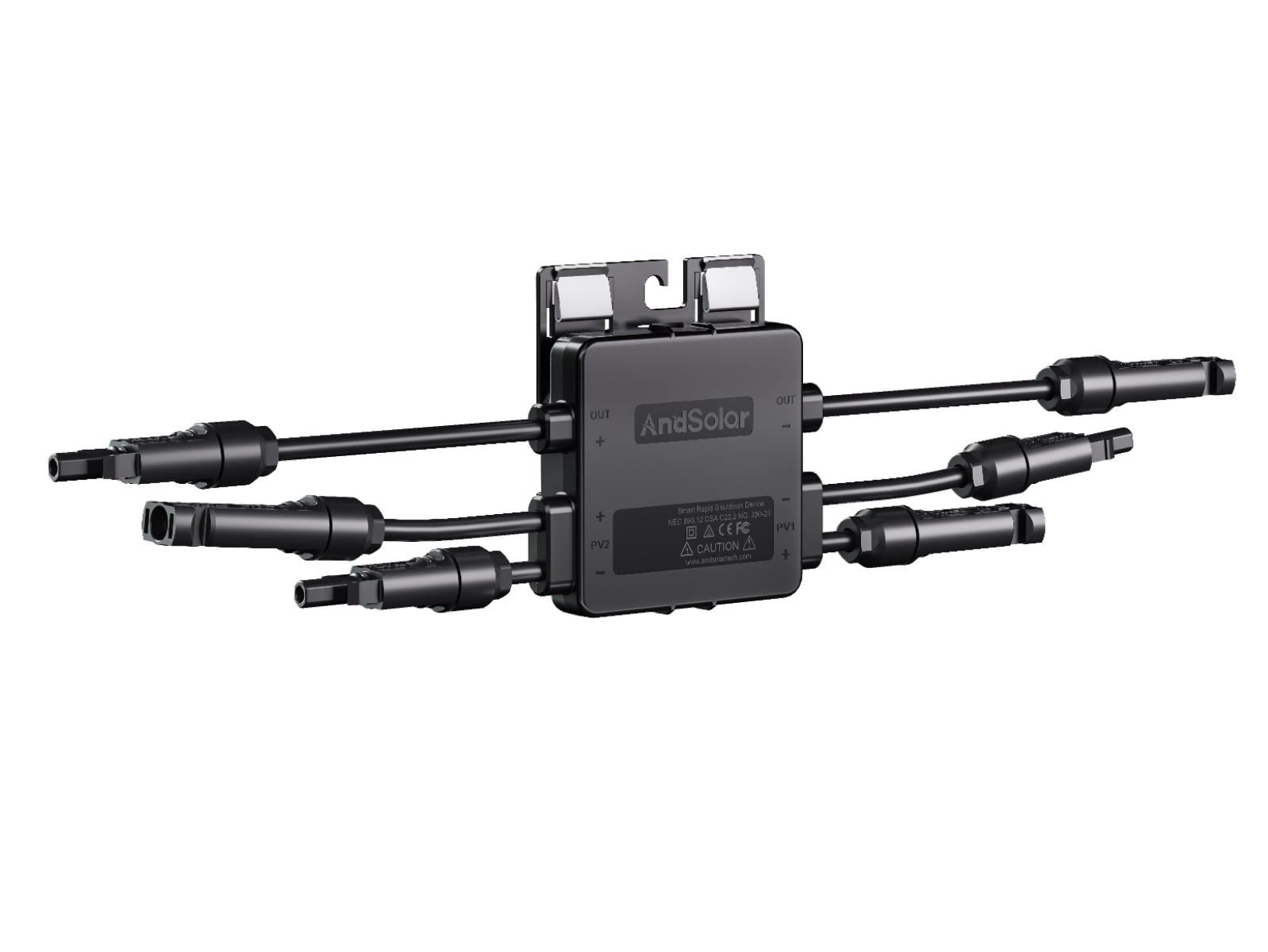
The solar photovoltaic industry has undergone significant regulatory evolution over the past decade, with safety emerging as a paramount concern for installers, building owners, and emergency responders. Among the most consequential changes to the National Electrical Code has been the introduction and refinement of rapid shutdown requirements, mandating that solar arrays must quickly de-energize conductors during emergencies. Meeting these stringent code provisions demands more than traditional inverter technology alone. It requires intelligent, module-level control that can instantly respond to shutdown signals while maintaining system reliability and performance. This regulatory shift has positioned module-level power electronics as an indispensable component in modern solar installations.
Understanding why MLPE solutions have become critical requires examining the specific technical and regulatory challenges that conventional photovoltaic architectures cannot adequately address. The 2017 and subsequent updates to NEC Article 690.12 established requirements that solar arrays must reduce conductor voltage to 80 volts or less within 30 seconds of shutdown initiation, with conductors more than one foot from the array boundary required to reach safe levels within 30 seconds and those within the array boundary controlled to 80 volts or less. Traditional string inverter systems struggle to achieve this level of granular control across distributed array locations, particularly when dealing with long conductor runs and multiple array configurations. This fundamental limitation has driven the adoption of distributed power electronics that operate at the individual module or small group level, providing the precision control necessary for code compliance.
The Regulatory Foundation Driving MLPE Adoption
Evolution of National Electrical Code Rapid Shutdown Requirements
The journey toward mandatory rapid shutdown began with recognition that firefighters and emergency personnel faced unacceptable risks when responding to incidents at buildings with rooftop solar installations. Even during daylight hours when arrays were disconnected from the grid, high DC voltages persisted throughout conductor runs, creating electrocution hazards and complicating ventilation operations. The 2014 NEC introduced initial rapid shutdown provisions, but these were significantly strengthened in the 2017 edition, which established the current framework requiring array-level voltage reduction. MLPE solutions emerged as the most practical technology capable of meeting these enhanced requirements across diverse installation scenarios.
The specific voltage and timing thresholds established by NEC 690.12 were carefully calibrated to balance safety objectives with technical feasibility. The 80-volt threshold represents a level below which electrical shock risks diminish substantially, while the 30-second window provides sufficient time for emergency response while remaining achievable with current technology. These requirements apply to both controlled conductors within the array boundary and those extending to inverter locations, creating a comprehensive safety envelope. MLPE solutions address these requirements through distributed architecture that places shutdown control directly at the source of power generation, eliminating reliance on long-distance signaling that could fail during emergencies.
State and Local Jurisdictional Variations
Beyond the baseline National Electrical Code requirements, numerous jurisdictions have adopted additional provisions that further emphasize the need for robust MLPE solutions. California's Title 24 building standards, for example, incorporate rapid shutdown requirements alongside other solar system provisions, while certain municipalities have enacted local ordinances with even stricter voltage reduction timelines. Fire departments in densely populated areas have been particularly proactive in advocating for enhanced safety measures, recognizing that high-rise and multi-unit residential buildings present unique challenges during emergency response. These varied requirements create a complex regulatory landscape that system designers must navigate.
The practical implication of this jurisdictional variation is that solar contractors operating across multiple regions must implement solutions with flexibility and adaptability. MLPE solutions provide this versatility because their fundamental architecture inherently supports the most stringent rapid shutdown scenarios. Rather than developing region-specific system designs, installers can deploy standardized MLPE solutions confident that they will satisfy requirements across diverse jurisdictions. This standardization reduces design complexity, streamlines permitting processes, and minimizes the risk of non-compliance that could result in costly retrofits or project delays.
Insurance and Liability Considerations
The regulatory requirement for rapid shutdown has evolved alongside increasing awareness of liability exposure for property owners and solar contractors. Insurance providers have begun incorporating code compliance verification into their underwriting processes, with some requiring explicit documentation of rapid shutdown capability before issuing coverage. In the event of an incident involving emergency responders, failure to implement compliant safety systems could expose property owners to significant legal liability and contractors to professional negligence claims. MLPE solutions provide clear documentation pathways and verifiable compliance that help mitigate these risks.
The liability dimension extends beyond immediate emergency scenarios to encompass long-term system ownership. As solar assets change hands through property sales or refinancing, the presence of code-compliant rapid shutdown becomes a due diligence item that affects transaction valuations. Systems installed without proper safety provisions may face mandatory upgrades before transactions can close, creating unexpected costs for sellers. Forward-thinking developers and commercial property owners increasingly view MLPE solutions as essential risk management tools that protect asset value while ensuring ongoing code compliance throughout the system's operational lifetime.
Technical Mechanisms Enabling Rapid Voltage Reduction
Module-Level Power Conversion Architecture
The fundamental technical advantage of MLPE solutions lies in their distributed power conversion architecture, which places power electronics directly at or near individual photovoltaic modules. Power optimizers, microinverters, and intelligent junction boxes represent the primary categories of module-level power electronics, each employing distinct approaches to achieving rapid shutdown capability. Power optimizers maintain DC voltage while providing module-level maximum power point tracking and shutdown control, while microinverters perform DC-to-AC conversion at each module, inherently eliminating high DC voltages in inter-module wiring. Regardless of specific topology, these solutions share the critical capability of controlling voltage at the source of generation.
When a shutdown signal is initiated through a building-mounted switch, integrated control system, or automatic detection mechanism, MLPE solutions respond by immediately ceasing power conversion operations. Power optimizers typically employ active voltage clamping circuits that force module output voltage to safe levels by presenting controlled impedance loads. Microinverters accomplish shutdown by halting inverter switching operations, which eliminates AC output while module-level DC voltage remains only at the individual module terminals rather than propagating through conductor runs. The distributed nature of these controls ensures that shutdown occurs simultaneously across all array locations, eliminating the possibility of isolated high-voltage conductor segments.
Communication Protocols and Failsafe Mechanisms
Reliable rapid shutdown depends not only on the power electronics hardware but also on robust communication systems that transmit shutdown commands throughout the array. MLPE solutions employ various communication methodologies including power line carrier signals superimposed on DC conductors, dedicated wireless mesh networks, or hybrid approaches combining multiple channels. These systems are engineered with redundancy and failsafe defaults to ensure shutdown occurs even during component failures or communication disruptions. Most implementations include periodic heartbeat signals that maintain system operation, with shutdown automatically triggered if heartbeat communication is lost.
The failsafe philosophy embedded in quality MLPE solutions reflects recognition that emergency scenarios may involve damage to communication infrastructure or power supply disruptions. In properly designed systems, loss of communication or control power defaults to the safe condition with conductors de-energized rather than maintaining dangerous voltages. This approach contrasts with some conventional architectures where loss of control signals might leave systems in indeterminate states. Independent testing and certification by recognized laboratories verify that MLPE solutions maintain failsafe operation across various failure modes, providing assurance that code compliance will be maintained under real-world emergency conditions.
Verification and Testing Capabilities
Meeting code requirements demands not only that systems possess rapid shutdown capability but also that this functionality can be verified during commissioning and periodically tested throughout operational life. MLPE solutions incorporate diagnostic features that enable installers and system owners to confirm proper shutdown operation without creating hazardous test conditions. Monitoring platforms typically include remote shutdown testing capabilities that allow verification from safe locations, with detailed event logging that documents response times and voltage reduction performance. These features address both initial code compliance verification during inspection and ongoing maintenance requirements.
The ability to document and verify shutdown performance provides crucial support during permitting processes and authority having jurisdiction inspections. Inspectors increasingly request demonstration of rapid shutdown functionality rather than accepting design documentation alone. MLPE solutions with integrated monitoring and verification capabilities streamline this process by providing objective data on system response. The resulting documentation also serves long-term asset management needs, creating compliance records that support property transactions, insurance renewals, and operational safety audits throughout the system's decades-long service life.
Operational Benefits Beyond Code Compliance
Enhanced System Performance and Energy Yield
While code compliance drives initial MLPE adoption, these solutions deliver substantial operational benefits that extend far beyond safety requirements. Module-level power electronics enable individual maximum power point tracking that optimizes energy harvest from each photovoltaic module independently, rather than constraining entire strings to operate at compromise voltages determined by the weakest-performing module. This capability proves particularly valuable in installations affected by shading, soiling variations, or module mismatch conditions. Real-world performance data consistently demonstrates energy yield improvements ranging from five to twenty-five percent compared to traditional string architectures, depending on site-specific conditions.
The performance advantage stems from eliminating the current-matching constraint inherent in series-connected string configurations. In conventional systems, the lowest-producing module in a string determines current for all modules in that string, forcing higher-performing modules to operate below their capability. MLPE solutions break this limitation by allowing each module to operate at its individual optimum point, with power electronics managing the voltage and current conversion needed to integrate power from mismatched sources. This architectural advantage becomes increasingly important as arrays age and individual modules diverge in performance characteristics due to differential degradation rates.
Advanced Monitoring and Diagnostic Capabilities
The distributed electronic intelligence embedded in MLPE solutions provides unprecedented visibility into array performance at the individual module level. Unlike string inverter systems that report only aggregate array output, module-level power electronics continuously monitor and report voltage, current, power, and temperature data for each module. This granular information enables rapid identification of underperforming modules, detection of installation issues, and proactive maintenance that addresses problems before they significantly impact energy production. The diagnostic value of this monitoring capability often justifies MLPE solutions even in applications where rapid shutdown requirements might technically be met through alternative approaches.
The operational intelligence provided by MLPE monitoring platforms transforms solar asset management from reactive troubleshooting to proactive optimization. System operators can identify shading issues that might be resolved through vegetation management, detect soiling patterns that inform optimal cleaning schedules, and discover installation anomalies such as module misorientation or electrical connection problems. In large commercial and utility-scale installations, this intelligence supports performance guarantee verification and helps optimize operating strategies. The same communication infrastructure that enables rapid shutdown provides the data pathways for continuous performance monitoring, creating synergy between safety compliance and operational excellence.
Design Flexibility and Installation Simplification
MLPE solutions fundamentally simplify array design by eliminating many of the constraints that govern traditional string inverter architectures. String systems require careful matching of module quantities to inverter voltage windows, consideration of temperature coefficients affecting voltage ranges, and complex design iterations to achieve optimal string configurations. Module-level power electronics relax these constraints by handling voltage conversion at the distributed level, allowing designers to focus on mechanical array layout and aesthetic considerations rather than electrical optimization puzzles. This flexibility proves particularly valuable in residential and commercial rooftop applications where roof geometry often dictates irregular array shapes.
Installation labor represents a significant component of total solar system cost, making any simplification that reduces field labor time economically significant. MLPE solutions contribute to installation efficiency through standardized module-level connections that reduce the complexity of DC home runs and combiner box requirements. The distributed architecture also enables phased installation approaches where arrays can be expanded incrementally without redesigning entire electrical systems. For contractors managing diverse project portfolios across multiple jurisdictions, the standardization enabled by MLPE solutions reduces training requirements and minimizes the risk of field errors that could compromise safety or performance.
Comparative Analysis of MLPE Technologies
Power Optimizer Systems
Power optimizer implementations represent the most widely deployed category of MLPE solutions, combining distributed power electronics with centralized inverter architecture. In these systems, DC power optimizers attach to individual or small groups of modules, performing maximum power point tracking and voltage conditioning while maintaining DC power transmission to a central string inverter. This hybrid approach preserves some advantages of centralized inverters such as established reliability and straightforward replacement, while adding module-level optimization and shutdown control. Power optimizer systems typically achieve rapid shutdown by commanding optimizers to clamp module voltages to safe levels while simultaneously disabling the central inverter.
The economic positioning of power optimizer systems reflects their role as an evolution of traditional string inverter architectures rather than a complete departure. Installation labor closely resembles conventional string systems with the addition of optimizer mounting and connection at each module. The centralized inverter location simplifies warranty service compared to fully distributed microinverter approaches, though optimizer failures still require rooftop access for replacement. Performance characteristics generally match or exceed microinverter systems, with efficiency specifications typically ranging from 97.5 to 99.5 percent depending on operating conditions and specific product designs.
Microinverter Architectures
Microinverter systems pursue complete decentralization by performing DC-to-AC conversion at each individual module or small module group. This architecture eliminates high-voltage DC wiring entirely, with AC connections running from modules through standard branch circuit wiring to the electrical service panel. The inherent safety advantage of this approach extends beyond code-mandated rapid shutdown to include elimination of DC arc-fault risks and simplified electrical inspection processes. Microinverters achieve rapid shutdown by ceasing inverter operation, which immediately eliminates AC output while module-level DC voltage remains confined to individual module terminals and short pigtail connections.
The fully distributed nature of microinverter systems provides maximum flexibility for irregular array configurations and simplifies future expansion since each module operates independently. Reliability considerations differ from centralized architectures, with microinverter longevity depending on thermal management in rooftop mounting environments and the quality of enclosure designs protecting electronics from moisture and environmental stress. Advanced microinverter designs incorporate sophisticated thermal management and conformal coating technologies that enable 25-year warranties matching module lifetimes. The AC-based architecture simplifies integration with battery storage systems and facilitates partial array shutdown scenarios that might be required for roof maintenance while maintaining power production from unaffected sections.
Emerging Hybrid and Integrated Solutions
The ongoing evolution of MLPE solutions includes development of hybrid architectures that combine advantages of multiple approaches and integrated systems where power electronics are manufactured directly into photovoltaic modules. Some emerging designs incorporate both optimizer and microinverter functions within single units that can be field-configured for specific application requirements. Others integrate power electronics into module junction boxes during manufacturing, creating AC modules that eliminate field installation of separate MLPE hardware. These advanced architectures aim to reduce installation labor while improving reliability through factory integration and reduced field connection points.
Integrated MLPE solutions face technical challenges related to servicability and technology obsolescence timelines that differ between power electronics and photovoltaic cells. Modules typically achieve 25-year performance warranties with functional lifetimes extending beyond 30 years, while power electronics face more aggressive environmental stresses and faster technology evolution cycles. Innovative approaches addressing these challenges include separable electronics modules that can be upgraded without disturbing photovoltaic elements, and robust encapsulation technologies that extend electronics lifetimes to match module durability expectations. As manufacturing volumes increase and design maturity improves, integrated solutions may become increasingly prevalent for new installations.
Implementation Considerations for System Designers
Project Assessment and Technology Selection
Successful MLPE implementation begins with comprehensive project assessment that considers site-specific factors including shading conditions, roof geometry, electrical infrastructure, and applicable code requirements. Projects with significant shading from trees, adjacent structures, or rooftop equipment derive maximum benefit from module-level power electronics due to the performance advantages of independent maximum power point tracking. Conversely, unshaded ground-mount arrays with uniform orientation may achieve code compliance through MLPE solutions while gaining relatively modest performance improvements. Economic analysis should account for both the incremental cost of MLPE hardware and installation labor against energy yield improvements and long-term monitoring benefits.
Technology selection between power optimizer and microinverter approaches depends on project-specific priorities including cost targets, desired monitoring granularity, maintenance access considerations, and installer experience. Power optimizer systems typically present lower initial costs for large residential and small commercial projects, while microinverter approaches may prove more economical for very small residential installations where centralized inverter costs represent a larger proportion of total system expense. Technical factors including desired system voltage, integration with battery storage, and future expansion plans also influence optimal technology selection. Experienced contractors develop decision frameworks that streamline technology selection across their project portfolios.
Installation Best Practices and Quality Assurance
Proper MLPE installation requires attention to manufacturer-specific requirements including mechanical mounting procedures, torque specifications for electrical connections, and communication network topology guidelines. Power optimizer and microinverter units must be securely mounted to withstand wind loading and thermal cycling over multi-decade service lives, typically using mounting clips integrated with racking systems or direct attachment to module frames. Electrical connections demand particular care to ensure long-term reliability, with proper crimping techniques, strain relief provisions, and weatherproof connector mating critical to preventing moisture intrusion and connection degradation.
Quality assurance processes should verify both electrical functionality and code compliance before system commissioning. Installers typically perform module-level verification of MLPE unit operation, communication network integrity testing, and documented rapid shutdown performance demonstration. Thermal imaging during initial operation can identify connection problems or component issues that might not be apparent through electrical testing alone. Comprehensive documentation including MLPE serial numbers, monitoring platform configuration, and rapid shutdown test results supports ongoing system operation and provides compliance evidence for authorities having jurisdiction. These quality practices minimize callbacks and ensure systems deliver expected performance throughout their operational lives.
Maintenance and Long-Term Performance Management
The distributed nature of MLPE solutions shifts maintenance considerations compared to traditional centralized inverter systems. While central inverters represent single points of failure requiring periodic replacement, MLPE architectures distribute failure risk across many units with individual failures affecting only single modules rather than entire arrays. Monitoring systems enable rapid identification of failed units, allowing targeted replacement during scheduled maintenance visits. Economic analysis of long-term maintenance should consider statistical failure rates, replacement costs including labor for rooftop access, and the production impact of individual unit failures versus complete inverter outages.
Proactive performance management leverages the detailed monitoring data provided by MLPE solutions to optimize system operation beyond simple failure response. Trending analysis of module-level performance can identify gradual degradation patterns requiring investigation, such as developing shading from vegetation growth or progressive soiling accumulation in specific array sections. This intelligence supports optimized maintenance scheduling that addresses issues before they significantly impact energy production. As MLPE installed bases mature, industry data on field reliability and failure modes continues improving, enabling refinement of maintenance strategies and informing design improvements in successive product generations.
FAQ
What makes MLPE solutions more effective than string inverters for rapid shutdown compliance?
MLPE solutions achieve superior rapid shutdown compliance because they place control electronics directly at or near individual modules, enabling immediate voltage reduction at the source of power generation. String inverters can disconnect arrays from the grid but cannot eliminate high DC voltages that persist in long conductor runs between modules and inverter locations. Module-level power electronics actively clamp or eliminate these voltages within the 30-second timeframes required by code, ensuring conductors throughout the entire system reach safe levels. The distributed architecture also provides inherent redundancy, with each unit operating independently rather than relying on single-point control systems that might fail during emergencies.
Do all solar installations require MLPE solutions to meet current electrical codes?
Current National Electrical Code requirements mandate rapid shutdown capability for most solar installations, but MLPE solutions represent one of several potential compliance approaches. Alternative methods include specialized rapid shutdown equipment integrated with string inverters, module-level shutdown devices that do not perform power conversion functions, and certain system configurations where conductors remain entirely within protected equipment enclosures. However, MLPE solutions have emerged as the most widely adopted approach because they satisfy code requirements while simultaneously providing performance optimization and monitoring benefits that alternative methods do not deliver. For practical purposes, MLPE solutions have become the standard compliance method across the industry, particularly for residential and commercial rooftop installations.
How do MLPE solutions affect overall system cost and return on investment?
MLPE solutions typically add 10 to 25 percent to total system hardware costs compared to basic string inverter architectures, with the specific premium depending on system size, technology selection, and competitive market conditions. This incremental cost must be evaluated against multiple offsetting factors including enhanced energy production from module-level optimization, simplified array design reducing engineering time, potential labor savings from standardized installation procedures, and long-term value from advanced monitoring capabilities. In many scenarios, increased energy yield alone justifies the MLPE premium through improved financial returns over system lifetime. Additional considerations include code compliance assurance, reduced liability exposure, and enhanced asset value for property sales or refinancing. Comprehensive financial analysis typically demonstrates favorable return on investment for MLPE implementation, particularly in applications with shading challenges or complex roof geometries.
What happens to MLPE systems during grid outages or emergency situations?
During grid outages, MLPE systems respond according to anti-islanding requirements that mandate immediate cessation of power production to prevent energizing de-energized utility infrastructure. Microinverters and string inverters connected to power optimizer systems both incorporate UL 1741-certified anti-islanding detection that shuts down within required timeframes when grid voltage or frequency deviates from acceptable ranges. This shutdown places the system in the same safe, de-energized state as manual rapid shutdown activation, ensuring no electrical hazards exist for utility workers or emergency responders. Systems equipped with battery backup or designed for off-grid operation include additional control logic that can maintain power production for protected loads while isolating from the utility grid, but these specialized configurations include enhanced safety interlocks to manage the more complex operational scenarios.
Table of Contents
- The Regulatory Foundation Driving MLPE Adoption
- Technical Mechanisms Enabling Rapid Voltage Reduction
- Operational Benefits Beyond Code Compliance
- Comparative Analysis of MLPE Technologies
- Implementation Considerations for System Designers
-
FAQ
- What makes MLPE solutions more effective than string inverters for rapid shutdown compliance?
- Do all solar installations require MLPE solutions to meet current electrical codes?
- How do MLPE solutions affect overall system cost and return on investment?
- What happens to MLPE systems during grid outages or emergency situations?
