Solar energy systems have become increasingly sophisticated, and one question continues to dominate discussions among installers, engineers, and commercial facility managers: can module-level power electronics truly enhance the energy production of photovoltaic arrays? The answer is not a simple yes or no, but rather a nuanced evaluation of how MLPE devices interact with specific installation conditions, shading patterns, and system configurations. Understanding whether power optimizers and similar technologies can meaningfully boost your solar system's overall yield requires examining both the technical mechanisms behind these devices and the real-world scenarios where their benefits become most apparent.
The performance of traditional string inverter systems can be significantly compromised when even a single panel experiences partial shading, soiling, or module-level mismatch. This is where MLPE devices enter the conversation as a potential solution. By enabling independent maximum power point tracking at the module level, these technologies promise to mitigate losses that would otherwise drag down the entire string's output. However, the magnitude of yield improvement depends heavily on site-specific factors, making it essential to evaluate whether the investment in MLPE devices aligns with your particular installation's characteristics and long-term energy production goals.
Understanding How MLPE Devices Address String-Level Limitations
The Fundamental Problem with String-Level MPPT
Traditional string inverters operate under a critical constraint: they can only perform maximum power point tracking for the entire string as a single unit. When all modules in a string receive uniform irradiance and operate under similar conditions, this approach works efficiently. However, real-world installations rarely maintain such ideal uniformity. Partial shading from nearby structures, accumulated dirt on individual panels, or even minor manufacturing variations between modules create mismatches that force the inverter to compromise its operating point. The weakest performing module effectively becomes a bottleneck, limiting the current that can flow through the entire series-connected string.
This string-level limitation manifests most dramatically during partial shading events. When shade covers even a small portion of one panel, that module's current output drops significantly. Since all modules in a string must carry the same current, the inverter reduces the operating current to match the shaded module's capacity. The result is a disproportionate energy loss across the entire string, far exceeding what would be expected from simply losing the shaded area's contribution. This cascading effect represents one of the most compelling cases for considering MLPE devices in installations where shading cannot be completely avoided through design optimization.
How Module-Level Electronics Restore Individual Panel Performance
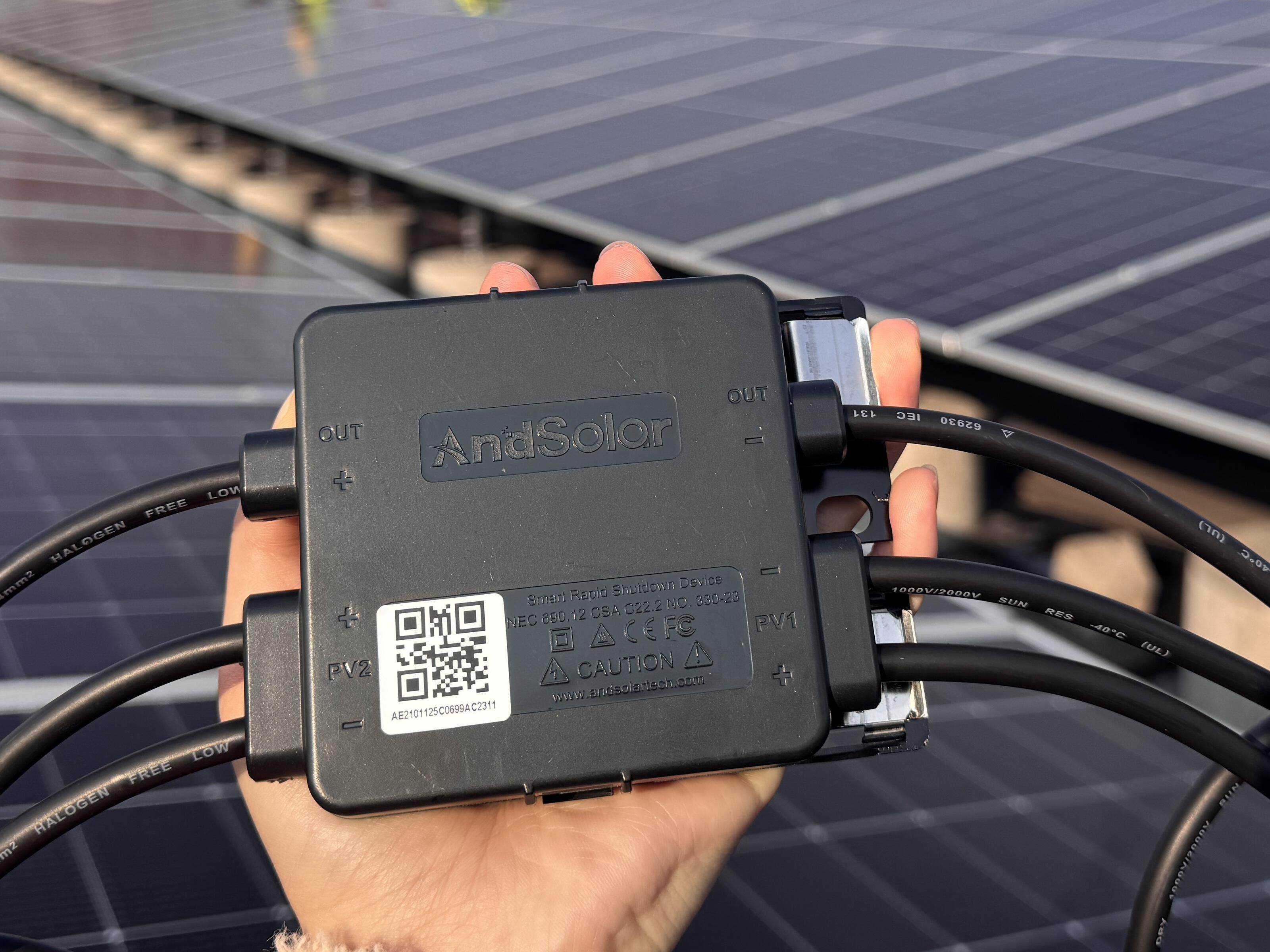
MLPE devices fundamentally change this dynamic by decoupling each module's performance from its neighbors. Power optimizers, the most common type of MLPE devices, attach to individual solar panels and perform DC-to-DC conversion with independent maximum power point tracking. Each optimizer continuously adjusts its input voltage and current to extract maximum power from its connected module, regardless of what neighboring panels are producing. The optimizer then converts this power to a common output voltage that can be safely combined with other optimizers in the string without the current-matching constraint that plagues traditional configurations.
This architectural difference allows shaded or underperforming modules to operate at their individual maximum power points while high-performing modules simultaneously operate at their own optimal points. The energy harvest from well-illuminated panels is no longer dragged down to match the lowest performer. In installations with complex roof geometries, multiple orientations, or unavoidable shading from trees or adjacent buildings, MLPE devices can recover energy that would otherwise be lost to string-level mismatch. The magnitude of this recovery directly correlates with how much performance variation exists between modules under actual operating conditions throughout the year.
Quantifying the Yield Enhancement Potential
The yield improvement from implementing MLPE devices varies considerably based on installation-specific factors. In ideal scenarios with no shading and perfect module matching, the benefit may be minimal or even slightly negative when accounting for the small conversion losses in the optimizers themselves. However, in installations experiencing regular partial shading patterns, documented yield improvements range from five to twenty-five percent depending on the severity and duration of shading events. These gains represent real energy production increases that directly impact project economics and payback periods for commercial and residential installations alike.
Field studies of MLPE devices deployed in diverse environments have provided valuable performance data. Installations in urban settings with nearby buildings often see ten to fifteen percent yield improvements compared to string inverter baselines. Residential rooftop systems with tree shading or complex roof planes with multiple orientations typically achieve eight to twelve percent gains. Even in relatively clean installations, MLPE devices can recover two to four percent through better management of module-level mismatch caused by manufacturing tolerances, differential aging, and varying soiling accumulation. These percentages translate directly to kilowatt-hours produced and revenue generated over the system's operational lifetime.
Evaluating When MLPE Devices Deliver Maximum Value
Site Conditions That Favor Module-Level Power Electronics
Certain installation characteristics make MLPE devices particularly valuable investments. Complex roof geometries with multiple azimuths and tilt angles create inherent performance mismatches between module groups that cannot be addressed through string design alone. When panels face different directions or sit at varying slopes, their power production profiles diverge throughout the day. MLPE devices allow each module to operate independently, preventing high-performing orientations from being limited by lower-producing orientations within the same string. This architectural flexibility also simplifies system design and reduces the constraints on panel placement.
Shading analysis represents perhaps the most critical factor in determining MLPE device value. Sites with predictable partial shading from trees, chimneys, vent pipes, or neighboring structures during specific times of day or seasons are prime candidates for module-level optimization. Even brief shading events during peak production hours can cause significant energy losses in string inverter systems. Detailed shade modeling using tools that account for sun path variations throughout the year helps quantify the specific hours and seasons when MLPE devices would actively recover lost production. The economic case for these devices strengthens in direct proportion to the number of annual sun-hours affected by partial shading conditions.
Installation Scenarios Where Traditional Inverters Remain Adequate
Not every solar installation benefits sufficiently from MLPE devices to justify their additional cost and complexity. Large ground-mounted arrays in open fields with no shading obstacles and uniform panel orientation often perform excellently with well-designed string inverter systems. When all modules receive consistent irradiance throughout the day and year, the string-level MPPT approach works efficiently without the performance compromises that MLPE devices are designed to solve. The additional hardware cost and marginal conversion losses of optimizers may actually reduce overall system economics in these scenarios.
Similarly, commercial rooftop installations on simple building geometries with southern exposure and no nearby obstructions typically achieve optimal performance with string inverters alone. When proper string sizing calculations account for temperature coefficients and voltage windows, and when all panels can be oriented identically without shading interference, the incremental yield gain from MLPE devices often falls below the threshold needed to justify the investment. The key distinction lies in carefully assessing whether module-level performance variation will occur frequently enough to recover the premium cost of optimizer-based systems through increased energy production.
Long-Term Performance Monitoring and Failure Isolation Benefits
Beyond immediate yield enhancement, MLPE devices provide operational advantages that accumulate value over the system's lifetime. Module-level monitoring capabilities inherent in most optimizer systems enable rapid identification of underperforming panels, connection issues, or developing failures. This granular visibility allows maintenance teams to address problems before they escalate and impact broader system performance. String inverter systems typically only indicate array-level production, making it difficult to pinpoint which specific module or connection might be causing reduced output without manual testing procedures.
This diagnostic capability translates to reduced troubleshooting time and lower maintenance costs over decades of operation. When a single module develops a hotspot, experiences connection degradation, or suffers physical damage, MLPE devices with monitoring platforms immediately flag the specific location and performance deviation. Maintenance personnel can target their efforts precisely rather than inspecting entire strings or arrays. This operational efficiency becomes increasingly valuable as solar portfolios scale and the cost of system downtime or prolonged underperformance grows. The combination of yield enhancement and operational intelligence makes MLPE devices particularly attractive for commercial installations where performance guarantees and energy production predictability carry significant financial weight.
Technical Considerations for MLPE Device Integration
System Design Adjustments for Optimizer-Based Architectures
Implementing MLPE devices requires adjustments to standard solar system design practices. String voltage calculations must account for the optimizer's output voltage characteristics rather than the module's native voltage. Most power optimizers maintain a fixed output voltage or operate within a defined voltage window, fundamentally changing how strings are sized and configured. This standardized voltage output simplifies inverter selection in some ways but requires careful attention to the total number of optimizers that can be series-connected while remaining within the inverter's input voltage range across all operating temperatures.
Wire sizing and voltage drop calculations also shift when using MLPE devices. Since optimizers typically output higher voltage than individual modules produce, the current flowing through DC conductors decreases proportionally, potentially allowing smaller wire gauges for the same power transmission. However, designers must still account for the input side of each optimizer where module-level current flows through short home-run connections. The overall DC system architecture becomes more distributed, with each optimizer representing a small DC-DC converter that must be properly grounded and protected according to electrical code requirements specific to these distributed electronics configurations.
Thermal Management and Environmental Durability
MLPE devices mount directly to the back of solar modules or adjacent racking, exposing them to the same harsh environmental conditions as the panels themselves. Quality optimizers incorporate thermal management features including heat sinks and thermally conductive mounting interfaces that allow heat dissipation into the module frame or racking structure. However, the additional electronics inevitably introduce thermal considerations that don't exist in string inverter systems where conversion electronics reside in ventilated enclosures. High ambient temperatures, particularly in desert climates or on dark roofing materials, can stress optimizer components and potentially impact long-term reliability if thermal design is inadequate.
Manufacturers of premium MLPE devices design for twenty-five year operational lifetimes matching module warranties, using conformal coatings, sealed enclosures, and component derating to ensure reliability across temperature extremes, humidity variations, and UV exposure. The track record of field-deployed optimizers has generally been positive, with failure rates remaining low in properly installed systems. However, the distributed nature means each installation contains dozens or hundreds of individual electronic units, each representing a potential failure point. Selecting MLPE devices from manufacturers with proven field reliability data and comprehensive warranties becomes essential for ensuring that the yield benefits are not eroded by maintenance burdens or premature component failures over the system's operational life.
Economic Analysis Framework for MLPE Device Adoption
Determining whether MLPE devices make financial sense requires rigorous analysis comparing incremental costs against projected energy production gains. The additional expense includes not only the optimizer hardware but also installation labor, monitoring platform subscriptions, and potential maintenance implications. This cost premium typically ranges from ten to twenty percent of total system cost depending on project scale. Against this investment, designers must model the expected annual energy increase based on site-specific shading analysis, orientation factors, and anticipated mismatch conditions throughout the system's lifetime.
Net present value calculations should incorporate the time-value of the additional energy produced, accounting for electricity rate escalation and any performance-based incentives tied to actual generation. In markets with high electricity costs or significant time-of-use rate differentials, the value of recovered energy during peak periods may justify MLPE devices even with modest percentage yield improvements. Conversely, in regions with low electricity rates and minimal shading challenges, the payback period may extend beyond acceptable thresholds. Sensitivity analysis exploring various shading scenarios, module degradation patterns, and electricity price trajectories helps establish confidence intervals around the investment decision and identifies the break-even point where MLPE devices transition from cost to value generators.
Comparing MLPE Technologies and Implementation Approaches
Power Optimizers Versus Microinverters
When discussing MLPE devices, the conversation naturally includes both DC optimizers and microinverters, though these technologies take fundamentally different approaches to module-level power management. Power optimizers perform DC-to-DC conversion, maintaining a DC system architecture that terminates at a central inverter performing the final DC-to-AC conversion. Microinverters instead perform complete DC-to-AC conversion at each module, eliminating central inverter equipment and creating a purely AC distribution system from the array onward. Each approach offers distinct advantages depending on system scale, electrical infrastructure, and performance objectives.
Power optimizer systems generally prove more economical at commercial scales where numerous modules justify the fixed cost of a central inverter. The centralized conversion stage achieves higher efficiency for the DC-AC conversion portion while optimizers handle the module-level MPPT function. Microinverter architectures excel in residential applications where smaller system sizes, aesthetic concerns about central inverter enclosures, or AC-coupled battery integration drive design decisions. Both categories of MLPE devices deliver similar module-level independence and monitoring capabilities, but their system-level implications for scalability, efficiency, and maintenance differ enough to warrant careful evaluation based on project-specific requirements rather than assuming one technology universally outperforms the other.
Selective Optimization Strategies for Cost-Effective Performance
A nuanced approach to MLPE device deployment involves selective optimization where only specific modules receive optimizers while others connect through traditional string configurations. This hybrid strategy makes sense in installations where shading affects only certain portions of the array at predictable times. Modules in consistently shaded zones receive optimizers to maintain their independent operation, while modules in unshaded regions with uniform conditions connect through standard strings to avoid unnecessary hardware costs. The challenge lies in properly designing the electrical architecture to accommodate both optimized and non-optimized modules without creating new mismatch problems at the string or inverter level.
Implementing selective optimization requires sophisticated design analysis and may introduce complexity that reduces some of the economic benefits. Monitoring systems may need to accommodate mixed architectures, and future troubleshooting becomes more complex when portions of the array operate under different control schemes. Nevertheless, for large installations with clearly defined shaded and unshaded zones, the cost savings from avoiding unnecessary optimizers on unaffected modules can be substantial while still capturing most of the available yield improvement. This approach represents a middle ground between full-array MLPE device deployment and traditional string inverter systems, optimizing the cost-benefit equation for specific site conditions.
Future Developments in Module-Level Power Electronics
The MLPE device category continues evolving with advances in power electronics, communication protocols, and integrated functionality. Next-generation optimizers are incorporating higher switching frequencies enabling smaller components, improved thermal management through advanced materials, and enhanced monitoring capabilities leveraging wireless communication standards. Some manufacturers are developing optimizers with integrated rapid shutdown functionality that meets increasingly stringent electrical code requirements while eliminating separate safety devices. These integrated approaches reduce component count and installation complexity while maintaining or improving the core performance benefits that drive MLPE device adoption.
Emerging developments also include optimizers with integrated energy storage interfaces, allowing module-level battery coupling for enhanced system flexibility. As bifacial modules become more common, MLPE devices designed specifically to capitalize on rear-side irradiance variations may capture additional performance benefits that string inverters cannot efficiently manage. The ongoing convergence of MLPE devices with digital monitoring platforms, predictive maintenance algorithms, and grid-interactive capabilities suggests that the value proposition extends beyond simple yield enhancement toward comprehensive asset management and grid services. These evolving capabilities will likely expand the scenarios where MLPE devices deliver compelling returns on investment as solar systems increasingly participate in sophisticated energy management and grid support functions.
Making the Investment Decision for Your Solar Project
Conducting Site-Specific Performance Modeling
The decision to implement MLPE devices should rest on detailed performance modeling specific to your installation site rather than generic industry claims. Sophisticated solar design software can simulate hourly production throughout an entire year, accounting for actual sun path data, detailed shade modeling from surrounding objects, and the electrical characteristics of specific optimizer and inverter combinations. These simulations generate comparative production estimates for optimizer-based versus string inverter architectures under your actual site conditions, providing the energy production differential that drives the economic analysis.
Quality modeling requires accurate three-dimensional site representation including all potential shade sources with correct heights, distances, and orientations. Tree growth over the system's lifetime should be factored into long-term projections, as increasing shade from maturing vegetation can dramatically shift the economics in favor of MLPE devices over time. Seasonal variations matter significantly since shade patterns that only affect production during low-sun-angle winter months carry less economic weight than shading during high-production summer periods. The modeling process should also account for soiling accumulation patterns if your site experiences differential dust or pollen deposition, as MLPE devices can mitigate the string-level impact of non-uniform soiling across the array.
Evaluating Total Cost of Ownership Beyond Initial Investment
A complete financial assessment of MLPE devices must extend beyond comparing initial system costs to encompass total cost of ownership across the installation's expected operational lifetime. While optimizers add upfront expense, they may reduce other costs including simplified wire sizing, potential elimination of combiner boxes through direct home-run strings, and reduced inverter sizing requirements due to better production management. The monitoring and diagnostic capabilities can lower maintenance costs by reducing troubleshooting time and enabling proactive component replacement before failures cause extended downtime or collateral damage.
Warranty structures and replacement cost projections also factor into long-term economics. Central string inverters typically require replacement after ten to fifteen years, while individual optimizers may need periodic replacement throughout the system lifetime but in smaller increments. The financial model should account for the timing and magnitude of these component replacements, discounting future costs appropriately. Additionally, the resale value or refinancing potential of solar assets with module-level monitoring and documented performance history may exceed that of systems with only array-level visibility. This asset value differential, though difficult to quantify precisely, represents real economic benefit in markets where solar installations are bought, sold, or used as collateral for financing arrangements.
Aligning Technology Selection with Operational Objectives
The final dimension of the MLPE device decision involves alignment with broader operational and strategic objectives beyond simple energy production maximization. Organizations with sustainability commitments may value the higher energy yield per installed module capacity that MLPE devices enable in constrained spaces, allowing more aggressive carbon reduction targets within limited roof area. Facilities management teams prioritizing predictable operations and minimized disruptions may find the enhanced monitoring and rapid problem identification capabilities justify the investment regardless of marginal yield improvements.
For solar developers building systems for sale or long-term ownership, the bankability and perceived risk profile of MLPE device systems may influence financing terms and investor appetite. Systems with module-level monitoring and proven yield enhancement in partial shade conditions may achieve more favorable debt terms or higher sale valuations than comparable string inverter systems. These soft benefits, combined with hard energy production gains, create a comprehensive value proposition that extends beyond the immediate kilowatt-hour calculations. The decision ultimately requires weighing multiple technical, financial, and operational factors in the context of your specific installation requirements, site conditions, and organizational priorities to determine whether MLPE devices represent the optimal architecture for your solar energy investment.
FAQ
How much yield improvement can I realistically expect from adding power optimizers to my solar system?
The realistic yield improvement from MLPE devices varies significantly based on your specific site conditions. In installations with minimal shading and uniform module orientation, you might see only two to four percent improvement primarily from better management of minor module mismatch. Sites with regular partial shading can achieve eight to fifteen percent gains, while complex installations with severe shading or multiple orientations sometimes realize twenty to twenty-five percent improvements. The key is conducting detailed site analysis including shade modeling throughout the year to generate accurate projections for your particular situation rather than relying on generalized industry claims.
Do power optimizers reduce the overall efficiency of my solar system?
Power optimizers themselves introduce a small conversion loss, typically between one and three percent, as they perform DC-to-DC conversion at each module. However, this minor loss is usually more than offset by the elimination of mismatch losses in installations with any performance variation between modules. In perfectly uniform conditions with no shading or mismatch, the optimizer conversion loss could theoretically result in slightly lower efficiency than a well-designed string inverter system. In real-world installations with typical shading and mismatch conditions, the net effect is positive, with the recovered energy from independent MPPT substantially exceeding the conversion losses. The overall system efficiency question should be evaluated based on total energy delivery rather than component-level efficiency in isolation.
What happens to my solar system if an individual power optimizer fails?
Most modern MLPE devices include bypass functionality that allows the string to continue operating even when an individual optimizer fails, though the affected module's contribution is lost. The remaining optimizers in the string maintain normal operation, limiting the production loss to just the single module rather than taking down an entire string as might occur with certain string inverter failure modes. Many systems also provide immediate alerts when an optimizer goes offline, enabling rapid replacement before significant energy loss accumulates. The distributed nature of optimizers means failures affect smaller portions of the array, but it also means there are more individual components with failure potential. Quality MLPE devices from established manufacturers typically demonstrate field failure rates below one percent annually, making this scenario relatively uncommon in properly installed systems using reliable equipment.
Can I add power optimizers to an existing solar system that currently uses a string inverter?
Retrofitting power optimizers into an existing string inverter system is technically complex and often economically impractical. Optimizers require compatible inverters designed to accept their specific voltage output characteristics, and most standard string inverters cannot accommodate optimizer input without replacement. Additionally, the electrical design would need complete revision to account for the changed voltage and current characteristics throughout the DC system. In most cases, if your existing system would benefit from optimization technology, the more practical approach is replacing the entire inverter and DC architecture during a planned upgrade cycle rather than attempting a partial retrofit. However, if you are planning system expansion or inverter replacement due to age or failure, that represents an opportune time to evaluate transitioning to an optimizer-based architecture for the entire installation, capturing benefits across both existing and new array sections.
Table of Contents
- Understanding How MLPE Devices Address String-Level Limitations
- Evaluating When MLPE Devices Deliver Maximum Value
- Technical Considerations for MLPE Device Integration
- Comparing MLPE Technologies and Implementation Approaches
- Making the Investment Decision for Your Solar Project
-
FAQ
- How much yield improvement can I realistically expect from adding power optimizers to my solar system?
- Do power optimizers reduce the overall efficiency of my solar system?
- What happens to my solar system if an individual power optimizer fails?
- Can I add power optimizers to an existing solar system that currently uses a string inverter?
