Distributed photovoltaic systems have transformed renewable energy deployment across residential, commercial, and industrial sectors, yet their widespread adoption has introduced complex safety challenges that traditional inverter technologies struggle to address effectively. Module-Level Power Electronics (MLPE) technology has emerged as a transformative solution that fundamentally reshapes how solar installations manage electrical hazards, respond to emergencies, and protect both personnel and property. By decentralizing power conversion and control to the individual module level, MLPE technology introduces unprecedented safety mechanisms that operate at the granular level where electrical risks originate, creating multiple layers of protection that were previously impossible with centralized inverter architectures.
The safety revolution brought by MLPE technology extends beyond simple risk mitigation to fundamentally alter how distributed photovoltaic systems operate under fault conditions, environmental stresses, and emergency scenarios. This technology addresses critical vulnerabilities inherent in string inverter configurations, where high DC voltages persist across extensive cable runs and multiple series-connected modules create single points of failure that can propagate hazards throughout the entire system. Understanding how MLPE technology revolutionizes safety requires examining the specific mechanisms through which module-level control eliminates dangerous voltage conditions, enables rapid shutdown capabilities, prevents arc fault propagation, and provides continuous monitoring that detects potential failures before they escalate into serious safety incidents.
Fundamental Safety Mechanisms Enabled by Module-Level Control Architecture
Rapid Voltage Reduction Through Distributed Power Management
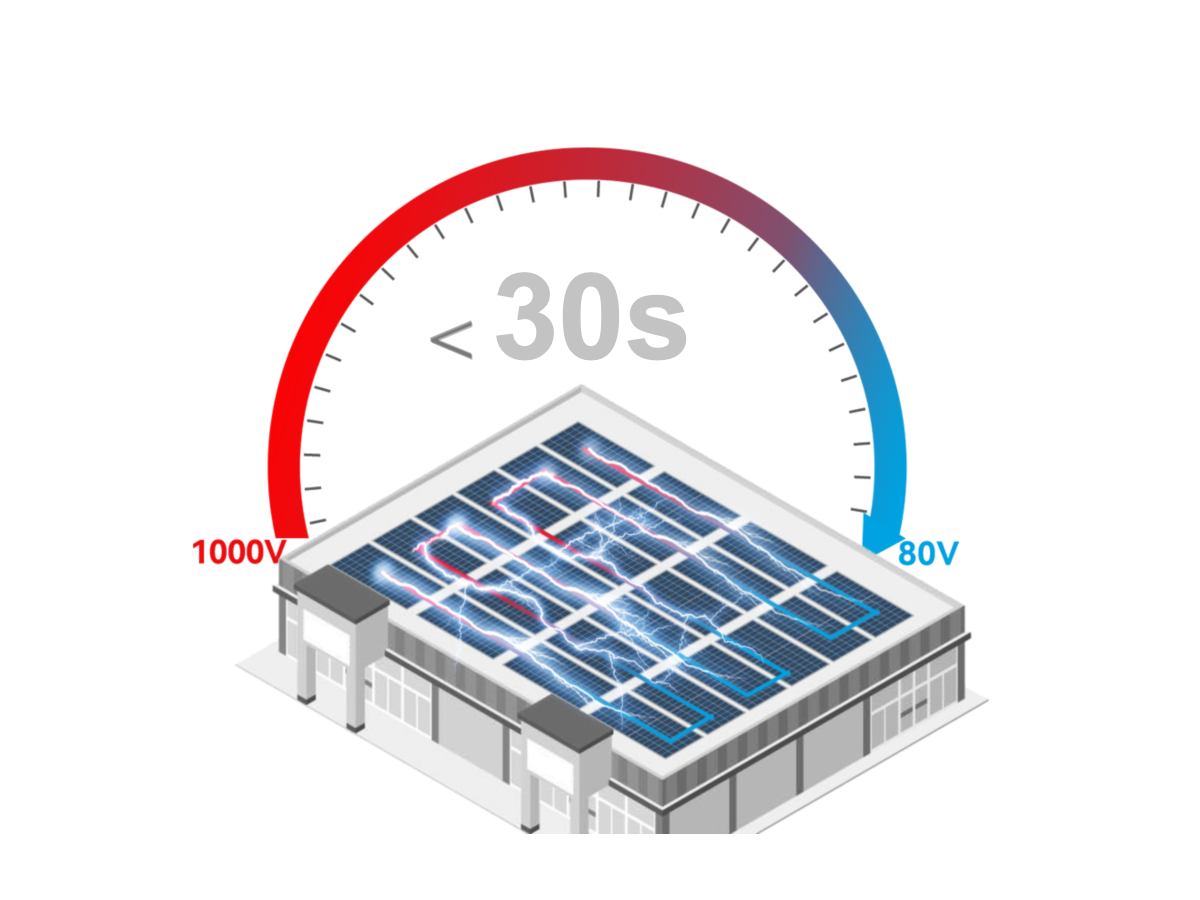
The primary safety innovation of MLPE technology lies in its ability to reduce dangerous DC voltages to safe levels within seconds of detecting emergency conditions or receiving shutdown commands. Traditional string inverter systems maintain high DC voltages ranging from 600 to 1500 volts across conductors that run from rooftop arrays to ground-level inverters, creating persistent electrocution and arc flash hazards even after AC disconnection. MLPE technology fundamentally changes this paradigm by converting DC power at each module location, ensuring that voltages beyond the immediate module vicinity remain at safe levels typically below 80 volts under normal operation and dropping to under 30 volts during shutdown conditions.
This distributed voltage control architecture operates through power optimizers or microinverters attached to each photovoltaic module, which continuously regulate output voltage regardless of input conditions. When emergency shutdown signals activate through manual switches, grid disconnection, or automatic fault detection, MLPE technology responds by immediately ceasing power conversion and discharging residual energy within the module-level electronics. This rapid voltage reduction occurs in milliseconds to seconds rather than the minutes or persistent high-voltage conditions characteristic of string systems, dramatically shrinking the window during which electrical hazards exist and enabling safer emergency response procedures.
Elimination of Series Arc Fault Propagation Pathways
Series arc faults represent one of the most dangerous failure modes in photovoltaic systems, capable of generating sustained high-temperature plasma discharges that ignite surrounding materials and propagate fires across rooftop installations. String inverter configurations create ideal conditions for series arc development because multiple modules connect in long series strings where any single connection point degradation can initiate arcing that the system continues to energize through the string's combined voltage. MLPE technology revolutionizes arc fault safety by segmenting the electrical system into isolated module-level zones where arc initiation automatically results in voltage collapse that extinguishes the arc before it can establish sustained discharge conditions.
The segmentation approach inherent in MLPE technology means that each module operates as an independent power source with its own conversion electronics, preventing the cascading energy contribution that sustains series arcs in traditional configurations. When connection degradation or insulation failure begins to generate arcing at any point in an MLPE-equipped system, only the single module involved contributes energy to the fault condition, and the localized electronics immediately detect abnormal impedance characteristics that trigger protective shutdown. This containment mechanism limits arc energy to levels typically insufficient for ignition while simultaneously alerting system operators to the specific module location requiring attention, enabling targeted maintenance that prevents recurrence.
Module-Level Fault Isolation and System Continuity
Beyond preventing hazard propagation, MLPE technology enhances safety through intelligent fault isolation that maintains system operation even when individual modules experience failures that would disable entire strings in conventional architectures. Traditional string configurations create series dependencies where a single module fault forces shutdown of all connected modules to prevent unsafe operating conditions, potentially leaving critical loads without power during emergency situations. MLPE technology breaks these dependencies by providing each module with independent maximum power point tracking and voltage regulation capabilities that allow the system to isolate faulty modules while maintaining power production from all healthy units.
This isolation capability operates through continuous impedance monitoring and performance analysis at each module location, where MLPE technology detects abnormal electrical characteristics indicating developing faults such as ground leakage, insulation degradation, or internal module damage. Upon detecting fault signatures, the affected module's electronics transition to a protective mode that disconnects the module from the system DC bus while maintaining normal operation of all other modules. This surgical isolation approach prevents fault propagation while preserving maximum system functionality, which proves particularly valuable in critical infrastructure applications where continuous power availability directly impacts occupant safety and emergency response capabilities.
Advanced Shutdown Capabilities Meeting Rapid Shutdown Code Requirements
Compliance with NEC 690.12 Rapid Shutdown Standards
The National Electrical Code Article 690.12 established rapid shutdown requirements specifically to address safety concerns with photovoltaic systems, mandating that modules located more than one foot from array edges must reduce conductors to 80 volts or less within 30 seconds of shutdown initiation. MLPE technology was specifically architected to exceed these requirements, providing the only practical means for distributed residential and commercial arrays to achieve compliant rapid shutdown without extensive additional equipment. The module-level control inherent in MLPE technology naturally satisfies rapid shutdown mandates because power conversion occurs at the module location, eliminating the extended high-voltage DC conductors that create the hazards these codes address.
Implementation of rapid shutdown through MLPE technology operates through multiple redundant triggering mechanisms that ensure reliable voltage reduction regardless of fault conditions or communication pathway integrity. Primary shutdown activation occurs through dedicated low-voltage control circuits that connect all module-level electronics to centralized shutdown switches located at building service entrances, allowing emergency responders to immediately de-energize arrays before entering structures. Secondary activation pathways include automatic shutdown upon AC grid disconnection and wireless communication protocols that enable remote shutdown commands, creating a multi-layered activation system that maintains functionality even if individual pathways fail during emergency conditions.
Enhanced First Responder Safety Through Controlled De-Energization
The rapid shutdown capabilities enabled by MLPE technology directly address first responder concerns about photovoltaic system hazards during fire suppression and rescue operations. Fire service organizations have documented numerous cases where string inverter systems complicated emergency response due to persistent high DC voltages that remained energized despite AC disconnection, forcing responders to alter tactics or delay entry while awaiting specialized electrical expertise. MLPE technology eliminates these complications by providing clearly marked shutdown switches that reduce all system voltages to safe levels within seconds, allowing standard fire service protocols to proceed without specialized photovoltaic safety procedures.
Beyond simple voltage reduction, MLPE technology enhances first responder safety through visual indication systems that confirm successful shutdown and safe entry conditions. Module-level electronics typically include LED indicators that display operational status, allowing responders to visually verify that arrays have transitioned to safe shutdown states before commencing operations. Advanced MLPE technology implementations integrate with building management systems to automatically illuminate pathway lighting and display panel status information that guides emergency personnel to shutdown locations and confirms system de-energization, creating intuitive safety interfaces that function reliably even for personnel without specialized photovoltaic training.
Maintenance Safety Through Selective Module De-Energization
MLPE technology revolutionizes maintenance safety by enabling selective de-energization of individual modules or array sections without requiring complete system shutdown, dramatically reducing both electrical hazards and productivity losses during routine service activities. Traditional string configurations force technicians to disconnect entire strings or complete arrays to safely access any single module, creating extended high-voltage exposure during connection and disconnection procedures while eliminating power production from all affected modules. Module-level electronics allow technicians to selectively disable specific modules through wireless commands or local switch activation, creating isolated safe work zones while maintaining production from all uninvolved array sections.
This selective shutdown capability extends safety benefits beyond electrical hazard elimination to include reduced fall risk and improved working conditions during maintenance operations. When technicians can disable individual modules without climbing to disconnect switches or breakers, the frequency of rooftop access decreases substantially, proportionally reducing fall exposure that represents the leading cause of photovoltaic installation injuries. MLPE technology further enhances maintenance safety through diagnostic capabilities that identify specific failing modules before dispatch, allowing technicians to arrive with correct replacement parts and complete repairs in single visits rather than multiple diagnostic and repair trips that multiply hazard exposure.
Arc Fault Detection and Prevention Through Continuous Monitoring
Real-Time Impedance Analysis for Early Arc Detection
MLPE technology incorporates sophisticated arc fault detection algorithms that continuously analyze electrical characteristics at module level to identify arc signatures before they develop into dangerous sustained discharges. These detection systems operate by monitoring high-frequency impedance variations, voltage ripple patterns, and current discontinuities that characterize incipient arcing conditions, processing this data through pattern recognition algorithms trained to distinguish genuine arc faults from normal switching transients and environmental noise. The module-level implementation of these algorithms provides unprecedented sensitivity because measurement occurs directly at potential arc initiation sites rather than attempting to detect small localized faults through analysis of aggregated string current at distant inverter locations.
When MLPE technology detects arc fault signatures exceeding programmed thresholds, the system implements graduated response protocols designed to extinguish arcs while maintaining power production if safe operation proves possible. Initial detection triggers temporary voltage reduction that often extinguishes incipient arcs formed by transient contact issues, followed by automatic restoration if arc signatures disappear. Persistent arc detection escalates response to complete module shutdown with event logging that alerts operators to required maintenance, preventing arc re-establishment while documenting the fault location and characteristics for targeted repair. This intelligent response system prevents both fire hazards and unnecessary system disruptions that would result from overly conservative shutdown strategies.
Prevention of Parallel Arc Faults Through Ground Fault Monitoring
While series arc faults receive considerable attention, parallel arc faults between conductors and grounded surfaces represent equally dangerous failure modes that MLPE technology addresses through continuous ground fault impedance monitoring at module level. Parallel arcs typically initiate through insulation degradation that allows leakage current between conductors and mounting structures, developing into sustained arcs when accumulated damage creates sufficient gap distance for arc establishment. String inverter systems detect ground faults only through aggregate leakage measurement at the inverter location, often missing localized faults until they escalate to catastrophic failure levels.
MLPE technology revolutionizes ground fault protection by implementing differential current monitoring within each module's power electronics, comparing input current from the photovoltaic module against output current to the system bus with sensitivity typically below 30 milliamperes. This module-level monitoring detects ground leakage at the specific fault location before current levels become sufficient for arc establishment, triggering protective shutdown and fault alerts that enable preemptive repair. The distributed monitoring architecture also eliminates blind spots inherent in centralized detection, where normal leakage from healthy modules can mask dangerous fault currents from individual failing units until insulation breakdown becomes complete.
Diagnostic Data Collection for Predictive Maintenance
Beyond reactive fault detection, MLPE technology enables predictive maintenance strategies that identify developing safety issues before they manifest as active faults requiring emergency response. Module-level electronics continuously collect operational data including voltage, current, temperature, and impedance measurements across varying environmental conditions, building comprehensive performance profiles for each module over time. Advanced MLPE technology systems analyze this data to identify gradual degradation patterns characteristic of insulation breakdown, connection corrosion, or internal module damage, generating maintenance alerts when statistical analysis indicates developing fault conditions.
This predictive capability transforms safety management from reactive incident response to proactive hazard elimination, allowing scheduled maintenance during favorable conditions rather than emergency repairs during active fault situations. The granular diagnostic data provided by MLPE technology also enables more accurate failure analysis and targeted repairs compared to traditional systems where fault investigation often yields limited information about failure mechanisms. By documenting the complete electrical history leading to each fault condition, MLPE technology supports continuous safety improvement through systematic identification of installation practices, environmental factors, or component specifications that correlate with elevated failure rates requiring design modifications.
Ground Fault Protection and Personnel Safety Enhancement
Distributed Ground Fault Detection Sensitivity
MLPE technology implements ground fault protection with sensitivity levels and response speeds that substantially exceed capabilities of centralized inverter-based detection systems, providing enhanced personnel protection against electric shock hazards. Traditional ground fault detection operates at the inverter location where it must distinguish dangerous fault currents from normal system leakage across dozens or hundreds of modules, limiting practical sensitivity to approximately 300-500 milliamperes to avoid nuisance tripping from accumulated normal leakage. This sensitivity level provides adequate equipment protection but leaves personnel vulnerable to shock currents well above safe physiological thresholds during ground fault conditions.
The module-level architecture of MLPE technology enables ground fault detection sensitivity approaching residential GFCI levels by monitoring differential current at each individual module where normal leakage remains minimal. Individual module electronics can reliably detect ground faults at 30-50 milliampere thresholds without false triggering, providing protection approaching safety levels established for personnel protection devices. When any module detects ground fault current exceeding programmed thresholds, the affected module immediately ceases power conversion while signaling the system controller to verify whether additional modules show similar fault signatures indicating system-wide insulation failure versus isolated module damage requiring targeted maintenance.
Elimination of Floating Ground Hazards
Photovoltaic systems configured with ungrounded DC circuits present unique safety challenges because the first ground fault condition may go undetected while creating floating voltage conditions that become extremely dangerous when second ground faults occur at different circuit polarities. Traditional string systems address this through ground fault detectors that measure circuit balance to ground, but these centralized monitors provide limited fault location information and cannot protect against transient faults or rapidly developing insulation failures. MLPE technology revolutionizes floating ground protection by implementing active voltage monitoring at each module that continuously verifies expected voltage relationships between circuit conductors and grounding infrastructure.
This distributed voltage monitoring allows MLPE technology to detect and respond to first-fault conditions with precision impossible in centralized architectures, immediately identifying the specific module experiencing insulation breakdown and initiating protective shutdown before second faults can establish dangerous cross-circuit current paths. The module-level monitoring also detects intermittent ground faults caused by environmental factors such as moisture accumulation or physical contact from vegetation or wildlife, enabling maintenance intervention during early fault stages rather than waiting for permanent insulation failure. By eliminating the floating ground hazard window between first and second fault conditions, MLPE technology substantially reduces shock and arc flash risks to both maintenance personnel and building occupants.
Enhanced Isolation Monitoring for Personnel Protection
MLPE technology extends personnel protection through continuous insulation resistance monitoring that detects degrading isolation before leakage currents reach levels sufficient for ground fault detection activation. Module-level electronics periodically inject small test signals between DC conductors and ground reference points, measuring resulting leakage impedance to verify that insulation resistance remains above safety thresholds typically specified at one megohm or higher. This proactive monitoring identifies gradual insulation degradation caused by environmental exposure, mechanical stress, or material aging, generating maintenance alerts that enable insulation restoration before dangerous fault conditions develop.
The insulation monitoring capabilities of MLPE technology prove particularly valuable in harsh environmental conditions where moisture, salt spray, or chemical exposure accelerates insulation degradation compared to controlled laboratory aging profiles. By continuously verifying insulation integrity throughout varying environmental conditions, module-level monitoring detects environment-specific degradation mechanisms that might escape detection during installation testing or periodic inspection intervals. This continuous vigilance ensures that personnel safety remains protected throughout system lifetime rather than degrading gradually as insulation deteriorates between scheduled maintenance activities.
Fire Safety Enhancement Through Intelligent System Shutdown
Automatic Fire Detection Integration and Response
Advanced MLPE technology implementations integrate with building fire detection systems to provide automatic photovoltaic array shutdown upon smoke or heat detector activation, eliminating electrical hazards before fire service arrival and reducing system contribution to fire spread. Traditional photovoltaic systems continue operating during fire conditions until manual disconnection occurs, potentially energizing damaged conductors that create additional ignition sources or shock hazards that complicate suppression efforts. MLPE technology addresses these concerns through dedicated fire alarm inputs that automatically trigger rapid shutdown protocols upon receiving fire detection signals, ensuring that arrays transition to safe states within seconds of initial fire discovery.
This integrated shutdown capability extends beyond simple de-energization to include intelligent damage assessment that determines whether partial array restoration becomes safe after fire containment or whether sustained shutdown remains necessary pending inspection and repair. Module-level diagnostics allow MLPE technology to identify specific array sections exposed to fire conditions through temperature sensors and electrical parameter changes indicating thermal damage, maintaining shutdown of affected sections while potentially restoring power from undamaged array areas that support critical loads during recovery operations. This selective restoration capability balances safety priorities with operational continuity needs in ways impossible with traditional systems that require complete manual inspection before any restoration attempt.
Reduction of Photovoltaic System Fire Contribution
MLPE technology reduces photovoltaic system contribution to structure fires through multiple mechanisms beyond rapid shutdown, including arc fault prevention, hotspot elimination, and reduced conductor energy content that limit ignition potential even during electrical fault conditions. Statistical analysis of photovoltaic system fire incidents consistently identifies electrical faults as primary ignition sources, with series arc faults, ground faults, and module hotspots accounting for the majority of documented cases. The module-level monitoring and control provided by MLPE technology directly addresses each of these ignition mechanisms through continuous fault detection, rapid protective response, and elimination of the high-voltage series connections that provide energy for sustained fault conditions.
Quantitative fire risk assessment demonstrates that MLPE technology implementations reduce photovoltaic system fire probability by approximately 80-90 percent compared to traditional string inverter configurations lacking equivalent arc fault detection and rapid shutdown capabilities. This risk reduction derives from the combination of arc fault prevention through early detection and voltage reduction, hotspot elimination through module-level maximum power point tracking that prevents reverse bias conditions, and rapid shutdown capability that minimizes electrical energy available for fire propagation during fault conditions. The cumulative effect of these safety mechanisms transforms photovoltaic systems from potential fire hazards requiring special consideration to electrical installations with fire risk profiles comparable to or better than conventional building electrical systems.
Post-Fire System Safety Verification
Following fire incidents, MLPE technology provides diagnostic capabilities that enable systematic safety verification before system restoration, identifying specific modules and conductors requiring replacement due to thermal exposure or physical damage. Traditional photovoltaic systems offer limited diagnostic information after fire incidents, typically requiring complete system inspection and testing to verify safety before restoration attempts. The comprehensive monitoring data collected by MLPE technology throughout fire events documents thermal exposure, electrical stress, and operational anomalies experienced by each system component, enabling targeted damage assessment that focuses inspection efforts on actually affected equipment rather than requiring universal replacement or testing.
This diagnostic capability accelerates safe system restoration while ensuring that thermally damaged components receive appropriate replacement before re-energization. Module-level data logging records peak temperatures, exposure duration, and electrical parameter variations during fire conditions, providing evidence for damage assessment protocols that determine which modules experienced thermal stress sufficient to degrade internal connections or insulation systems. By enabling data-driven damage assessment rather than purely visual inspection, MLPE technology ensures that hidden thermal damage receives appropriate attention while avoiding unnecessary component replacement that delays restoration and increases recovery costs without corresponding safety benefit.
FAQ
What makes MLPE technology safer than traditional string inverter systems?
MLPE technology provides superior safety through multiple mechanisms including rapid voltage reduction to safe levels within seconds, module-level arc fault detection that prevents sustained discharges, ground fault monitoring with personnel-protection sensitivity, and isolation capabilities that contain faults to single modules rather than allowing propagation across string connections. The fundamental architectural difference lies in performing power conversion and monitoring at each module location rather than centralizing these functions at distant inverters, which enables granular control and fault detection impossible with string configurations that aggregate dozens of modules onto shared high-voltage conductors.
How quickly can MLPE technology shut down during emergency situations?
MLPE technology typically achieves voltage reduction to safe levels below 80 volts within 10-30 seconds of shutdown activation, with many implementations reaching safe voltage thresholds in under 10 seconds. The actual shutdown speed depends on specific product design and array configuration, but all compliant MLPE technology implementations meet National Electrical Code requirements for rapid shutdown within 30 seconds. This response time represents fundamental improvement over traditional string systems where high DC voltages persist indefinitely until manual disconnection occurs at combiner boxes or inverters, often requiring specialized electrical expertise and creating sustained hazards during emergency response operations.
Does MLPE technology require special maintenance procedures for safety systems?
MLPE technology safety systems generally require minimal maintenance beyond standard photovoltaic system care, with most manufacturers recommending annual functional testing of rapid shutdown systems and periodic verification of arc fault detection through self-test routines built into system monitoring interfaces. The distributed architecture of MLPE technology actually simplifies maintenance compared to traditional systems because module-level diagnostics identify specific components requiring attention rather than requiring troubleshooting across entire strings. However, proper maintenance does require that system operators understand MLPE technology functionality and regularly verify that monitoring systems display expected operational status for all modules, with prompt investigation of any persistent fault indicators or communication losses that might compromise safety system effectiveness.
Can MLPE technology prevent all photovoltaic system electrical hazards?
While MLPE technology substantially reduces electrical hazards through advanced monitoring and rapid shutdown capabilities, no technology can eliminate all possible risks in electrical systems exposed to environmental stresses and physical damage potential. MLPE technology specifically addresses the most significant photovoltaic safety concerns including sustained high DC voltage exposure, arc fault fire initiation, ground fault shock hazards, and emergency responder risks during fire incidents. However, proper installation practices, regular maintenance, adherence to electrical codes, and appropriate safety procedures during service activities remain essential for comprehensive safety management. MLPE technology should be understood as providing multiple additional safety layers that dramatically reduce risk rather than as a complete substitute for fundamental electrical safety practices and proper system design.
Table of Contents
- Fundamental Safety Mechanisms Enabled by Module-Level Control Architecture
- Advanced Shutdown Capabilities Meeting Rapid Shutdown Code Requirements
- Arc Fault Detection and Prevention Through Continuous Monitoring
- Ground Fault Protection and Personnel Safety Enhancement
- Fire Safety Enhancement Through Intelligent System Shutdown
- FAQ
