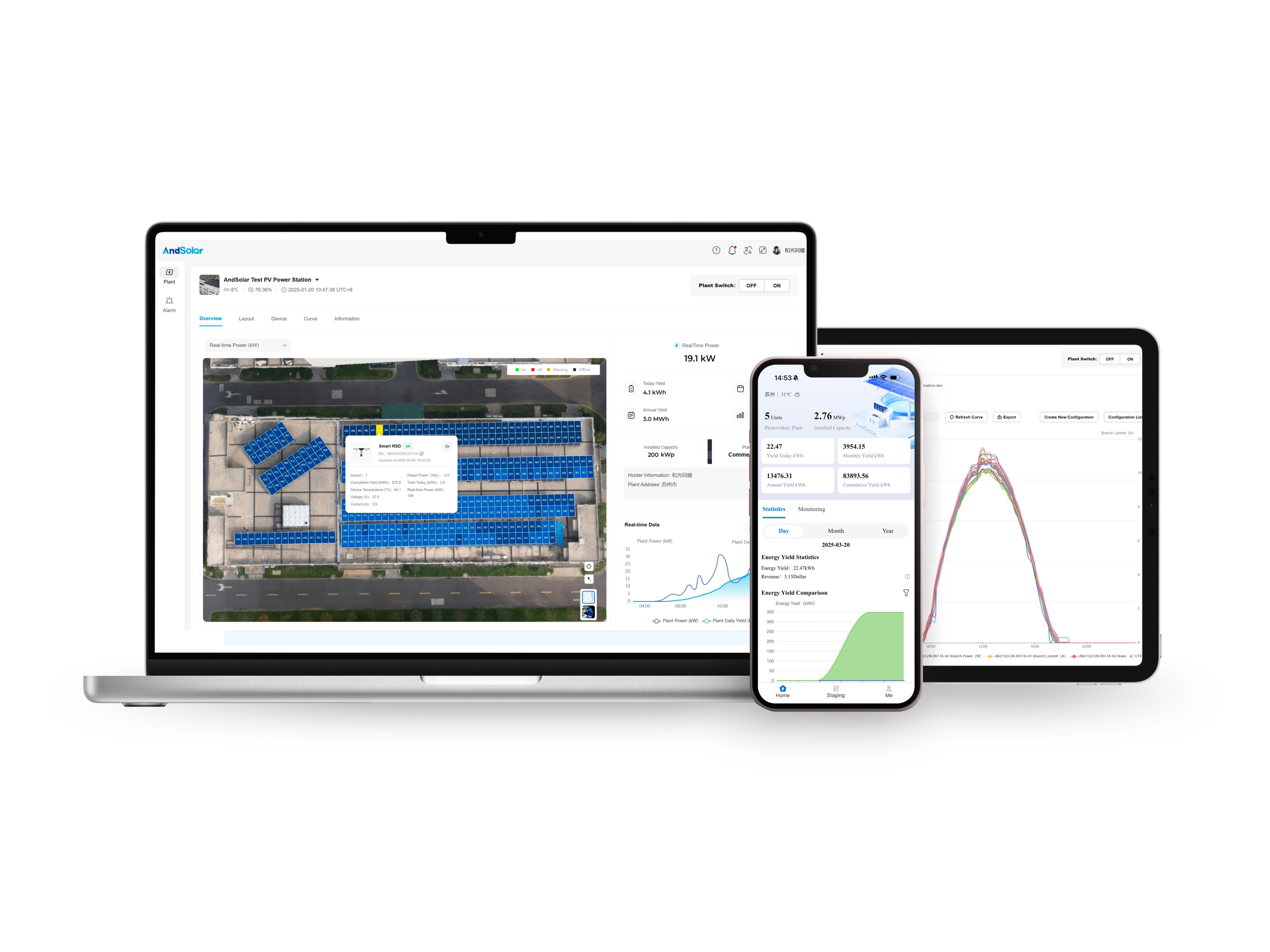
The trajectory of solar technology stands at a pivotal crossroads where innovation, economic forces, and environmental imperatives converge to reshape how humanity harnesses energy from the sun. As global energy demands escalate and climate concerns intensify, understanding the future landscape of solar technology efficiency and affordability becomes essential for businesses, policymakers, and industrial stakeholders. The evolution of photovoltaic systems, energy storage integration, and manufacturing processes will determine whether solar technology can transition from a supplementary energy source to the dominant pillar of global power generation within the coming decades.

Current market dynamics reveal that solar technology has already achieved unprecedented cost reductions over the past fifteen years, with photovoltaic module prices dropping by more than eighty percent since 2010. However, the question of what the future holds extends beyond mere price trajectories to encompass breakthrough materials science, grid integration capabilities, and the scalability of production infrastructure. The interplay between efficiency improvements and cost reduction mechanisms will define competitive positioning across industrial sectors, influence national energy security strategies, and determine the pace at which developing economies can access clean energy solutions without compromising economic growth.
Breakthrough Materials Driving Next-Generation Solar Technology Efficiency
Perovskite Solar Cells and Their Transformative Potential
Perovskite solar cells represent one of the most promising frontiers in solar technology advancement, offering theoretical efficiency ceilings that surpass traditional silicon-based systems. These crystalline structures demonstrate remarkable light absorption properties and can be manufactured through relatively low-temperature processes, potentially reducing production costs while simultaneously boosting energy conversion rates. Laboratory achievements have already demonstrated perovskite cells reaching efficiency levels exceeding twenty-five percent, with tandem configurations combining perovskite and silicon layers pushing toward the thirty percent threshold that was once considered commercially unattainable.
The industrial viability of perovskite solar technology hinges on resolving stability challenges that have historically limited their operational lifespan. Researchers are developing encapsulation techniques and compositional modifications that enhance resistance to moisture, thermal stress, and ultraviolet degradation. Early commercialization efforts focus on niche applications where higher efficiency justifies premium pricing, including building-integrated photovoltaics and portable power systems. As manufacturing processes mature and material costs decline through economies of scale, perovskite solar technology could democratize access to high-efficiency solar solutions across diverse market segments.
Tandem and Multi-Junction Architectures
Multi-junction solar technology architectures strategically layer different semiconductor materials to capture broader portions of the solar spectrum, fundamentally overcoming the efficiency limitations inherent in single-junction designs. Each layer is optimized to absorb specific wavelength ranges, converting photons that would otherwise be wasted as heat in conventional systems. This approach has enabled concentrator photovoltaic systems to achieve record-breaking efficiency levels exceeding forty-seven percent under laboratory conditions, though practical deployment requires sophisticated tracking systems and cooling infrastructure.
The future affordability of tandem solar technology depends critically on manufacturing innovations that reduce the complexity and material costs associated with multi-layer fabrication. Emerging techniques such as direct wafer bonding and epitaxial lift-off processes promise to streamline production while maintaining the precise layer alignment necessary for optimal performance. As these manufacturing methods transition from research laboratories to industrial production lines, the cost premium associated with tandem solar technology is projected to narrow, making high-efficiency systems economically viable for utility-scale installations where land availability constraints justify higher per-watt investments.
Manufacturing Innovation and Cost Reduction Trajectories
Automation and Artificial Intelligence in Production
Advanced manufacturing automation represents a fundamental driver of future solar technology affordability, with artificial intelligence systems optimizing production parameters in real-time to minimize defect rates and material waste. Modern fabrication facilities employ machine vision systems that inspect photovoltaic cells at microscopic resolution, identifying imperfections that human operators would miss and enabling immediate process corrections. These intelligent manufacturing systems continuously learn from production data, refining operational parameters to enhance yield rates and reduce the energy consumption inherent in solar panel production.
The integration of robotics throughout the solar technology supply chain extends beyond cell fabrication to encompass module assembly, quality testing, and logistics coordination. Collaborative robots work alongside human technicians to handle delicate silicon wafers and precisely position components during lamination processes. This human-machine collaboration increases production throughput while maintaining the quality standards necessary for twenty-five-year performance warranties. As artificial intelligence capabilities mature and robotics costs decline, even mid-sized solar technology manufacturers will access automation tools previously reserved for industry giants, fostering competitive dynamics that accelerate cost reduction across the entire sector.
Supply Chain Optimization and Vertical Integration
Strategic vertical integration within the solar technology industry is reshaping cost structures by reducing transaction expenses and enabling tighter quality control throughout production chains. Leading manufacturers are investing in polysilicon refineries, ingot casting facilities, and wafer production lines to secure material supplies and capture value at each transformation stage. This vertical consolidation reduces exposure to commodity price volatility and enables proprietary process improvements that compound efficiency gains across multiple production steps.
Geographic diversification of manufacturing capacity represents another critical factor influencing future solar technology affordability, as regional production hubs emerge to serve local markets while reducing transportation costs and tariff exposure. Investments in automated production facilities across North America, Europe, and Southeast Asia are creating distributed manufacturing networks that enhance supply chain resilience and accelerate regional technology adoption. These localized production capabilities also facilitate closer collaboration between manufacturers and regional installers, enabling customization of solar technology products to address specific climatic conditions and regulatory requirements that vary significantly across global markets.
Energy Storage Integration and System-Level Economics
Battery Technology Convergence
The future affordability and utility of solar technology is inextricably linked to advances in energy storage systems that address the intermittency challenges inherent in photovoltaic generation. Lithium-ion battery costs have declined by nearly ninety percent over the past decade, making solar-plus-storage configurations increasingly competitive with conventional grid power even without subsidies. Next-generation battery chemistries including solid-state designs and sodium-ion alternatives promise further cost reductions while enhancing safety profiles and cycle life characteristics critical for long-term industrial applications.
The economic calculus of solar technology deployment is fundamentally altered when storage capabilities enable time-shifting of energy production to match consumption patterns and peak demand periods. Industrial facilities can leverage solar technology paired with battery systems to reduce demand charges that often constitute significant portions of commercial electricity expenses. This system-level approach transforms solar installations from simple energy generation assets into sophisticated power management platforms that optimize operational costs across multiple time horizons, enhancing return on investment calculations and accelerating adoption across energy-intensive industries.
Grid Services and Revenue Diversification
Advanced solar technology systems equipped with intelligent inverters and storage integration are evolving into distributed grid assets capable of providing ancillary services that generate additional revenue streams beyond simple energy production. Frequency regulation, voltage support, and demand response capabilities enable solar installations to participate in wholesale electricity markets and capacity mechanisms previously accessible only to conventional power plants. This revenue diversification improves project economics and justifies higher upfront investments in control systems and grid interconnection infrastructure.
The proliferation of virtual power plant architectures that aggregate distributed solar technology resources is creating new business models that enhance system value while reducing individual project risks. Cloud-based optimization platforms coordinate charging and discharging of batteries across hundreds of installations to maximize collective revenue from energy arbitrage and grid services. These aggregation strategies make solar technology economically viable in market contexts where individual projects would struggle to achieve acceptable returns, expanding the geographic and sectoral scope of viable deployment opportunities.
Policy Frameworks and Market Structure Evolution
Regulatory Adaptation and Grid Modernization
Future solar technology affordability will be significantly influenced by regulatory frameworks that either facilitate or impede grid integration of distributed generation resources. Progressive jurisdictions are implementing interconnection standards that streamline permitting processes and establish clear technical requirements for solar technology systems to connect safely and reliably to distribution networks. These regulatory certainties reduce soft costs associated with project development and enable standardization of installation practices that drive labor productivity improvements.
Grid modernization investments represent essential enablers of widespread solar technology adoption, as aging distribution infrastructure in many regions lacks the monitoring and control capabilities necessary to accommodate high penetrations of variable renewable generation. Smart grid technologies including advanced metering infrastructure, distribution automation, and real-time voltage management systems transform grid operations from passive power delivery networks into active platforms that optimize flows from diverse generation sources. The pace of these infrastructure upgrades will partially determine how quickly solar technology can scale beyond current penetration levels without triggering grid stability concerns or curtailment requirements that undermine project economics.
International Technology Transfer and Capacity Building
The global diffusion of solar technology knowledge and manufacturing capabilities will shape future affordability trajectories, particularly in developing markets where energy access gaps remain substantial. International development institutions and bilateral cooperation programs are facilitating technology transfer initiatives that establish local assembly capacity and training programs for installation and maintenance workforces. These capacity-building efforts reduce reliance on imported equipment and expertise, lowering total system costs while creating employment opportunities that strengthen political support for renewable energy transitions.
Intellectual property frameworks and licensing arrangements will influence the pace at which breakthrough solar technology innovations propagate across global markets. Open-source hardware initiatives and patent pooling arrangements can accelerate technology dissemination, enabling manufacturers in emerging economies to adopt advanced production techniques without prohibitive licensing fees. Conversely, restrictive intellectual property regimes may concentrate manufacturing capabilities among established players, potentially slowing cost reductions and limiting market competition. The balance between protecting innovation incentives and promoting broad technology access will significantly impact how equitably the benefits of solar technology advancement are distributed across different economic contexts.
Industrial Applications and Sectoral Transformation
Heavy Industry Decarbonization Pathways
Solar technology is increasingly recognized as a critical enabler of decarbonization strategies across energy-intensive industries including steel production, chemical manufacturing, and mining operations. Large-scale solar installations paired with electrolysis systems can produce green hydrogen that replaces fossil fuels in high-temperature industrial processes, fundamentally altering the carbon intensity of manufactured goods. The economic viability of these applications depends on continued improvements in solar technology efficiency that reduce the land footprint required for industrial-scale hydrogen production and lower the levelized cost of green hydrogen below fossil-based alternatives.
Industrial solar technology deployments benefit from economies of scale and simplified site preparation when integrated directly into manufacturing campuses and mining operations that already possess electrical infrastructure and land availability. Process industries with thermal energy requirements can leverage concentrating solar thermal systems that deliver high-temperature heat directly for industrial applications, avoiding the conversion losses associated with electricity generation and subsequent thermal conversion. These direct thermal applications represent specialized market segments where solar technology can achieve particularly favorable economics compared to conventional fuel sources, especially in regions with high solar irradiance and rising fossil fuel costs.
Agricultural Integration and Agrivoltaic Systems
Agrivoltaic systems that co-locate solar technology installations with agricultural production represent an innovative approach to land use optimization that addresses concerns about solar farms competing with food production. Strategic panel placement and height adjustments enable continued farming activities beneath solar arrays while providing crops with beneficial shading that reduces water requirements and heat stress. Research demonstrates that certain crop varieties actually exhibit enhanced yields under partial shading conditions, creating synergistic relationships between energy generation and agricultural productivity.
The future development of agrivoltaic applications will depend on solar technology designs specifically optimized for dual-use scenarios, including elevated mounting structures that accommodate farm equipment passage and transparent or semi-transparent modules that balance energy generation with crop light requirements. These specialized system configurations currently carry cost premiums compared to conventional ground-mount installations, but increasing recognition of their multiple value streams including agricultural production, energy generation, and water conservation is attracting policy support and agricultural subsidies that improve overall project economics. As climate change intensifies agricultural water scarcity in many regions, the water-saving benefits of agrivoltaic systems may become increasingly valuable, justifying higher initial investments in specialized solar technology infrastructure.
FAQ
How quickly will solar technology efficiency improvements translate into cost reductions for industrial buyers?
Efficiency improvements in solar technology typically translate into cost reductions over a two-to-five-year horizon as manufacturing processes scale and supply chains optimize for new materials and designs. Industrial buyers can expect that each percentage point improvement in module efficiency reduces balance-of-system costs by decreasing the number of panels, mounting structures, and electrical components required for a given capacity. However, the pace of cost reduction depends on production volume growth and competitive dynamics within the manufacturing sector, with breakthrough technologies often commanding premium pricing during initial commercialization phases before economies of scale drive prices downward.
What role will government policy play in determining future solar technology affordability?
Government policy significantly influences solar technology affordability through multiple mechanisms including production incentives that lower manufacturing costs, installation subsidies that reduce upfront expenses for buyers, and renewable energy mandates that create stable demand enabling long-term manufacturing investments. Research and development funding accelerates innovation timelines by supporting high-risk fundamental research that private industry might avoid. Trade policies and tariff structures also substantially impact regional pricing dynamics, with protectionist measures potentially increasing local costs while supporting domestic manufacturing capacity. The most effective policy frameworks balance near-term affordability goals with long-term objectives of establishing competitive domestic solar technology industries.
Can emerging solar technology compete economically with established fossil fuel infrastructure?
Emerging solar technology is already achieving economic parity with fossil fuel infrastructure in many contexts, particularly when comparing new solar installations against new fossil fuel plants rather than against existing depreciated infrastructure. In regions with strong solar resources and supportive regulatory environments, utility-scale solar technology installations now deliver electricity at costs below new natural gas combined-cycle plants, even without considering carbon pricing or environmental externalities. However, the complete displacement of fossil fuel infrastructure requires solving intermittency challenges through energy storage and grid flexibility mechanisms, which add costs that narrow solar technology's economic advantage. Industrial applications with high daytime electricity consumption and the ability to integrate on-site storage achieve the most favorable economics, often realizing returns on investment within five to seven years under current technology and pricing conditions.
What are the most significant technical barriers to achieving higher solar technology efficiency?
The most significant technical barriers to higher solar technology efficiency include fundamental thermodynamic limitations on single-junction cells, material stability challenges in advanced cell architectures, and optical losses from reflection and transmission through encapsulation layers. Recombination losses where charge carriers reunite before extraction constitute a persistent efficiency drain that researchers address through improved material purity and interface engineering. Thermal management represents another challenge, as solar technology efficiency degrades at elevated operating temperatures, necessitating cooling strategies that add system complexity. Scaling laboratory achievements to mass production while maintaining performance characteristics and ensuring long-term reliability remains a persistent challenge, as manufacturing variations and environmental stressors encountered in field deployment often reduce practical efficiency below laboratory-measured values.
Table of Contents
- Breakthrough Materials Driving Next-Generation Solar Technology Efficiency
- Manufacturing Innovation and Cost Reduction Trajectories
- Energy Storage Integration and System-Level Economics
- Policy Frameworks and Market Structure Evolution
- Industrial Applications and Sectoral Transformation
-
FAQ
- How quickly will solar technology efficiency improvements translate into cost reductions for industrial buyers?
- What role will government policy play in determining future solar technology affordability?
- Can emerging solar technology compete economically with established fossil fuel infrastructure?
- What are the most significant technical barriers to achieving higher solar technology efficiency?
