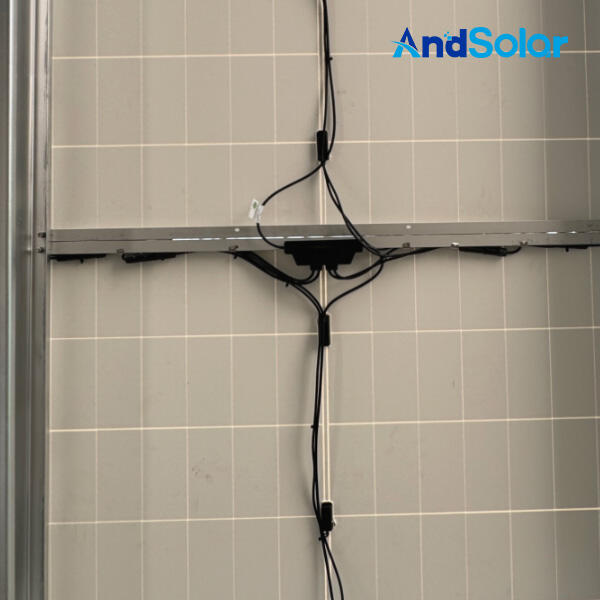
The transformation of sunlight into usable electrical energy represents one of humanity's most significant technological achievements in renewable energy. Modern photovoltaic cells have undergone remarkable evolution since their inception, achieving conversion efficiencies that were once considered theoretically impossible. Understanding the mechanisms behind this enhanced performance requires examining the sophisticated materials science, quantum physics principles, and engineering innovations that define contemporary solar technology. For industrial facilities, commercial installations, and residential applications alike, the efficiency gains in photovoltaic cells directly translate to reduced payback periods, smaller installation footprints, and improved return on investment across the system lifecycle.
The efficiency improvements in photovoltaic cells stem from multiple converging technological advancements that address fundamental energy loss mechanisms inherent in solar conversion processes. Traditional first-generation silicon cells were limited by thermalization losses, incomplete light absorption, and electron recombination at crystal boundaries. Modern photovoltaic cells overcome these limitations through advanced material architectures, passivation techniques, and light management strategies that capture previously wasted photon energy. These innovations have pushed commercial module efficiencies from historical averages of twelve to fifteen percent into the twenty to twenty-three percent range for standard installations, with laboratory devices exceeding forty-seven percent efficiency through multi-junction approaches. The practical implications of these efficiency gains extend beyond simple power output increases, fundamentally changing the economics and spatial requirements of solar energy deployment worldwide.
Advanced Material Engineering in Modern Photovoltaic Cells
High-Purity Silicon and Crystal Structure Optimization
The foundation of efficiency improvements in contemporary photovoltaic cells begins with the exceptional quality of silicon substrates used in manufacturing. Modern monocrystalline silicon wafers achieve purity levels exceeding 99.9999 percent, dramatically reducing defect sites where electron-hole pairs can recombinate before contributing to electrical current. The Czochralski growth process has been refined to produce larger ingots with fewer dislocations and oxygen precipitates, creating uniform crystalline structures that facilitate unimpeded charge carrier movement. This material perfection directly enhances the probability that photon-generated electrons will successfully traverse the cell structure and enter the external circuit rather than being lost to non-radiative recombination processes.
Beyond basic purity, the crystalline architecture itself has been optimized through controlled doping profiles and junction engineering. Modern photovoltaic cells incorporate carefully designed emitter regions with specific dopant concentration gradients that create built-in electric fields optimized for charge separation. The use of phosphorus diffusion for n-type layers and boron for p-type regions has been refined to atomic precision, establishing depletion zones with ideal width and field strength characteristics. These engineered junctions minimize series resistance while maximizing the driving force that sweeps photogenerated carriers toward collection electrodes, directly increasing the fill factor and overall conversion efficiency of the device.
Passivation Technologies Reducing Surface Recombination
Surface recombination has historically represented a major efficiency loss mechanism in photovoltaic cells, as dangling silicon bonds at crystal interfaces create energy states that trap charge carriers. Modern cells employ sophisticated passivation layers that chemically neutralize these surface states, dramatically reducing recombination velocity at critical interfaces. Aluminum oxide, silicon nitride, and hydrogenated amorphous silicon layers serve dual functions of passivating surface defects while also providing optical benefits through refractive index matching. The implementation of passivated emitter and rear cell (PERC) architecture has become standard in high-efficiency photovoltaic cells, adding reflective and passivating layers to the rear surface that were previously metallized directly to the silicon substrate.
The effectiveness of passivation is further enhanced through tunnel oxide structures that provide atomic-level interface quality between different semiconductor layers. These ultrathin oxide films, typically only one to two nanometers thick, allow quantum mechanical tunneling of majority carriers while blocking minority carrier recombination. When combined with polysilicon contact layers, this passivated contact technology has enabled laboratory photovoltaic cells to achieve efficiencies exceeding twenty-six percent for single-junction silicon devices. The industrial implementation of these passivation schemes requires precise process control and advanced deposition equipment, but the resulting efficiency gains of two to three percentage points absolute justify the manufacturing complexity for premium solar products.
Light Management Strategies Maximizing Photon Capture
Textured Surfaces and Anti-Reflective Coatings
Optical losses from front surface reflection have been systematically minimized in modern photovoltaic cells through multi-scale light management approaches. Microscale pyramid texturing created through anisotropic etching of silicon surfaces ensures that reflected light strikes adjacent pyramid faces, providing multiple opportunities for photon entry into the semiconductor material. This geometric light trapping reduces front surface reflection from approximately thirty percent for polished silicon down to less than three percent for optimally textured surfaces. The random pyramid structures characteristic of monocrystalline photovoltaic cells also increase the effective optical path length within the absorber layer, enhancing absorption of longer wavelength photons that would otherwise pass through thinner regions.
Anti-reflective coating technology has advanced beyond simple quarter-wave silicon nitride layers to include multi-layer dielectric stacks with engineered refractive index profiles. These coatings are designed to minimize reflection across the broad solar spectrum from ultraviolet through near-infrared wavelengths, rather than optimizing for a single wavelength as earlier designs did. Modern photovoltaic cells frequently incorporate double-layer anti-reflective schemes combining silicon nitride with titanium dioxide or aluminum oxide to achieve reflection below two percent across the peak solar irradiance spectrum. Some advanced designs now integrate nanostructured moth-eye patterns that provide gradient refractive index transitions, nearly eliminating reflection through biomimetic optical principles adapted from insect vision systems.
Rear Surface Reflection and Bifacial Light Collection
The rear surface of photovoltaic cells has evolved from simple metal backing to sophisticated optical structures that reflect unabsorbed photons back through the active silicon layer for a second absorption opportunity. White dielectric rear reflectors combined with localized contact points create high rear surface albedo while maintaining electrical connectivity, effectively increasing the optical thickness of the cell without adding material. This rear surface engineering contributes efficiency gains of approximately one percentage point absolute by capturing photons in the red and near-infrared spectrum that were not absorbed during their initial pass through the silicon wafer.
Bifacial photovoltaic cells represent an advanced light management strategy that collects illumination from both the front and rear surfaces, exploiting reflected ground radiation and diffuse skylight that would otherwise be wasted. These designs require transparent or reflective rear structures that allow light entry while maintaining passivation quality and electrical performance. When deployed in appropriate mounting configurations with reflective ground surfaces or elevated installations, bifacial photovoltaic cells can generate ten to thirty percent additional energy compared to monofacial equivalents of the same rated power. This bifacial gain is particularly pronounced in snow-covered environments, near water bodies, or in installations using white roofing membranes that create high-albedo backgrounds.
Advanced Junction Designs and Carrier Collection
Selective Emitter and Localized Contact Schemes
Conventional photovoltaic cells faced a fundamental tradeoff between achieving low sheet resistance for efficient lateral current collection and maintaining high surface passivation quality. Heavily doped emitter regions provided good electrical conductivity but created increased Auger recombination and reduced blue light response due to dead layer effects. Modern selective emitter technology resolves this conflict by implementing spatially varying doping profiles, with heavily doped regions only beneath metal contacts where low resistance is critical, and lightly doped areas between contacts where passivation quality dominates performance. This selective doping approach typically improves efficiency by 0.3 to 0.5 percentage points absolute through simultaneous optimization of electrical and optical properties.
Interdigitated back contact (IBC) designs represent the ultimate evolution of contact optimization, relocating all metallization to the rear surface of photovoltaic cells to eliminate front surface shading losses entirely. This architecture requires sophisticated processing to create interleaved n-type and p-type contact regions on the rear surface, connected by buried junction structures that collect carriers generated throughout the silicon volume. While manufacturing complexity is substantial, IBC photovoltaic cells achieve the highest efficiencies of any commercial silicon technology, routinely exceeding twenty-three percent in production and reaching twenty-six percent in optimized designs. The absence of front surface gridlines also provides aesthetic advantages valued in premium residential installations where visual appearance influences purchasing decisions.
Heterojunction Technology and Carrier Selectivity
Silicon heterojunction (HJT) photovoltaic cells combine crystalline silicon absorbers with thin-film amorphous silicon layers that provide exceptional surface passivation and carrier-selective contact properties. The heterojunction interface creates band alignment that facilitates collection of one carrier type while blocking the opposite polarity, enabling near-ideal charge separation without heavily doped regions that introduce recombination. These devices operate at lower processing temperatures than conventional cells, preserving material quality while reducing thermal budget and energy consumption during manufacturing. Commercial HJT photovoltaic cells routinely achieve efficiencies above twenty-four percent with excellent temperature coefficients, maintaining performance advantages in real-world elevated temperature operating conditions.
The carrier selectivity principle extends beyond HJT architectures to include various tunnel oxide passivated contact (TOPCon) designs that use thin oxide layers and doped polysilicon to achieve similar functional results through different material combinations. These carrier-selective structures enable photovoltaic cells to approach theoretical efficiency limits by simultaneously maximizing open-circuit voltage through excellent surface passivation while maintaining high fill factors through low-resistance contact interfaces. The flexibility of selective contact technology allows optimization for different manufacturing environments and cost structures, with multiple pathways available for producers to exceed twenty-four percent efficiency in volume production while maintaining acceptable manufacturing economics.
Multi-Junction Approaches for Spectrum Optimization
Tandem Cell Architectures and Bandgap Engineering
Single-junction photovoltaic cells face fundamental efficiency limitations imposed by the Shockley-Queisser limit, which restricts conversion efficiency to approximately thirty-three percent for optimal bandgap materials under one-sun illumination. This limitation arises because high-energy photons lose their excess energy as heat through thermalization, while low-energy photons below the bandgap energy are not absorbed at all. Multi-junction or tandem photovoltaic cells overcome this constraint by stacking subcells with different bandgap energies, allowing each layer to efficiently convert a specific portion of the solar spectrum. Wide-bandgap top cells absorb high-energy photons without thermalization losses, while narrower-bandgap bottom cells capture longer wavelength light that passes through the upper layers.
Perovskite-silicon tandem photovoltaic cells currently represent the most commercially promising multi-junction approach, combining the tunable bandgap and solution-processable nature of perovskite materials with the mature technology and excellent infrared response of crystalline silicon. Laboratory devices have demonstrated efficiencies exceeding thirty-two percent, substantially surpassing the best single-junction silicon cells, with clear pathways toward thirty-five percent efficiency through continued optimization. The perovskite top cell is typically configured with a bandgap near 1.68 electron-volts to optimally divide the solar spectrum with the 1.12 electron-volt silicon bottom cell. While stability challenges have historically limited perovskite commercialization, recent encapsulation advances and compositional engineering have achieved operational lifetimes approaching commercial viability thresholds.
Spectral Splitting and Concentration Systems
Concentrator photovoltaic (CPV) systems use optical elements to focus sunlight onto small, ultra-high-efficiency multi-junction cells, achieving system efficiencies that exceed conventional flat-plate technologies. These systems typically employ triple-junction or quadruple-junction photovoltaic cells fabricated from III-V semiconductor materials including gallium arsenide, indium gallium phosphide, and germanium in optimized bandgap sequences. Under concentration ratios of 500 to 1000 suns, these devices achieve conversion efficiencies exceeding forty-five percent in commercial products and have demonstrated forty-seven percent in research configurations. The use of expensive III-V materials becomes economically justified because concentration reduces the required semiconductor area by the concentration factor, with relatively inexpensive optical elements providing the light collection function.
Spectral beam splitting represents an alternative approach to multi-junction concepts, using dichroic filters or diffractive optics to divide incoming sunlight by wavelength and direct different spectral bands to optimized single-junction photovoltaic cells. This architecture avoids the series-connection constraint of monolithic tandem cells, allowing independent optimization of voltage and current for each spectral region. While adding optical and mechanical complexity, spectral splitting systems can theoretically achieve higher efficiencies than equivalent monolithic tandems by eliminating current-matching constraints. Practical implementations remain largely in research phases, but the concept demonstrates the continuing innovation in photovoltaic cell design aimed at extracting maximum energy from the broad solar spectrum through intelligent light management and material optimization strategies.
Thermal Management and Real-World Performance
Temperature Coefficient Optimization
The operating temperature of photovoltaic cells significantly impacts conversion efficiency, with conventional silicon cells losing approximately 0.4 to 0.5 percent of their rated power for each degree Celsius above standard test conditions. This temperature sensitivity arises from fundamental semiconductor physics, as elevated temperatures increase intrinsic carrier concentration and reduce bandgap energy, degrading open-circuit voltage and overall performance. Modern photovoltaic cells incorporate design features that minimize temperature coefficients, including optimized doping profiles, enhanced surface passivation, and material selections that exhibit reduced temperature sensitivity. Heterojunction and back-contact architectures demonstrate temperature coefficients as low as 0.25 percent per degree Celsius, maintaining substantially higher real-world energy yield in elevated temperature operating environments common in many deployment regions.
Thermal management extends beyond cell-level design to include module and system-level considerations that influence operating temperature under field conditions. The choice of encapsulation materials, backsheet color, and mounting configuration all affect module temperature and therefore energy production. White or reflective backsheets reduce heat absorption compared to traditional black designs, lowering operating temperature by five to ten degrees Celsius in full sun conditions. Ventilated mounting systems that allow airflow behind modules provide additional cooling benefits, particularly important for building-integrated photovoltaic applications where heat buildup can substantially degrade performance. The cumulative effect of improved temperature coefficients and thermal management strategies can increase annual energy yield by five to fifteen percent compared to conventional designs operated under identical environmental conditions.
Degradation Mechanisms and Long-Term Stability
The long-term efficiency retention of photovoltaic cells determines lifecycle energy production and economic viability over typical twenty-five to thirty year operational lifetimes. Modern cells exhibit substantially improved stability compared to earlier generations through better understanding and mitigation of degradation mechanisms including potential-induced degradation (PID), light-induced degradation (LID), and moisture ingress. Advanced encapsulation materials and module construction techniques minimize moisture and ion migration that drive PID, while improvements in silicon material quality and processing reduce boron-oxygen defect formation responsible for LID. Premium photovoltaic cells now demonstrate degradation rates below 0.5 percent per year, ensuring that modules retain over eighty-five percent of their initial efficiency after twenty-five years of operation.
Accelerated testing protocols and field monitoring programs provide increasingly accurate predictions of long-term performance, allowing manufacturers to warrant specific efficiency retention levels with confidence. The transition to n-type silicon substrates in many high-efficiency photovoltaic cells eliminates light-induced degradation entirely, as boron-oxygen defect formation does not occur in phosphorus-doped base material. This stability advantage adds to the efficiency benefits of n-type architectures including PERT, TOPCon, and HJT designs, making them attractive despite higher manufacturing costs. The combination of high initial efficiency and excellent long-term stability maximizes lifetime energy production per unit of installed capacity, directly improving the economics and sustainability profile of solar energy systems across residential, commercial, and utility-scale applications.
FAQ
What is the highest efficiency achieved by modern photovoltaic cells in commercial production?
Commercial photovoltaic cells currently achieve efficiencies ranging from twenty to twenty-four percent in volume production, with premium monocrystalline silicon modules incorporating PERC, TOPCon, or heterojunction technology reaching the upper end of this range. The highest efficiency commercial product currently available uses interdigitated back-contact heterojunction architecture and exceeds twenty-four percent module efficiency. Laboratory record efficiencies substantially exceed commercial values, with single-junction silicon cells reaching 26.7 percent and multi-junction tandem designs surpassing thirty-two percent, indicating continued potential for commercial efficiency improvements as research innovations transition to manufacturing.
How do efficiency improvements in photovoltaic cells translate to practical benefits for system owners?
Higher efficiency photovoltaic cells generate more electricity from the same physical area, reducing the number of modules required for a target power output and decreasing installation costs through reduced mounting hardware, wiring, and labor. For space-constrained applications such as residential rooftops, efficiency gains directly increase the maximum system size that can be installed, improving project economics and energy independence. Higher efficiency also improves energy yield per dollar invested in the system, accelerating payback periods and increasing return on investment. In utility-scale projects, efficiency reduces land requirements and balance-of-system costs, improving project viability and enabling solar deployment in regions where land availability or cost would otherwise be prohibitive.
Why do photovoltaic cells lose efficiency at higher operating temperatures?
Temperature-induced efficiency loss in photovoltaic cells results primarily from increased intrinsic carrier concentration and reduced bandgap energy in semiconductor materials at elevated temperatures. As temperature rises, the thermal generation of electron-hole pairs increases, raising the dark saturation current and reducing open-circuit voltage according to fundamental diode equations. The bandgap narrowing with temperature also shifts the spectral response and affects carrier mobility and lifetime. These effects combine to reduce voltage output more rapidly than any offsetting current increases from improved carrier mobility, resulting in net power loss. Advanced cell designs minimize temperature sensitivity through superior surface passivation and optimized doping profiles that reduce sensitivity to intrinsic carrier concentration changes.
What role do photovoltaic cells play in achieving grid parity and renewable energy transition goals?
The efficiency improvements in modern photovoltaic cells have been instrumental in achieving grid parity where solar electricity costs equal or undercut conventional generation in many global markets. Each percentage point efficiency gain reduces the levelized cost of energy by improving power output without proportionally increasing system costs, accelerating adoption across residential, commercial, and utility sectors. High-efficiency photovoltaic cells enable distributed generation on limited roof space, reducing transmission losses and enhancing grid resilience through decentralized energy production. As efficiency continues improving toward theoretical limits through tandem architectures and advanced light management, solar photovoltaic technology is positioned to provide an increasing share of global electricity generation, contributing substantially to decarbonization objectives and climate change mitigation efforts while delivering economic benefits through reduced energy costs.
Table of Contents
- Advanced Material Engineering in Modern Photovoltaic Cells
- Light Management Strategies Maximizing Photon Capture
- Advanced Junction Designs and Carrier Collection
- Multi-Junction Approaches for Spectrum Optimization
- Thermal Management and Real-World Performance
-
FAQ
- What is the highest efficiency achieved by modern photovoltaic cells in commercial production?
- How do efficiency improvements in photovoltaic cells translate to practical benefits for system owners?
- Why do photovoltaic cells lose efficiency at higher operating temperatures?
- What role do photovoltaic cells play in achieving grid parity and renewable energy transition goals?
