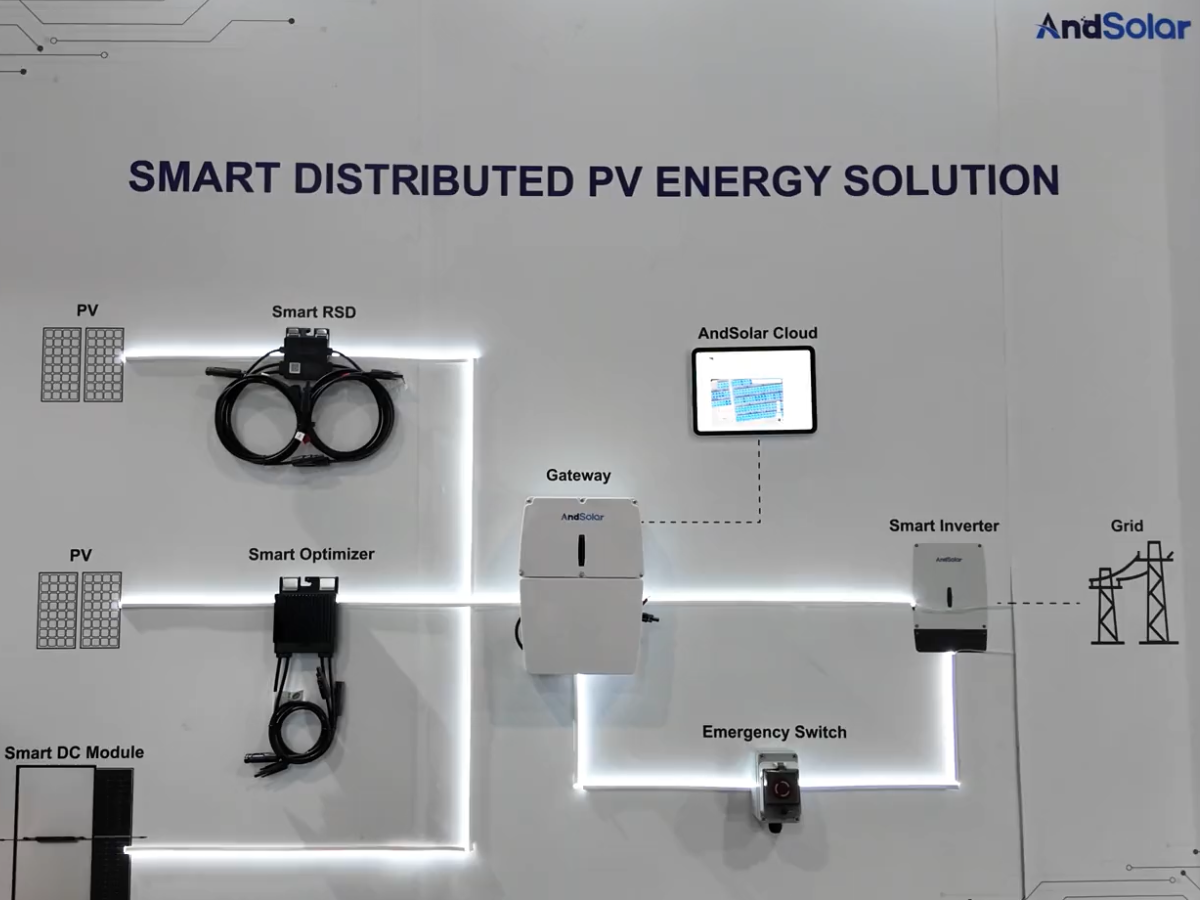
Urban environments face a critical challenge in meeting growing energy demands while reducing carbon emissions and achieving sustainability goals. As cities account for over 70% of global energy consumption and a similar proportion of greenhouse gas emissions, the urgency to transition toward clean energy solutions has never been more pressing. Distributed PV systems emerge as a transformative solution that integrates solar photovoltaic technology directly into urban infrastructure, enabling cities to generate electricity at or near the point of consumption. Unlike traditional centralized power plants that require extensive transmission networks, these systems leverage rooftops, building facades, parking structures, and other urban surfaces to capture solar energy efficiently. This decentralized approach addresses the unique spatial constraints of dense urban areas while simultaneously reducing transmission losses, enhancing grid resilience, and empowering communities to participate actively in the energy transition.
The question of whether distributed PV systems hold the key to unlocking urban renewable energy potential requires examining multiple dimensions including technical feasibility, economic viability, policy frameworks, and practical implementation challenges. Cities possess vast untapped solar potential across millions of square meters of rooftop space, yet harnessing this resource effectively demands sophisticated planning, advanced technology integration, and coordinated stakeholder engagement. The adoption of distributed PV systems represents more than simply installing solar panels on buildings; it fundamentally reshapes how urban areas produce, distribute, and consume electricity. This transformation creates opportunities for reducing peak demand stress on centralized grids, enabling energy independence for building owners, fostering local economic development through green jobs, and accelerating progress toward municipal climate commitments. Understanding the full scope of how distributed PV systems can unlock urban renewable energy potential requires analyzing their technical capabilities, economic advantages, implementation strategies, and the evolving regulatory landscape that either facilitates or constrains their deployment.
Technical Capabilities That Position Distributed PV Systems as Urban Energy Solutions
Spatial Efficiency and Utilization of Existing Urban Infrastructure
One of the most compelling technical advantages of distributed PV systems lies in their ability to convert underutilized urban surfaces into productive energy assets without requiring additional land acquisition. Cities typically feature extensive rooftop areas on residential buildings, commercial complexes, industrial facilities, and public structures that receive substantial solar irradiation throughout the year. Research indicates that rooftop solar installations in major metropolitan areas could potentially meet between 30% and 50% of total urban electricity demand, depending on factors such as building density, roof orientation, shading patterns, and local solar resources. Beyond horizontal rooftop surfaces, distributed PV systems can be integrated into vertical building facades through building-integrated photovoltaics, installed over parking lots using solar carports, and deployed on noise barriers along transportation corridors. This multidimensional approach to solar capture maximizes energy generation within the spatial constraints that define urban environments, eliminating the need for remote utility-scale solar farms that require extensive transmission infrastructure and suffer from line losses during electricity transport.
The modular nature of distributed PV systems enables flexible scaling to match specific building loads and architectural constraints. Unlike centralized power generation facilities that must be constructed at predetermined capacities, distributed solar installations can be sized precisely to align with individual building energy profiles, available mounting space, and budget considerations. This scalability extends from small residential systems generating a few kilowatts to large commercial installations producing multiple megawatts across sprawling warehouse rooftops or corporate campuses. Advanced mounting systems, lightweight solar panel technologies, and streamlined installation techniques have evolved to accommodate diverse roof types including flat commercial roofs, sloped residential roofs, and structurally complex heritage buildings. Modern distributed PV systems incorporate smart inverters with grid-support functionalities, enabling them to provide voltage regulation, frequency response, and reactive power support that enhances overall grid stability rather than simply acting as passive energy sources.
Advanced Energy Management and Grid Integration Technologies
Contemporary distributed PV systems incorporate sophisticated monitoring, control, and optimization technologies that transform them from simple electricity generators into intelligent energy assets. Real-time monitoring systems track performance metrics including energy production, system efficiency, inverter operation, and potential fault conditions, enabling predictive maintenance and maximizing system uptime. When paired with battery energy storage systems, distributed PV installations can store excess solar generation during peak production hours and dispatch stored energy during evening demand peaks or grid emergencies. This capability fundamentally changes the value proposition of distributed solar by enabling time-shifting of renewable generation to match consumption patterns, providing backup power during outages, and participating in demand response programs that compensate building owners for reducing grid stress during critical periods. Energy management systems can optimize the interaction between solar generation, battery storage, building loads, and grid electricity to minimize costs while maximizing renewable energy utilization and self-consumption rates.
The integration of distributed PV systems with smart grid infrastructure creates opportunities for coordinated control across thousands of individual installations, effectively aggregating distributed resources into virtual power plants that can respond to grid operator signals. Advanced inverters with communication capabilities enable distribution system operators to curtail solar generation during oversupply conditions, adjust power output to support voltage regulation, and coordinate distributed energy resources to provide ancillary services traditionally supplied by conventional power plants. Microgrid configurations that interconnect multiple distributed PV systems within defined geographic areas can operate independently from the main grid during emergencies, enhancing community resilience and ensuring critical facility operation during natural disasters or grid failures. These technical capabilities position distributed PV systems not merely as supplemental energy sources but as foundational elements of modernized urban energy infrastructure that can balance variable renewable generation, optimize resource utilization, and maintain grid reliability as fossil fuel generation capacity declines.
Economic Drivers Supporting Distributed PV System Deployment in Urban Areas
Declining Technology Costs and Favorable Financial Returns
The economic case for distributed PV systems has strengthened dramatically over the past decade as photovoltaic module prices have fallen by more than 90% since 2010, driven by manufacturing scale economies, technological improvements, and competitive market dynamics. Residential and commercial solar installation costs have similarly declined, with typical system prices in mature markets now ranging between one and two dollars per watt installed, depending on system size, location, and site complexity. These cost reductions have pushed distributed PV systems across the threshold of grid parity in many urban markets, meaning solar-generated electricity costs less than retail electricity purchased from utility providers. For commercial and industrial building owners facing high electricity rates during daytime peak periods, distributed PV systems deliver immediate operational cost savings that typically generate payback periods between five and eight years, followed by decades of nearly free electricity generation. The combination of declining upfront costs, rising retail electricity prices, and available financial incentives creates compelling investment returns that increasingly attract private capital without requiring subsidies.
Distributed PV systems generate multiple revenue streams and value components beyond simple electricity bill savings, enhancing their overall financial attractiveness. Net metering policies in many jurisdictions allow building owners to receive retail credit for excess solar generation exported to the grid, effectively using the utility network as virtual storage and maximizing system value. Time-of-use electricity rate structures that charge premium prices during afternoon and early evening hours align particularly well with solar generation patterns, enabling distributed PV systems to offset the most expensive grid electricity. Federal investment tax credits, accelerated depreciation schedules, state and local rebate programs, and renewable energy certificate markets provide additional financial benefits that improve project economics. Third-party ownership models including solar leases and power purchase agreements eliminate upfront capital requirements for building owners, allowing them to adopt distributed PV systems with zero money down while immediately reducing electricity costs. These diverse financing mechanisms have democratized access to solar technology across different building types, ownership structures, and financial situations, accelerating deployment rates in urban markets.
Risk Mitigation and Long-Term Energy Cost Stability
Beyond direct financial returns, distributed PV systems provide building owners and urban organizations with protection against electricity price volatility and long-term energy cost certainty. Conventional grid electricity prices fluctuate based on natural gas prices, generation fuel costs, transmission infrastructure investments, and regulatory policy changes, creating budgetary uncertainty for businesses and institutions with substantial energy expenses. Once installed, distributed PV systems generate electricity at a fixed, predictable cost determined by the initial capital investment and minimal ongoing maintenance requirements, effectively locking in energy prices for 25 to 30 years. This cost stability proves particularly valuable for organizations operating on fixed budgets including schools, hospitals, government facilities, and nonprofit organizations that struggle to accommodate unexpected utility cost increases. Corporate sustainability commitments and environmental, social, and governance investment criteria increasingly drive distributed PV system adoption as companies seek to demonstrate climate leadership, reduce scope 2 emissions from purchased electricity, and differentiate their brands through authentic environmental action.
The property value enhancement associated with distributed PV systems represents an additional economic benefit that strengthens their investment case. Multiple studies demonstrate that residential properties equipped with solar installations command sale price premiums averaging between three and four percent compared to comparable non-solar homes, translating to thousands of dollars in added value. Commercial real estate with distributed PV systems attracts tenants seeking operational cost savings and sustainability credentials while commanding higher lease rates and improved occupancy rates. Green building certifications including LEED, BREEAM, and WELL recognize distributed PV systems as contributing toward energy performance credits, further enhancing property marketability and tenant appeal. As corporate tenants increasingly prioritize sustainable workspaces and institutional investors incorporate climate risk assessments into property valuations, buildings without distributed energy resources may face competitive disadvantages and potential obsolescence risks. These compounding economic advantages position distributed PV systems as strategic investments that deliver financial returns, operational benefits, risk mitigation, and asset value appreciation simultaneously.
Implementation Strategies for Maximizing Urban Distributed PV System Potential
Comprehensive Solar Resource Assessment and Site Suitability Analysis
Successful deployment of distributed PV systems across urban landscapes requires systematic assessment of solar resource potential, identification of suitable installation sites, and prioritization of high-value opportunities. Advanced geospatial analysis tools combining light detection and ranging data, satellite imagery, and building footprint databases enable municipalities to create detailed solar potential maps that quantify available rooftop area, estimate generation capacity, and calculate economic returns for every building within city boundaries. These assessments account for critical factors including roof orientation, tilt angle, shading from adjacent structures and vegetation, structural load capacity, and proximity to electrical service equipment. Solar access regulations that protect property owners' rights to receive sunlight can preserve long-term generation potential by preventing new construction from shading existing or planned distributed PV systems. Publicly accessible solar mapping platforms empower building owners to evaluate their properties' solar potential, estimate system costs and savings, and connect with qualified installers, reducing information barriers that historically impeded adoption.
Prioritizing distributed PV system deployment on public buildings, affordable housing developments, and underserved communities addresses energy equity concerns while demonstrating municipal commitment to renewable energy. Schools, libraries, community centers, water treatment facilities, and municipal offices typically offer substantial roof areas, predictable daytime electricity consumption that aligns with solar generation, and long-term ownership horizons that maximize investment returns. Installing distributed PV systems on affordable housing properties reduces energy burden for low-income residents who spend disproportionate percentages of household income on utility bills while improving building resilience and indoor environmental quality. Community solar programs that allow multiple subscribers to share output from centralized distributed PV installations extend solar access to renters, condominium residents, and property owners with unsuitable roofs, ensuring equitable participation in urban renewable energy transitions. Strategic site selection that balances technical suitability, economic viability, community benefit, and scalability potential accelerates distributed PV system deployment while maximizing social and environmental impact.
Streamlined Permitting, Interconnection, and Installation Processes
Administrative barriers including complex permitting procedures, lengthy interconnection reviews, and inconsistent inspection requirements significantly impact distributed PV system deployment timelines and costs. Leading cities have implemented streamlined permitting processes that standardize application requirements, establish clear approval timelines, and provide online submission portals that reduce processing time from weeks to days. Model ordinances developed by organizations like SolSmart and the Interstate Renewable Energy Council provide municipalities with proven frameworks for simplified residential solar permitting that eliminates unnecessary requirements while maintaining safety standards. Automated permit approval systems that instantly authorize compliant applications for standardized distributed PV systems further reduce delays and administrative costs. Interconnection procedures that govern how distributed generation connects to utility distribution networks require similar streamlining, with fast-track approval processes for small systems meeting technical standards and transparent queue management for larger installations.
Building code provisions that require solar-ready design features in new construction reduce future installation costs and facilitate distributed PV system adoption. Solar-ready requirements typically mandate conduit pathways, designated inverter and battery storage locations, adequate electrical panel capacity, and roof structural specifications that eliminate retrofitting expenses. Some jurisdictions have advanced beyond solar-ready requirements to mandate actual distributed PV system installation on new residential and commercial buildings, directly integrating renewable generation into urban development patterns. Workforce development initiatives that train electricians, contractors, and building inspectors on distributed PV system installation standards, safety protocols, and performance optimization ensure adequate skilled labor supply to support deployment scaling. Industry certification programs, apprenticeship opportunities, and technical college curricula focused on solar technology create career pathways while building local capacity for distributed energy transitions. These implementation strategies remove friction from adoption processes, reduce soft costs that comprise significant portions of total system expenses, and establish institutional frameworks that normalize distributed PV systems as standard building features rather than specialized additions.
Policy Frameworks and Regulatory Conditions Enabling Distributed PV System Growth
Net Metering, Compensation Mechanisms, and Grid Access Rights
Net metering policies that credit distributed PV system owners at retail electricity rates for excess generation exported to the grid represent foundational regulatory support that maximizes economic returns and accelerates adoption. Under net metering frameworks, bidirectional utility meters track both electricity consumption and solar generation, with customers paying only for net electricity usage over monthly or annual billing periods. This arrangement effectively values distributed solar generation at the avoided cost of purchasing grid electricity, creating strong financial incentives particularly in jurisdictions with high retail rates. However, net metering policies face ongoing challenges from utilities and regulators who argue that distributed PV system owners do not pay sufficient grid infrastructure costs, leading to cost shifts onto non-solar customers. Alternative compensation mechanisms including value-of-solar tariffs, grid export credits below retail rates, and capacity-based charges attempt to balance distributed generation compensation with cost recovery requirements while maintaining sufficient financial incentives to support continued deployment.
Interconnection standards that establish clear technical requirements, standardized application procedures, and defined approval timelines reduce uncertainty and ensure distributed PV systems can reliably and safely connect to distribution networks. Model interconnection standards specify equipment requirements including IEEE 1547-compliant inverters with anti-islanding protection, automatic disconnection capabilities, and voltage/frequency ride-through functions that maintain grid stability. Interconnection fees charged by utilities to process applications and study grid impacts should reflect actual administrative costs rather than creating artificial barriers to distributed generation. Third-party ownership policies that explicitly allow solar leases, power purchase agreements, and community solar subscriptions expand financing options and enable distributed PV system adoption among building owners unable or unwilling to make upfront capital investments. Virtual net metering provisions that allocate solar credits across multiple customer accounts enable community solar projects and shared renewable energy facilities that extend access beyond property owners with suitable installation sites.
Building Codes, Zoning Regulations, and Solar Access Protection
Local building codes and zoning ordinances significantly influence distributed PV system deployment through regulations governing setback requirements, height restrictions, fire access pathways, and aesthetic standards. Outdated or overly restrictive codes can unnecessarily limit system size, increase installation complexity, or prohibit certain mounting configurations without providing commensurate safety or community benefits. Progressive building codes incorporate updated solar installation standards that reflect current best practices, such as allowing solar panels to extend beyond traditional roof setback requirements when adequate fire department access exists through alternative means. Zoning provisions that classify distributed PV systems as accessory uses permitted by right in all zoning districts eliminate discretionary approval processes and associated delays. Aesthetic regulations that prohibit visible solar installations or mandate expensive screening measures in historic districts or homeowner associations create barriers that discourage adoption despite technical and economic feasibility.
Solar access laws that protect property owners' rights to install distributed PV systems and receive sunlight prevent restrictive covenants, homeowner association rules, and neighboring development from blocking solar adoption. These statutes typically prohibit blanket bans on solar installations while allowing reasonable restrictions related to safety, structural integrity, and genuine aesthetic concerns. Solar easements that legally protect existing or planned distributed PV systems from future shading by neighboring trees or structures provide long-term generation security. Renewable portfolio standards that require utilities to source specified percentages of electricity from renewable resources create market demand for distributed generation and may include specific carve-outs or multipliers for distributed PV systems. Clean energy financing programs including property assessed clean energy mechanisms allow building owners to finance distributed PV systems through property tax assessments, eliminating upfront costs while repaying investments through long-term, transferable obligations tied to properties rather than individuals.
Challenges and Considerations for Distributed PV System Scaling
Grid Integration Complexities and Distribution System Management
While distributed PV systems offer numerous benefits, their proliferation introduces technical challenges for distribution system operators managing electrical networks designed for unidirectional power flow from centralized generators to end-use customers. High penetrations of distributed solar generation can cause voltage fluctuations, reverse power flows, protection coordination issues, and transformer overloading in distribution circuits not engineered to accommodate variable bidirectional energy flows. During periods of high solar production and low local demand, distributed PV systems may export substantial electricity to the grid, potentially causing voltage rise that exceeds equipment ratings and triggers inverter disconnections. Advanced inverter functions including voltage regulation, reactive power compensation, and curtailment capabilities help mitigate these issues, but utilities must update protection schemes, upgrade distribution infrastructure, and implement sophisticated monitoring systems to safely accommodate increasing distributed generation penetrations.
The intermittent nature of solar generation creates grid management challenges as cloud movements cause rapid power output fluctuations across distributed PV systems within service territories. While individual system variability tends to average out across large numbers of distributed installations, localized weather events can simultaneously affect multiple systems, creating significant ramp rates that require conventional generation or energy storage to compensate. Distribution system operators require enhanced forecasting tools, real-time visibility into distributed generation output, and communication infrastructure enabling direct control or economic signals that incentivize distributed resource coordination. Hosting capacity analyses that determine how much distributed PV capacity individual distribution circuits can accommodate without infrastructure upgrades help utilities and regulators establish interconnection policies while identifying priority locations for grid modernization investments. As distributed PV systems comprise growing shares of total generation capacity, maintaining grid reliability requires evolution toward distributed energy resource management systems that actively coordinate thousands of small generators rather than passively accommodating their output.
Economic and Social Equity Considerations in Urban Solar Deployment
Despite declining costs, distributed PV systems remain largely inaccessible to low-income households, renters, and residents of multifamily buildings who face financial barriers, split incentives between building owners and tenants, or physical limitations preventing installations. This deployment pattern risks exacerbating energy inequity as affluent homeowners capture solar economic benefits and policy incentives while disadvantaged communities continue bearing high energy costs and disproportionate pollution burdens from fossil fuel generation. Addressing these equity gaps requires targeted programs including solar financing assistance, community solar access for non-homeowners, prioritized incentives for low-income installations, and workforce development initiatives creating green economy opportunities in underserved communities. Utilities and regulators must carefully design rate structures and cost recovery mechanisms that avoid shifting grid maintenance costs onto non-solar customers who may be least able to afford increased electricity rates.
The distributed nature of PV systems creates opportunities for local economic development through installation jobs, maintenance services, and retained energy expenditures that would otherwise flow to distant utility companies or fossil fuel suppliers. Maximizing local economic benefits requires workforce training programs, apprenticeship opportunities, and small business support enabling community residents to participate in solar deployment. Community ownership models that allow collective investment in distributed PV systems through cooperatives, municipal utilities, or community development financial institutions can democratize solar benefits while building local wealth. Ensuring that urban renewable energy transitions driven by distributed PV systems advance rather than undermine equity objectives demands intentional policy design, inclusive planning processes, and sustained commitment to distributing costs and benefits fairly across all community segments.
FAQ
What makes distributed PV systems particularly suitable for urban environments compared to rural areas?
Distributed PV systems prove especially suitable for urban environments because they leverage existing building infrastructure rather than requiring dedicated land, which is scarce and expensive in cities. Urban areas feature high electricity demand concentrated in relatively small geographic footprints, meaning distributed generation can directly serve local loads without transmission losses. The high density of buildings provides vast rooftop surface area that collectively represents significant generation potential, while commercial and industrial facilities with large roof areas and high daytime electricity consumption achieve particularly strong economic returns. Urban electricity rates typically exceed rural rates due to higher distribution costs and demand charges, improving distributed PV system financial viability. Additionally, cities face greater air quality challenges from fossil fuel generation and possess stronger political will to pursue climate solutions, creating supportive policy environments that facilitate distributed solar deployment.
Can distributed PV systems function during grid outages to provide backup power?
Standard distributed PV systems without battery storage automatically disconnect from the grid during outages for safety reasons, preventing solar panels from energizing distribution lines that utility workers assume are de-energized during repairs. However, when paired with battery energy storage systems and appropriate transfer switches or microgrid controllers, distributed PV installations can provide backup power during grid failures. These systems detect outages, disconnect from the main grid, and form isolated microgrids that continue powering critical building loads using stored battery energy supplemented by real-time solar generation. The backup power duration depends on battery capacity, building electricity consumption, and available solar generation during the outage. Some advanced systems prioritize essential circuits like refrigeration, lighting, and communication equipment to maximize backup duration. Building owners seeking resilience benefits must specifically design distributed PV systems with battery storage and backup capabilities, which increases upfront costs but provides valuable energy security.
How do distributed PV systems impact property values and real estate transactions?
Research consistently demonstrates that distributed PV systems increase residential property values, with studies showing sale price premiums ranging from three to four percent compared to similar homes without solar installations. This value addition reflects the capitalized present value of future electricity cost savings that transfer to new owners. Commercial properties with distributed PV systems benefit from reduced operating expenses, enhanced sustainability credentials, and improved tenant attraction, leading to higher lease rates and property valuations. However, third-party owned systems under lease or power purchase agreements can complicate transactions since ownership arrangements must transfer to buyers or be terminated early, sometimes requiring payoffs. Owned systems that are fully paid off represent unencumbered assets that clearly add value, while systems financed through property assessed clean energy loans transfer obligations to new owners through property tax bills. Real estate appraisers increasingly recognize solar installations as valuable property improvements, though appraisal methodologies continue evolving to appropriately capture distributed PV system contributions to property worth.
What role do distributed PV systems play in achieving urban carbon neutrality goals?
Distributed PV systems represent critical components of urban decarbonization strategies because building energy consumption accounts for the majority of municipal greenhouse gas emissions in most cities. By generating clean electricity on-site, distributed solar installations directly displace fossil fuel generation that would otherwise serve building loads, reducing both direct emissions and grid electricity carbon intensity. The distributed nature of these systems enables scalable deployment across thousands of individual buildings, collectively generating substantial renewable capacity without requiring utility-scale solar farms outside city boundaries. When combined with building energy efficiency improvements, electric vehicle charging infrastructure, and heat pump systems replacing fossil fuel heating, distributed PV systems enable comprehensive building sector electrification powered by clean energy. Many cities have established ambitious carbon neutrality targets requiring near-complete elimination of fossil fuel use by mid-century, goals that cannot be achieved without massive deployment of distributed renewable generation. The local visibility of distributed PV systems also builds public awareness and support for climate action while demonstrating municipal commitment to sustainability goals.
Table of Contents
- Technical Capabilities That Position Distributed PV Systems as Urban Energy Solutions
- Economic Drivers Supporting Distributed PV System Deployment in Urban Areas
- Implementation Strategies for Maximizing Urban Distributed PV System Potential
- Policy Frameworks and Regulatory Conditions Enabling Distributed PV System Growth
- Challenges and Considerations for Distributed PV System Scaling
-
FAQ
- What makes distributed PV systems particularly suitable for urban environments compared to rural areas?
- Can distributed PV systems function during grid outages to provide backup power?
- How do distributed PV systems impact property values and real estate transactions?
- What role do distributed PV systems play in achieving urban carbon neutrality goals?
