Managing a solar installation at scale has always involved a fundamental tension: the need for granular visibility versus the operational complexity that comes with monitoring hundreds or thousands of individual components. For operations and maintenance teams, this tension becomes a daily challenge. Missing a single underperforming panel in a large array can quietly erode energy yield for weeks before it surfaces in aggregated data. MLPE panel-level diagnostics directly address this problem by shifting the monitoring paradigm from string-level guesswork to precise, component-by-component insight. Understanding how to leverage this capability effectively is what separates reactive maintenance from truly optimized O&M.
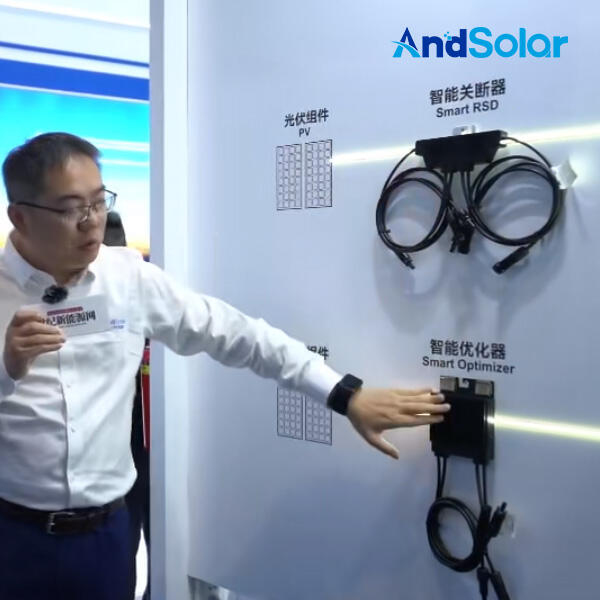
Module-Level Power Electronics, or MLPE, refers to devices such as microinverters and DC power optimizers that are attached directly to individual solar panels. Unlike traditional string inverter setups, MLPE systems communicate real-time performance data from each panel independently. This makes MLPE panel-level diagnostics not just a monitoring feature but a foundational operational tool. When combined with intelligent cloud-based management platforms, these diagnostics can streamline every phase of O&M—from fault identification and dispatch planning to long-term asset performance tracking. This article explains exactly how O&M teams can simplify their workflows by fully exploiting what MLPE panel-level diagnostics offer.
Understanding the O&M Burden Before MLPE
The Limitations of String-Level Monitoring
Before MLPE became widely adopted, most solar monitoring systems relied on data aggregated at the string or inverter level. In this setup, if one panel in a string of twenty began degrading due to soiling, shading, or cell damage, the only visible signal was a slight dip in the entire string's output. Identifying which panel was at fault required either a physical site inspection or time-consuming thermal imaging surveys. For large commercial or utility-scale installations, this translated into significant labor costs and extended periods of undetected yield loss.
String-level monitoring also made it difficult to distinguish between environmental factors—such as a passing cloud or seasonal shading—and genuine hardware faults. O&M teams often found themselves dispatched on-site only to discover that the anomaly had resolved itself or could not be reproduced. This kind of reactive, imprecise workflow is costly in both time and resources. The introduction of MLPE panel-level diagnostics fundamentally changed this dynamic by giving technicians exact fault coordinates before they ever leave the office.
The Compounding Cost of Invisible Degradation
One of the most significant financial risks in solar O&M is slow, invisible degradation. A panel operating at 85% of its rated capacity due to potential-induced degradation or micro-cracking may not trigger any threshold alert in a string-level system, yet over the course of a year, it represents a measurable revenue loss. Multiply that across dozens of panels across a large portfolio, and the cumulative effect becomes a serious performance problem.
Without MLPE panel-level diagnostics, this kind of gradual underperformance can persist for months. Asset owners have historically had no choice but to accept a degree of opaqueness in their performance data. Panel-level monitoring eliminates this blind spot entirely, providing the kind of resolution that makes proactive intervention both possible and practical. The transition from tolerating invisible degradation to actively managing it marks a fundamental improvement in O&M quality.
How MLPE Panel-Level Diagnostics Work in Practice
Real-Time Data Collection at the Module Level
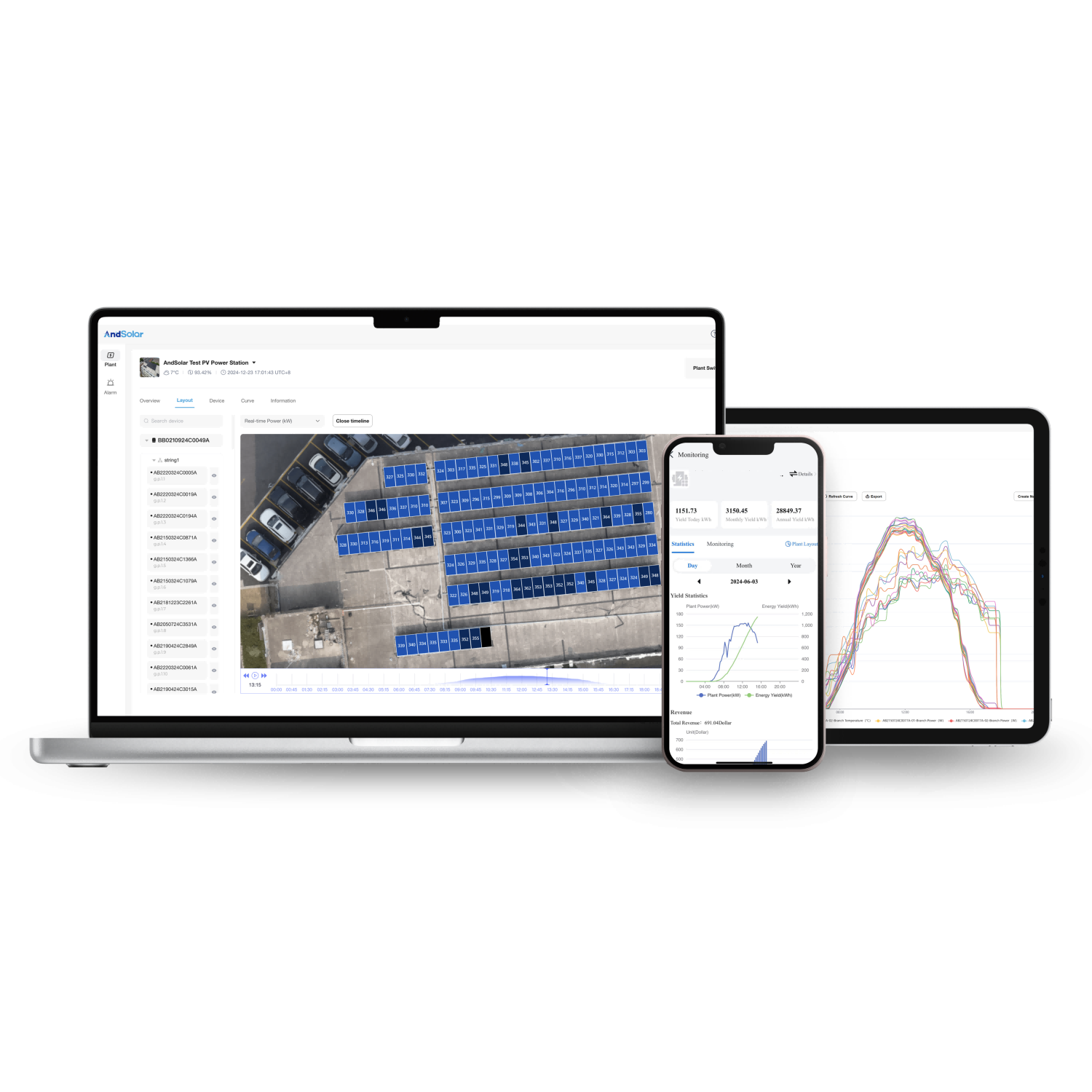
Each MLPE device—whether a microinverter or a power optimizer—continuously samples electrical parameters from the panel it is attached to. Voltage, current, power output, and temperature data are collected at short intervals and transmitted to a central monitoring platform. This produces a live performance map of every individual panel in the array. O&M teams can view this map at any time and immediately see which panels are performing within expected ranges and which are deviating.
MLPE panel-level diagnostics typically include fault classification algorithms that automatically categorize detected anomalies. Rather than simply flagging a low-output panel and leaving interpretation to the technician, these systems can distinguish between shade-related losses, connection issues, hardware faults, and performance degradation patterns. This kind of automated classification reduces diagnostic labor substantially and allows maintenance personnel to prepare correctly before arriving on site.
Alarm Management and Prioritization Logic
A monitoring system that generates hundreds of undifferentiated alerts is not useful—it simply creates noise. Effective MLPE panel-level diagnostics platforms incorporate intelligent alarm prioritization, grouping alerts by severity and type so that O&M teams can focus on issues that have the greatest impact on energy yield and system safety. A panel with a hard fault that is causing a complete output loss will be ranked higher than one showing a 5% degradation trend.
This prioritization logic is especially important for teams managing large portfolios across multiple sites. Without it, even highly capable monitoring data becomes overwhelming. By surfacing only the most actionable alerts in a structured and ranked format, MLPE panel-level diagnostics reduce decision fatigue and help O&M coordinators allocate field resources more efficiently. Technicians receive precise, pre-ranked work orders rather than raw data requiring manual interpretation.
Streamlining Maintenance Workflows with Panel-Level Data
Remote Fault Diagnosis Before Site Dispatch
One of the most immediate operational benefits of MLPE panel-level diagnostics is the ability to perform a thorough remote diagnosis before deciding to dispatch a technician. Because the system reports precise electrical parameters for each panel, a skilled O&M engineer can often determine the likely cause and severity of a fault from a desktop interface. This remote triage capability dramatically reduces unnecessary site visits, which are one of the largest variable costs in solar O&M.
When a dispatch is necessary, the technician arrives equipped with specific information: the exact panel location, the nature of the fault, and the recommended corrective action. This eliminates the exploratory phase of a maintenance visit—where a technician spends time simply identifying the problem—and allows the entire visit to focus on resolution. In practice, this can reduce average visit duration significantly, particularly on large rooftop or ground-mount installations where physical access to specific panels can itself be time-consuming.
Predictive Maintenance and Trend Analysis
Beyond reactive fault response, MLPE panel-level diagnostics enable a genuinely predictive approach to maintenance. By storing historical performance data for every individual panel, the monitoring platform can identify gradual degradation trends before they reach the threshold of a hard fault. A panel whose output has been declining by 0.3% per month over a six-month period is on a trajectory that maintenance teams should address proactively, even if its current absolute performance still looks acceptable.
Trend analysis at the panel level also helps O&M teams detect systemic issues. If a cluster of panels installed at the same time and in the same area begins showing similar degradation patterns, this may indicate a batch quality issue, a localized environmental problem, or an installation deficiency. Identifying these patterns early—as MLPE panel-level diagnostics make possible—allows corrective action before the problem propagates further. This proactive posture is the hallmark of mature, efficient O&M operations.
Performance Reporting and Asset Documentation
Accurate performance reporting is essential for asset owners, investors, and energy offtake counterparties who need to verify that a solar installation is meeting its contractual and financial obligations. MLPE panel-level diagnostics provide the most granular possible evidence base for performance reporting, allowing O&M teams to demonstrate exactly which panels were operational, what their output was, and how any deviations were addressed.
This level of documentation also has long-term asset value. When a system changes ownership or needs to be refinanced, comprehensive panel-level performance records serve as compelling evidence of proper maintenance and reliable yield history. Platforms that integrate MLPE panel-level diagnostics with automated report generation can significantly reduce the administrative burden of producing these records, freeing O&M staff to focus on technical rather than clerical work.
Leveraging Cloud Platforms for Centralized MLPE Management
Multi-Site Portfolio Visibility
For O&M organizations managing installations across multiple sites—whether commercial rooftops, ground-mount farms, or distributed residential portfolios—the ability to access all panel-level data through a single cloud interface is transformative. Rather than logging into separate systems for each site or compiling manually exported reports, operations managers can view the health status of every panel across their entire portfolio from one dashboard. This centralization is only possible because MLPE panel-level diagnostics generate standardized, structured data that cloud platforms can aggregate and display at scale.
Cloud-based management platforms designed for MLPE environments also support role-based access, allowing different team members—field technicians, site managers, asset managers, and finance teams—to see the data most relevant to their function. A field technician might see a work order queue derived from live fault alerts, while a portfolio manager reviews aggregate performance against modeled expectations. This layered access structure, built on a foundation of MLPE panel-level diagnostics, makes O&M both more efficient and more organizationally coherent. Platforms like MLPE panel-level diagnostics management tools are purpose-built to serve exactly this need across diverse installation portfolios.
Integration with Field Service Management
The value of MLPE panel-level diagnostics is fully realized when the monitoring platform connects directly with field service management tools. When a panel-level fault triggers an alarm, that alarm should automatically generate a service ticket, assign it based on technician location and availability, attach the relevant diagnostic data, and schedule the visit within the appropriate response window. This kind of integrated workflow eliminates the manual handoff between monitoring and dispatch—a common source of delays and errors in traditional O&M operations.
Integration also enables post-visit data capture. Once a technician resolves a fault and closes the service ticket, the monitoring platform can verify resolution by confirming that the affected panel's output has returned to expected levels. This closed-loop confirmation—made possible by the continuous data stream from MLPE panel-level diagnostics—provides quality assurance that manual inspection records cannot. It also creates an auditable maintenance history that supports warranty claims and performance guarantee compliance.
Practical Considerations for Implementing MLPE-Based O&M
Establishing Baselines and Alert Thresholds
Effective use of MLPE panel-level diagnostics requires establishing accurate performance baselines for each panel and each site. A panel in a high-shading environment will naturally underperform relative to nameplate capacity, and an alert threshold calibrated without accounting for that context will generate false positives that erode trust in the monitoring system. O&M teams should invest time during commissioning in configuring site-specific baseline models that reflect actual irradiance conditions, shading patterns, and system design parameters.
Once baselines are in place, alert thresholds can be set with much greater precision. MLPE panel-level diagnostics are most powerful when the thresholds triggering alerts are grounded in expected, site-calibrated performance rather than generic industry defaults. This configuration work pays dividends throughout the system's operational life by keeping alert accuracy high and reducing the noise that leads O&M teams to ignore or delay responding to genuine faults.
Training and Organizational Readiness
Deploying MLPE panel-level diagnostics successfully is not purely a technology challenge—it also requires organizational readiness. Field technicians need to understand how to interpret panel-level alerts and use the data provided to them during site visits. O&M managers need to build workflows that leverage remote diagnostic capability before dispatching personnel. And finance or asset management teams need to understand how panel-level data feeds into performance reporting and contractual compliance tracking.
Organizations that invest in training and workflow redesign alongside technology deployment consistently achieve better outcomes from MLPE panel-level diagnostics than those who simply install the hardware and platform without addressing process change. The diagnostic capability is only as valuable as the organization's ability to act on it promptly and correctly. Building that capability is an intentional organizational effort, not a default outcome of technology adoption.
FAQ
What is the difference between MLPE panel-level diagnostics and standard inverter monitoring?
Standard inverter monitoring aggregates data from all panels in a string, making it impossible to identify which individual panel is underperforming without a physical inspection. MLPE panel-level diagnostics, by contrast, report electrical parameters from each panel independently, providing precise fault location and performance data at the module level. This granularity dramatically reduces diagnostic time and allows for remote fault identification before any technician is dispatched.
Can MLPE panel-level diagnostics detect all types of solar panel faults?
MLPE panel-level diagnostics are highly effective at detecting electrical faults, output degradation, connection issues, and performance anomalies that manifest as changes in voltage, current, or power output. Some physical damage types—such as minor micro-cracking or early-stage delamination—may only become detectable once they begin to affect electrical performance. However, because MLPE systems monitor continuously and at fine resolution, they typically detect these issues earlier than string-level systems would, enabling faster intervention.
How frequently is data updated in MLPE panel-level monitoring systems?
Most MLPE panel-level diagnostics platforms update data at intervals ranging from every few seconds to every five minutes, depending on the specific device and platform configuration. This near-real-time resolution is sufficient to detect sudden faults promptly and to capture detailed performance patterns for trend analysis. Some advanced platforms offer configurable reporting intervals, allowing O&M teams to balance data granularity against storage and bandwidth considerations for their specific portfolio scale.
Is MLPE panel-level diagnostics technology suitable for both residential and commercial-scale installations?
Yes, MLPE panel-level diagnostics technology is applicable across installation scales. For residential installers and service providers, it simplifies remote customer support and reduces unnecessary truck rolls. For commercial and industrial installations, it enables the kind of rigorous asset management and performance documentation that financiers and asset owners require. The cloud platforms that aggregate this data are designed to scale from single rooftops to large multi-site portfolios, making the technology relevant and cost-effective across a wide range of deployment scenarios.
Table of Contents
- Understanding the O&M Burden Before MLPE
- How MLPE Panel-Level Diagnostics Work in Practice
- Streamlining Maintenance Workflows with Panel-Level Data
- Leveraging Cloud Platforms for Centralized MLPE Management
- Practical Considerations for Implementing MLPE-Based O&M
-
FAQ
- What is the difference between MLPE panel-level diagnostics and standard inverter monitoring?
- Can MLPE panel-level diagnostics detect all types of solar panel faults?
- How frequently is data updated in MLPE panel-level monitoring systems?
- Is MLPE panel-level diagnostics technology suitable for both residential and commercial-scale installations?
