Solar photovoltaic systems generate electrical energy as long as sunlight reaches the panels, creating a persistent voltage hazard even when the grid connection is disconnected. For first responders fighting fires on commercial rooftops or residential properties, and for maintenance crews performing routine service or emergency repairs, this continuous energization presents a life-threatening risk. Module-level rapid shutdown technology addresses this critical safety challenge by enabling swift de-energization of individual solar panels, reducing DC voltage to safe levels within seconds of system shutdown activation. This capability transforms dangerous high-voltage arrays into safer work environments, directly protecting the lives of emergency personnel and technicians who must work on or near solar installations.
Understanding how module-level rapid shutdown protects workers requires examining the specific mechanisms that reduce electrical hazards, the regulatory frameworks that mandate these protections, and the operational scenarios where rapid voltage reduction becomes essential for personnel safety. Unlike traditional string-level shutdown systems that may leave portions of the DC circuit energized, module-level solutions provide granular control that minimizes exposed conductors carrying dangerous voltage. This article explores the technical operation of these safety systems, their impact on emergency response protocols, and the practical benefits they deliver to those who must interact with solar arrays under hazardous conditions.
The Fundamental Safety Challenge in Solar Array Emergency Response
Persistent Voltage Hazards in Conventional Solar Systems
Traditional solar installations maintain dangerous DC voltage levels across the entire string of panels whenever sunlight is present, regardless of whether the AC inverter has been shut down or the utility connection severed. A typical residential string operates at 300 to 600 volts DC under normal illumination, while commercial arrays may exceed 1,000 volts in some configurations. When firefighters arrive at a structure fire involving a building with rooftop solar, they face electrocution risk from energized conductors running through attics, walls, and roof penetrations. Even during daylight hours when no grid connection exists, the solar panels continue generating voltage that can deliver lethal current through compromised insulation or direct contact with exposed wiring.
Maintenance technicians encounter similar hazards during routine service calls or emergency repairs. A module replacement, inverter troubleshooting, or wiring inspection requires working in close proximity to energized components. Without effective voltage reduction mechanisms, technicians must implement complex lockout procedures and work during low-light conditions to minimize electrical exposure. The persistent nature of photovoltaic voltage generation creates a fundamentally different safety profile compared to conventional electrical systems, where upstream disconnects can fully de-energize downstream circuits. Module-level rapid shutdown directly addresses this inherent characteristic by providing localized voltage control at each panel.
Response Protocol Limitations Without Rapid Shutdown
Fire departments traditionally approach solar-equipped structures with defensive tactics that limit their ability to effectively combat fires and conduct search-and-rescue operations. Standard protocols may require establishing keep-out zones around solar arrays, avoiding vertical ventilation through roofs, and limiting water application near panel installations due to electrocution concerns. These operational constraints can delay critical firefighting activities, allow fires to spread, and potentially compromise occupant rescue efforts. The inability to safely approach and work around energized arrays fundamentally alters emergency response effectiveness, creating situations where the presence of solar equipment influences tactical decisions about personnel safety versus fire suppression objectives.
For maintenance crews, the absence of rapid shutdown capability necessitates extensive safety procedures including working during dawn or dusk hours, implementing physical barriers around work zones, and conducting electrical testing before each task. These precautions increase labor costs, extend service windows, and introduce scheduling constraints that affect system uptime and operational efficiency. In emergency repair scenarios following storm damage or equipment failure, the inability to quickly de-energize arrays may delay restoration efforts and prolong system downtime. The operational and economic impacts of inadequate shutdown capability extend beyond immediate safety concerns to affect the overall viability and acceptance of solar technology in certain applications.
Regulatory Recognition of Personnel Safety Requirements
The National Electrical Code (NEC) has progressively strengthened rapid shutdown requirements in recognition of documented safety incidents and first responder concerns. The 2014 NEC introduced initial rapid shutdown provisions, while the 2017 edition expanded requirements to limit voltage and current within the array boundary. The 2020 NEC further refined these standards to require that controlled conductors outside the array remain at or below 80 volts and 240 volt-amperes within 30 seconds of shutdown initiation. These evolving requirements reflect the solar industry's maturation and the integration of lessons learned from field incidents involving emergency responders and maintenance personnel.
Module-level rapid shutdown solutions emerged as the most effective technology for meeting these stringent requirements, as they provide voltage reduction at the source rather than relying on string-level controls that may leave portions of DC wiring energized. State and local authorities having jurisdiction often adopt NEC provisions or impose even more restrictive standards based on local fire service input and jurisdictional safety priorities. The regulatory framework continues to evolve as industry stakeholders, safety organizations, and code-making panels incorporate operational experience and technological advances into updated standards. Compliance with these requirements has transitioned from voluntary best practice to mandatory design criteria for new installations in most jurisdictions.
Technical Mechanisms of Module-Level Voltage Reduction
Power Optimizer and Microinverter Shutdown Architecture
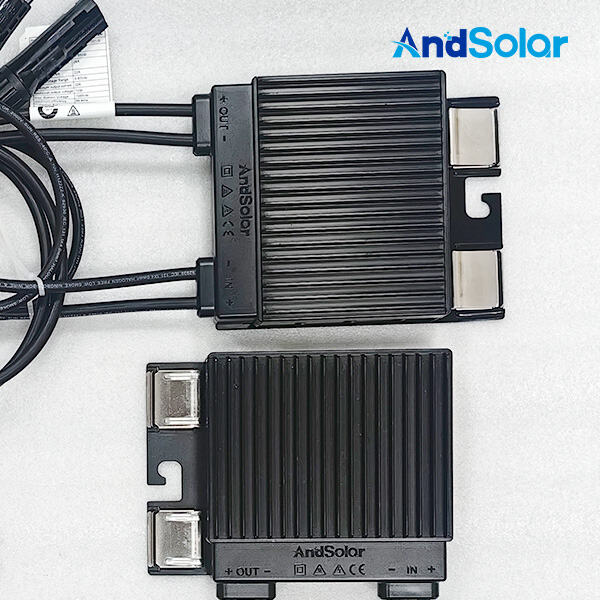
Module-level rapid shutdown systems employ electronic components attached to individual solar panels that can interrupt or substantially reduce DC voltage output upon receiving a shutdown command. Power optimizers, installed at each module, condition the DC output and incorporate switching circuitry that reduces panel voltage to safe levels when the shutdown signal is activated. These devices maintain communication with a central inverter or control system through powerline communication or dedicated control wiring, enabling simultaneous shutdown of all modules in the array. The distributed architecture ensures that each panel's contribution to system voltage is independently controlled, preventing the series addition of voltages that occurs in traditional string configurations.
Microinverter systems achieve similar safety outcomes through a different technical approach, converting DC power to AC at each individual panel. When the AC grid connection is lost or a shutdown command is issued, microinverters immediately cease operation, and the DC voltage present between the panel and microinverter remains localized to that single module connection. The module-level rapid shutdown capability inherent in these architectures eliminates high-voltage DC wiring throughout the system, as AC conductors downstream of the microinverters present different and generally more manageable hazard profiles for emergency responders. Both power optimizer and microinverter approaches deliver the granular control necessary to meet current rapid shutdown standards while maintaining system performance during normal operation.
Shutdown Initiation and Communication Protocols
Module-level rapid shutdown systems require reliable communication between the shutdown initiator and distributed power electronics across the array. Shutdown activation typically occurs through multiple pathways to ensure fail-safe operation, including loss of AC grid connection, manual activation of a shutdown switch, or detection of ground faults and other hazardous conditions. The control signal must propagate rapidly to all modules regardless of array size, achieving coordinated shutdown within the code-mandated 30-second window. Powerline communication methods encode the shutdown command onto the existing DC conductors, eliminating the need for separate control wiring while ensuring signal delivery to every connected device.
Alternative communication approaches utilize wireless protocols or dedicated control circuits that run parallel to power conductors. These systems must account for potential failures in the communication pathway itself, incorporating watchdog timers that automatically initiate shutdown if the control signal is lost for a specified duration. This fail-safe design ensures that damage to communication infrastructure or loss of central controller operation cannot prevent module-level rapid shutdown activation. The redundancy built into these protocols addresses concerns about single-point failures that could leave portions of an array energized during emergency conditions, providing the reliability necessary for life-safety applications.
Voltage Reduction Timeframes and Residual Energy Management
The effectiveness of module-level rapid shutdown in protecting personnel depends on both the speed of voltage reduction and the final de-energized state achieved. Code requirements specify that voltage and power levels must drop below defined thresholds within 30 seconds of shutdown initiation, but many modern systems achieve this reduction in substantially shorter timeframes, often within 10 to 15 seconds. The rapid response minimizes the window during which dangerous voltage persists after shutdown activation, reducing risk during the critical initial minutes of emergency response or maintenance activities. Faster shutdown times provide greater safety margins and reduce the likelihood of inadvertent contact with energized conductors during the voltage reduction period.
Even after successful shutdown, residual energy stored in system capacitance and the inherent voltage generation of illuminated panels requires careful management. Module-level rapid shutdown devices typically incorporate discharge circuitry that dissipates stored energy and limits the voltage that can develop across panel terminals under illumination. While individual modules may still generate their inherent open-circuit voltage when exposed to sunlight, the absence of series connections and the localized nature of this voltage significantly reduces shock and arc flash hazards compared to energized string configurations. Emergency responders and maintenance crews receive training to recognize shutdown indicators and verify de-energization before working on systems, incorporating module-level rapid shutdown status into their safety assessment protocols.
Operational Benefits for First Responders During Emergency Scenarios
Enhanced Tactical Options for Firefighting Operations
Module-level rapid shutdown fundamentally expands the tactical options available to firefighters working at structures with solar installations. With the ability to quickly de-energize arrays, incident commanders can authorize roof operations including vertical ventilation, which proves critical for releasing heat and smoke during interior firefighting. Crews can cut ventilation holes, open roof sections, and perform structural assessment without maintaining extensive buffer zones around solar equipment. This restored operational flexibility enables more aggressive interior attack strategies, faster victim search capabilities, and improved coordination between roof and interior teams. The tactical advantages directly translate to enhanced firefighter safety and improved outcomes for building occupants.
Water application, a fundamental firefighting tool, becomes safer in the presence of properly configured module-level rapid shutdown systems. While responders still exercise appropriate caution around electrical equipment, the rapid voltage reduction minimizes electrocution risk from water streams contacting solar components or exposed wiring. Firefighters can more confidently apply water from elevated positions, conduct overhaul operations near solar equipment, and respond to thermal events involving the solar system itself. The psychological confidence that comes from knowing arrays can be quickly de-energized reduces hesitation and supports more decisive tactical implementation during rapidly evolving emergency situations where delayed action can prove catastrophic.
Reduced Arc Flash and Electrocution Risk During Structural Operations
Structural firefighting operations often require cutting through roofs, walls, and other building components that may conceal solar system wiring. Module-level rapid shutdown substantially reduces the risk that cutting tools, pike poles, or other equipment will contact energized DC conductors running through concealed spaces. The localized voltage control provided by module-level devices ensures that even if a conductor is severed during operations, the potential for dangerous arcing and electrocution remains minimal compared to fully energized string-level systems. This risk reduction proves particularly important during search and rescue operations where urgency may limit the time available for detailed electrical system assessment before breaching operations begin.
Arc flash hazards, which can cause severe burns and ignite combustible materials, diminish substantially when module-level rapid shutdown successfully de-energizes DC circuits. Traditional string-level systems maintain sufficient voltage and available fault current to sustain dangerous arcs even after AC grid disconnection. The distributed architecture of module-level systems limits the energy available to sustain arcs, as individual module voltages remain below the threshold necessary for arc sustainment across typical gap distances. First responders benefit from this inherent safety characteristic even in scenarios where wiring damage occurs before shutdown activation, as the reduced voltage limits arc flash severity and improves survivability of inadvertent contact events.
Improved Scene Assessment and Hazard Communication
Module-level rapid shutdown systems often incorporate visual indicators that confirm successful de-energization, providing first responders with immediate feedback about electrical safety status. LED indicators, display screens, or remotely monitored signals enable incident commanders to verify shutdown before committing personnel to high-risk operations. This real-time hazard assessment capability surpasses the assumptions and indirect indicators necessary with conventional systems, where responders must presume energization and maintain conservative safety protocols throughout the incident. The ability to positively confirm de-energization supports more informed tactical decisions and reduces uncertainty that can lead to overly conservative approaches or dangerous assumption-based actions.
Enhanced communication between building occupants, facility managers, and emergency responders becomes possible when module-level rapid shutdown status can be clearly determined and conveyed. Standardized shutdown switch locations, clear labeling, and consistent status indication facilitate rapid identification of system state during chaotic emergency conditions. Fire departments increasingly incorporate solar system assessment into pre-incident planning activities, documenting shutdown device locations and array configurations for target hazard properties. The predictable behavior of module-level rapid shutdown systems enables more effective training and procedure development, ensuring that responding crews understand available safety features and know how to verify their activation during actual emergency incidents.
Protection Advantages for Maintenance and Service Personnel
Safe Access for Routine Maintenance Activities
Solar system maintenance requires periodic inspection of modules, mounting hardware, wiring connections, and inverter equipment. Module-level rapid shutdown enables maintenance technicians to safely perform these activities during daylight hours without the extensive safety protocols necessary when working around fully energized string-level systems. Technicians can activate the shutdown function, verify voltage reduction using appropriate test equipment, and proceed with cleaning, inspection, and minor repair tasks with substantially reduced electrocution risk. The ability to perform maintenance during optimal lighting conditions improves inspection quality, as visual defects become more apparent and work can proceed more efficiently than during marginal lighting conditions at dawn or dusk.
Module-level rapid shutdown particularly benefits technicians performing panel replacement, which requires disconnecting individual modules from the array. In traditional string systems, isolating a single module for replacement while maintaining system operation presents significant challenges and may require partial or complete string shutdown. With module-level devices, technicians can de-energize the specific panel requiring replacement while allowing the remainder of the system to continue operating, minimizing production losses during maintenance activities. This capability reduces the operational impact of component failures and enables more responsive service delivery, as technicians can address individual panel issues without scheduling system-wide shutdowns that affect customer energy production.
Emergency Repair Safety in Post-Storm and Damage Scenarios
Severe weather events, falling debris, and equipment failures can compromise solar system integrity, creating exposed conductors and damaged components that present acute electrical hazards. Module-level rapid shutdown enables emergency repair crews to safely approach damaged systems and implement temporary safeguards before undertaking permanent repairs. The ability to quickly de-energize arrays proves essential when conducting emergency stabilization following wind damage that has displaced panels, exposed wiring, or compromised structural mounting. Without effective shutdown capability, damaged systems may remain energized and inaccessible until conditions allow for safe approach, potentially extending the duration of electrical hazards to building occupants and extending system downtime.
Ground faults and insulation failures, which can develop gradually or occur suddenly due to physical damage, present particularly dangerous conditions for service personnel. Module-level rapid shutdown systems often incorporate ground fault detection that can automatically initiate shutdown when dangerous conditions develop, providing a protective layer beyond manual activation. This automatic protection proves valuable during diagnostic activities where technicians may not recognize developing fault conditions before they present acute safety risks. The integration of shutdown capability with fault detection creates a comprehensive safety system that addresses both operator-initiated and system-detected hazardous conditions, protecting maintenance personnel from a broader range of electrical risks.
Reduced Personal Protective Equipment Requirements and Operational Constraints
Working on energized electrical equipment traditionally requires extensive personal protective equipment including arc-rated clothing, insulated tools, and voltage-rated gloves appropriate for the system voltage class. Module-level rapid shutdown reduces these requirements for many maintenance activities by enabling technicians to establish an electrically safe work condition through verified de-energization rather than working on energized equipment. The reduced PPE requirements lower operational costs, improve worker comfort and dexterity during tasks, and eliminate the heat stress associated with arc-rated protective clothing during summer months when cooling loads drive maximum solar production and maintenance demand.
The ability to create electrically safe work conditions through module-level rapid shutdown also reduces the need for two-person crews required by some electrical safety standards when working on energized high-voltage DC systems. Single technicians can safely perform many routine tasks after verifying successful shutdown and implementing appropriate lockout-tagout procedures. This operational flexibility reduces labor costs for routine maintenance while maintaining appropriate safety standards, as the electrical hazard has been controlled at the source rather than managed through work practice controls and PPE. Service organizations benefit from improved scheduling flexibility and reduced mobilization costs while maintaining personnel safety through engineered hazard elimination rather than administrative controls.
System Design Considerations and Implementation Best Practices
Proper Shutdown Switch Placement and Accessibility
Effective module-level rapid shutdown protection requires careful attention to shutdown switch placement and accessibility. Code requirements and best practices dictate that shutdown initiators be located within sight of the array or at a designated location clearly marked and communicated to emergency responders. Residential installations typically place switches near the main electrical service or at a standardized location such as adjacent to the utility meter. Commercial systems may require multiple shutdown initiation points depending on array size and building configuration, ensuring that emergency personnel can activate shutdown without entering hazardous areas to access controls.
Clear and durable labeling must identify shutdown switch locations and provide concise operating instructions suitable for use by emergency responders unfamiliar with the specific system. Standardized label formats, using consistent terminology and graphical symbols, facilitate rapid identification during stressful emergency conditions. Weather-resistant labels must remain legible throughout the system service life despite exposure to UV radiation, temperature extremes, and environmental contaminants. Installation contractors bear responsibility for implementing these marking requirements in accordance with applicable codes and local authority requirements, and system owners should periodically verify that labels remain in place and legible during routine facility inspections.
Integration with Building Fire Alarm and Emergency Systems
Advanced implementations of module-level rapid shutdown integrate the PV system with building fire alarm and emergency management systems, enabling automatic shutdown activation when fire alarm conditions are detected. This integration eliminates reliance on manual switch activation by emergency responders who may not immediately locate or recognize the shutdown initiator during the chaotic initial phases of incident response. Automatic shutdown upon fire alarm activation provides an additional layer of protection, ensuring voltage reduction occurs early in the emergency timeline before firefighters arrive on scene. The integration requires coordination between solar system designers, electrical contractors, and fire alarm technicians to ensure compatible signaling and proper sequence of operations.
Building management systems in commercial facilities can incorporate solar system shutdown status into centralized monitoring and control platforms, providing facility operators with real-time awareness of system electrical safety state. This visibility proves valuable during facility emergency response procedures, enabling security and facility management personnel to confirm shutdown status and communicate system state to arriving emergency responders. The integration of solar safety systems with broader facility emergency management infrastructure represents an evolution toward comprehensive building safety systems where electrical, fire protection, and security systems operate in coordinated fashion to protect occupants and emergency responders.
Verification Testing and Commissioning Procedures
Proper commissioning of module-level rapid shutdown systems requires verification that all components respond appropriately to shutdown commands and achieve required voltage reduction within specified timeframes. Commissioning technicians must test shutdown activation from all intended initiation points, measure voltage levels at defined test points before and after shutdown, and verify that visual indicators accurately reflect system status. Documentation of commissioning test results provides a baseline for future verification testing and demonstrates compliance with code requirements to authorities having jurisdiction. Incomplete or inadequate commissioning may leave systems that fail to provide intended protection, exposing emergency responders and maintenance personnel to hazards that design specifications suggest have been mitigated.
Ongoing verification testing should occur at regular intervals throughout the system service life to confirm continued functionality of module-level rapid shutdown components. Environmental factors, component aging, and wiring degradation can compromise shutdown system reliability over time. Periodic testing protocols should replicate initial commissioning procedures, documenting voltage measurements and response times to identify developing issues before they result in shutdown system failures during actual emergency conditions. Service organizations and system owners should incorporate shutdown system testing into preventive maintenance programs, ensuring that this critical safety feature remains functional throughout the installation's operational life.
FAQ
What voltage levels does module-level rapid shutdown reduce solar panels to?
Module-level rapid shutdown systems must reduce controlled conductor voltage to 80 volts or less and limit power to 240 volt-amperes within 30 seconds of shutdown initiation according to current NEC requirements. Individual modules may retain their inherent open-circuit voltage, typically 40-50 volts for standard residential panels, but the elimination of series connections prevents the cumulative string voltages that create lethal shock hazards. This voltage reduction brings the system into a substantially safer state for emergency responders and maintenance personnel working on or near the installation.
Can firefighters safely cut through roofs with solar panels after rapid shutdown activation?
After verifying successful module-level rapid shutdown activation, firefighters can more safely perform roof cutting and ventilation operations near solar arrays. While appropriate caution remains necessary and responders should avoid directly cutting through visible solar equipment, the rapid voltage reduction substantially minimizes electrocution and arc flash risks compared to fully energized systems. Fire departments should incorporate solar system verification into incident size-up procedures and confirm shutdown indicator status before committing personnel to operations that may involve contact with solar components or wiring.
Do maintenance technicians still need to test for voltage after activating rapid shutdown?
Qualified maintenance personnel must verify de-energization using appropriate voltage testing equipment before working on solar system components, even after activating module-level rapid shutdown. This verification confirms that the shutdown system functioned as designed and that no unexpected voltage sources remain present due to equipment malfunction or unusual system configuration. Proper lockout-tagout procedures should accompany voltage verification to prevent inadvertent re-energization during maintenance activities. These precautionary measures align with electrical safety best practices and OSHA requirements for establishing electrically safe work conditions.
How do first responders know if a solar system has rapid shutdown capability?
Building placards and equipment labels must identify the presence of rapid shutdown systems according to NEC requirements, typically including the location of shutdown initiation switches and basic operating instructions. Modern installations include standardized signage at the main electrical service and near the solar equipment indicating system type and safety features. Fire departments increasingly incorporate solar system identification into pre-incident planning for target hazards, documenting shutdown device locations and array characteristics. Responders arriving at unfamiliar properties should look for required placards and, when in doubt, treat solar systems as energized until shutdown can be verified through visual indicators or voltage testing.
Table of Contents
- The Fundamental Safety Challenge in Solar Array Emergency Response
- Technical Mechanisms of Module-Level Voltage Reduction
- Operational Benefits for First Responders During Emergency Scenarios
- Protection Advantages for Maintenance and Service Personnel
- System Design Considerations and Implementation Best Practices
-
FAQ
- What voltage levels does module-level rapid shutdown reduce solar panels to?
- Can firefighters safely cut through roofs with solar panels after rapid shutdown activation?
- Do maintenance technicians still need to test for voltage after activating rapid shutdown?
- How do first responders know if a solar system has rapid shutdown capability?
