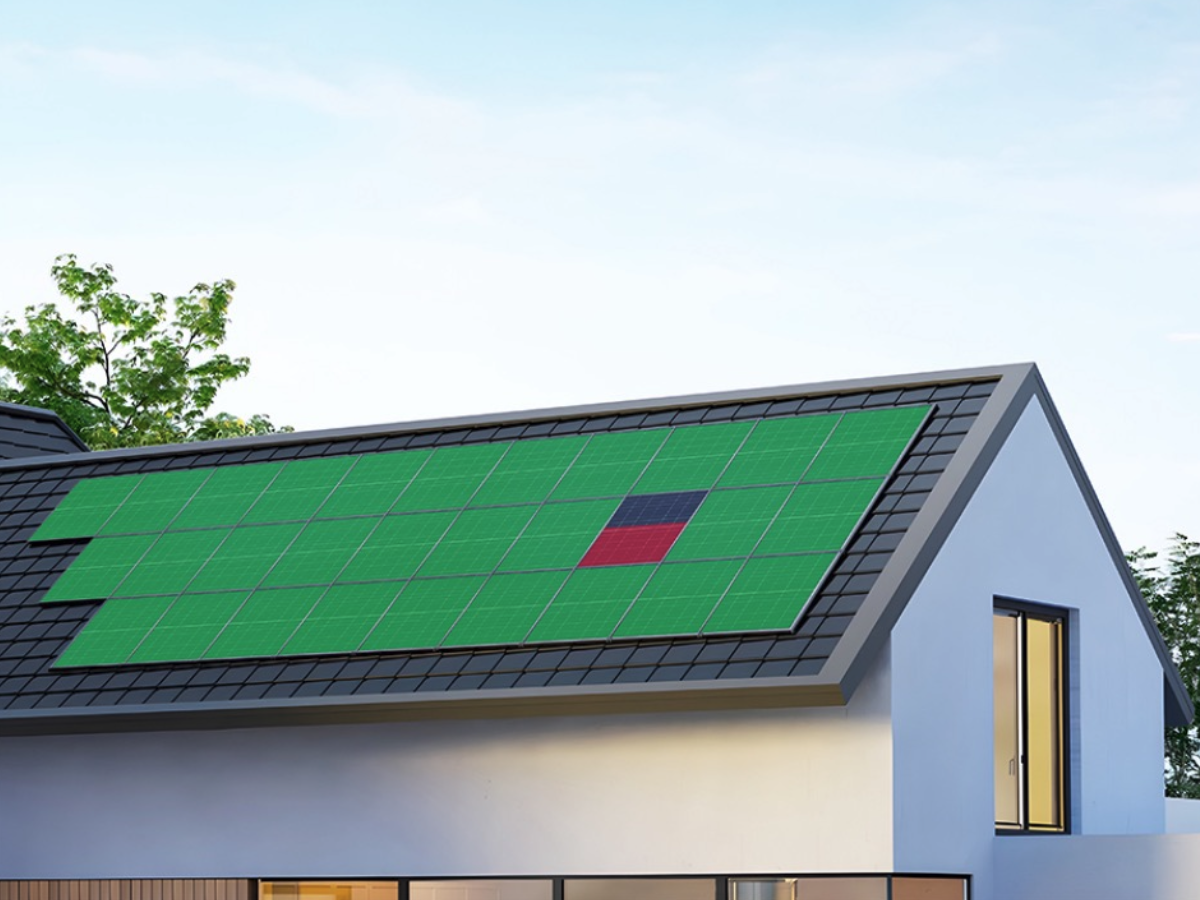
When you invest in a solar array, understanding how inverter efficiency influences your total power output is essential for maximizing return on investment and system performance. Many solar system owners focus primarily on panel wattage and placement, yet overlook the critical role that inverter efficiency plays in converting DC power from solar panels into usable AC power for your facility or grid connection. The inverter acts as the heart of your solar energy system, and even small variations in its efficiency rating can translate into substantial differences in annual energy yield, operational costs, and payback periods. This article explores the direct mechanisms through which inverter efficiency impacts your solar array's total power output, providing technical insights and practical guidance for system designers, facility managers, and energy decision-makers.
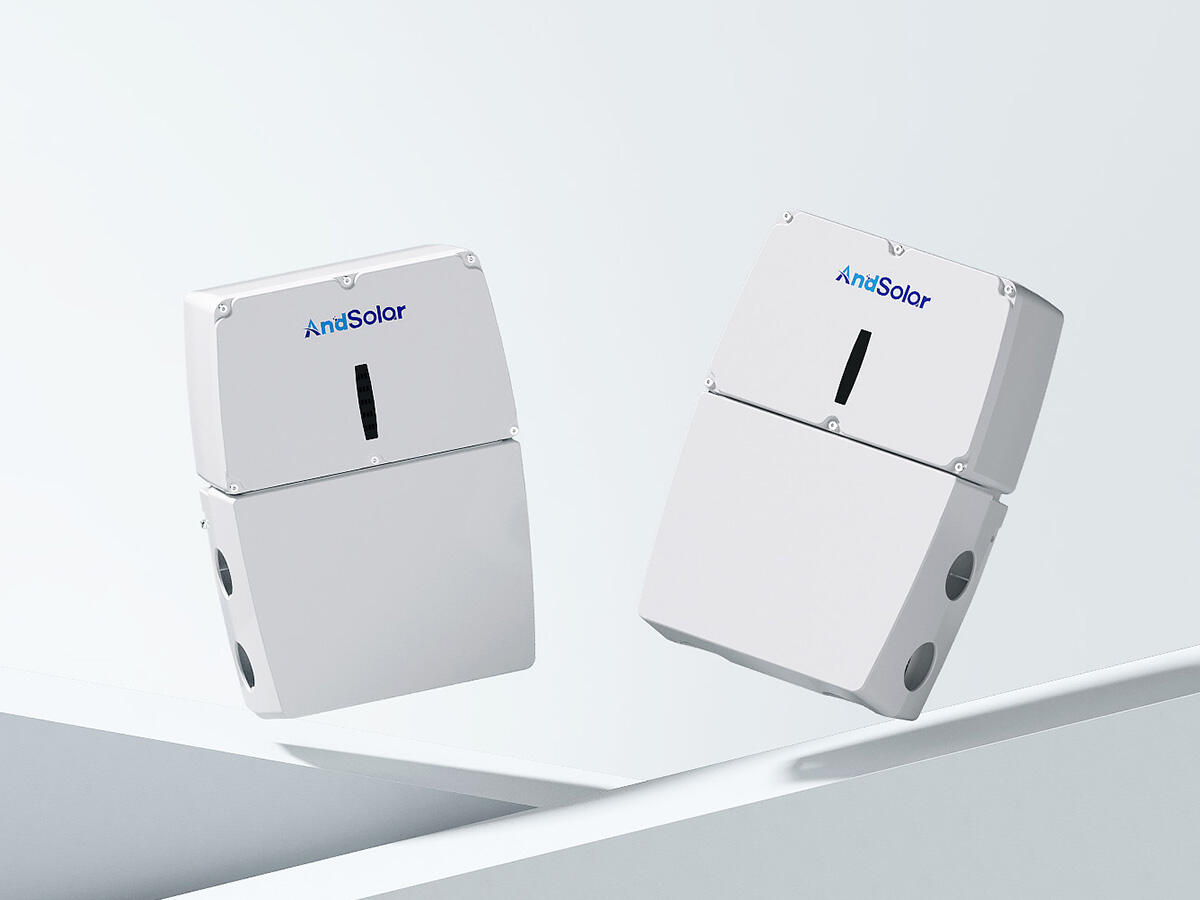
The relationship between inverter efficiency and total power output is fundamentally about energy loss during the conversion process. Solar panels generate direct current electricity, which must be converted to alternating current for most commercial and residential applications. During this conversion, energy is inevitably lost as heat due to electrical resistance, switching losses, and other inefficiencies within the inverter circuitry. A higher inverter efficiency rating means less energy is wasted during conversion, resulting in more usable power delivered from your solar array. For example, if your solar panels generate 10,000 watts of DC power and your inverter operates at 95 percent efficiency, you will receive approximately 9,500 watts of AC power output. If that same array uses an inverter with 97 percent efficiency, your output increases to 9,700 watts—a 200-watt difference that compounds over thousands of operating hours annually.
Understanding the Conversion Loss Mechanism in Solar Inverters
How Inverter Efficiency Ratings Are Defined and Measured
Inverter efficiency represents the ratio of AC power output to DC power input, expressed as a percentage. This metric is not constant across all operating conditions; instead, inverter efficiency varies depending on load levels, ambient temperature, input voltage, and other environmental factors. Manufacturers typically provide a peak efficiency rating, which represents the highest efficiency the inverter can achieve under optimal conditions, and a weighted efficiency rating such as the European Efficiency or CEC Efficiency, which accounts for performance across different load percentages. Understanding these distinctions is crucial because your solar array will rarely operate at peak conditions throughout the day. The weighted efficiency metrics provide a more realistic picture of how inverter efficiency will affect your total power output over time, as they incorporate performance at partial loads that correspond to morning, evening, and cloudy-day operation.
The Role of Maximum Power Point Tracking in Efficiency
Modern inverters incorporate Maximum Power Point Tracking technology, which continuously adjusts the electrical load to extract the maximum available power from your solar panels under varying conditions. The effectiveness of this MPPT algorithm directly influences inverter efficiency and consequently your array's total power output. A high-quality inverter with sophisticated MPPT can maintain optimal operating points even as shading patterns shift, temperature changes, or solar irradiance fluctuates throughout the day. Poor MPPT performance effectively reduces inverter efficiency by failing to harvest all available energy from your panels, creating an additional layer of power loss beyond the inherent conversion inefficiencies. When evaluating how inverter efficiency affects your solar array output, consider both the static conversion efficiency and the dynamic tracking efficiency, as both contribute to the final energy yield delivered to your facility or grid connection point.
Temperature-Dependent Efficiency Variations
Inverter efficiency is significantly affected by operating temperature, with most units experiencing reduced performance as internal temperatures rise. This thermal behavior creates a seasonal and diurnal pattern in how inverter efficiency impacts your total power output. During hot summer afternoons when your solar panels generate peak power, elevated ambient temperatures can cause your inverter to derate or operate at reduced efficiency levels, creating a double penalty where maximum available solar energy coincides with lowest conversion efficiency. Quality inverters designed for industrial applications incorporate advanced thermal management systems including heat sinks, forced-air cooling, or liquid cooling to maintain stable inverter efficiency across a wider temperature range. When assessing the relationship between inverter efficiency and your array's total output, factor in the thermal environment where your inverter will be installed, as a unit with 97 percent efficiency at 25 degrees Celsius might drop to 94 percent efficiency at 50 degrees Celsius, significantly affecting annual energy production.
Quantifying the Impact on Annual Energy Production
Calculating Real-World Energy Losses from Inverter Inefficiency
To understand how inverter efficiency affects your solar array's total power output in practical terms, consider a numerical example based on typical commercial installations. Assume a 100-kilowatt solar array in a location receiving 1,800 annual peak sun hours. This array would theoretically generate 180,000 kilowatt-hours per year under perfect conditions. With an inverter operating at 96 percent efficiency, your actual AC output would be approximately 172,800 kilowatt-hours. If you instead selected an inverter with 98 percent efficiency, your output would increase to 176,400 kilowatt-hours—a difference of 3,600 kilowatt-hours annually. At typical commercial electricity rates, this efficiency differential translates to hundreds or thousands of dollars in additional revenue or cost savings each year. Over the 25-year lifespan of your solar installation, the cumulative effect of inverter efficiency on total power output represents a substantial financial impact that should be carefully weighted during system design and equipment selection.
The Compounding Effect of Efficiency Losses Over System Lifetime
The relationship between inverter efficiency and total power output extends beyond simple percentage calculations because efficiency losses compound with other system losses. Your solar array already experiences energy losses from cable resistance, module mismatch, soiling, shading, and temperature coefficients. When you layer inverter conversion losses on top of these other loss mechanisms, the cumulative effect on total power output becomes more pronounced. For instance, if your array experiences 5 percent in combined DC-side losses and your inverter operates at 95 percent efficiency, your total system efficiency drops to approximately 90 percent. Improving inverter efficiency to 97 percent raises total system efficiency to about 92 percent—a seemingly modest 2 percentage point improvement that actually represents a 2.2 percent increase in absolute energy output. This compounding effect means that inverter efficiency improvements deliver disproportionate benefits to your total power output, especially in systems that already suffer from unavoidable losses due to site conditions or array configuration constraints.
Partial Load Performance and Real Operating Conditions
One of the most overlooked aspects of how inverter efficiency affects total power output is performance at partial load conditions. Solar arrays operate at full capacity for only a fraction of daylight hours, spending most time at 20 to 80 percent of rated capacity during morning ramp-up, evening decline, and periods of variable cloudiness. Many inverters exhibit reduced efficiency at these partial loads, with some designs dropping below 90 percent efficiency at loads under 20 percent of rated capacity. The weighted efficiency ratings mentioned earlier attempt to account for this behavior, but the actual impact on your specific installation depends on your site's irradiance profile and weather patterns. Sites with frequent partly cloudy conditions will experience greater influence from partial-load inverter efficiency characteristics compared to sites with predominantly clear-sky days. When evaluating how inverter efficiency will affect your array's total power output, review efficiency curves across the full load range and consider how these curves align with your site's typical operating profile throughout the year.
Design Considerations for Optimizing Inverter Efficiency
Proper Inverter Sizing and DC-to-AC Ratio
The sizing relationship between your solar array and inverter significantly influences how inverter efficiency affects total power output. This relationship is expressed as the DC-to-AC ratio, calculated by dividing the total DC array capacity by the inverter's AC rating. While conventional wisdom suggests matching array and inverter capacities with a 1:1 ratio, modern practice often employs DC-to-AC ratios of 1.1 to 1.3 or higher. This intentional oversizing of the array relative to the inverter allows the system to operate closer to the inverter's peak efficiency point for more hours per day, actually increasing total energy harvest despite occasional clipping of peak output during optimal conditions. The strategy works because inverters typically achieve peak efficiency at 50 to 75 percent of rated load, and by oversizing the array, you ensure the system operates in this high-efficiency zone for extended periods. The trade-off involves accepting some power clipping during peak irradiance hours, but this loss is often more than compensated by the improved inverter efficiency during the many hours of partial-load operation. Careful optimization of this DC-to-AC ratio represents one of the most effective ways to leverage inverter efficiency for maximum total power output.
String Inverter Versus Central Inverter Architectures
The choice between distributed string inverter architectures and centralized inverter systems directly impacts how inverter efficiency affects your array's total power output. String inverters, which handle smaller portions of your array, offer several efficiency advantages including reduced DC cable losses, independent MPPT for each string, and better resilience to partial shading or module mismatch. However, string inverters may have slightly lower peak efficiency ratings compared to large central inverters due to economies of scale in component quality and thermal management. The key consideration is that overall system efficiency—and thus total power output—depends not just on inverter efficiency specifications but on how well the inverter architecture matches your array's electrical characteristics and physical layout. Arrays with complex roof geometries, multiple orientations, or shading challenges typically achieve higher total power output with string inverter architectures despite potentially lower individual inverter efficiency ratings, because the distributed MPPT capability more than compensates for the efficiency differential. Conversely, large ground-mount arrays with uniform orientation and minimal shading often achieve optimal total power output with high-efficiency central inverters that minimize conversion losses.
Transformer-Based Versus Transformerless Inverter Technologies
The presence or absence of an isolation transformer within the inverter design has substantial implications for how inverter efficiency affects total power output. Transformerless inverter designs eliminate the core and copper losses associated with traditional transformer-isolated architectures, achieving peak efficiency ratings of 98 to 99 percent compared to 96 to 97 percent for transformer-based units. This 1 to 2 percentage point efficiency advantage translates directly into increased total power output from your array. However, transformerless designs require specific grounding configurations and may not be suitable for all array types or grid interconnection requirements. Transformer-based inverters offer galvanic isolation, which can be advantageous for certain thin-film solar technologies or installations with stringent safety requirements. When determining how inverter efficiency will impact your specific system's total power output, consider both the efficiency specifications and the compatibility requirements that might mandate one topology over another. In many commercial applications, the superior inverter efficiency of transformerless designs makes them the preferred choice where electrical codes and array characteristics permit their use.
Monitoring and Maintaining Inverter Efficiency Over Time
Performance Degradation and Preventive Maintenance
Inverter efficiency is not constant over the operational lifetime of your solar array; gradual degradation of electronic components, accumulation of dust and debris on cooling systems, and wear on electromechanical parts all contribute to declining efficiency that progressively reduces total power output. Quality commercial inverters typically maintain 95 to 98 percent of their initial efficiency for 10 to 15 years before requiring major service or replacement. However, without proper maintenance, efficiency degradation can accelerate significantly, with some units losing several percentage points of efficiency within 5 to 7 years. Regular preventive maintenance including cleaning of air filters and heat sinks, inspection of electrical connections, verification of cooling fan operation, and firmware updates can substantially slow this degradation process. By maintaining peak inverter efficiency through systematic maintenance, you protect your array's total power output and preserve the economic returns on your solar investment. Monitoring systems that track inverter efficiency metrics in real-time provide early warning of developing problems, allowing corrective action before significant output losses accumulate.
Real-Time Efficiency Monitoring and Diagnostics
Advanced monitoring systems enable continuous tracking of inverter efficiency by comparing DC input power to AC output power on a second-by-second basis. This capability allows you to observe exactly how inverter efficiency affects your array's total power output under varying conditions and identify efficiency anomalies that might indicate equipment problems or suboptimal operating parameters. Modern inverters with integrated monitoring provide detailed efficiency data across different load levels, temperatures, and times of day, creating a comprehensive picture of conversion performance. By establishing baseline efficiency profiles and setting alert thresholds, facility managers can quickly detect when inverter efficiency drops below expected levels, triggering investigation and corrective action. This proactive approach to efficiency monitoring prevents extended periods of reduced total power output that would otherwise go unnoticed until they manifest as unexpectedly low energy production figures at month-end or quarter-end reviews. The investment in comprehensive monitoring capabilities pays for itself through early detection of efficiency problems and optimization opportunities that maximize total energy harvest from your solar array.
Inverter Replacement and Upgrade Strategies
Given the central role of inverter efficiency in determining total power output, planned inverter replacement represents an important component of long-term solar asset management. Inverters typically have shorter operational lifespans than solar panels, with most units requiring replacement after 10 to 15 years of service. This replacement cycle creates opportunities to upgrade to newer inverter technologies with superior efficiency ratings, enhanced MPPT algorithms, and improved thermal management. A mid-life inverter upgrade from a unit with 96 percent weighted efficiency to a modern design achieving 98 percent efficiency can increase your array's total power output by approximately 2 percent for the remaining system lifetime—a significant improvement that enhances overall project economics. When planning inverter replacements, consider not just like-for-like substitution but whether advances in inverter technology and changes in energy prices justify upgrading to higher-efficiency models or different architectures. The efficiency gains from modern inverters often provide sufficient additional revenue to justify premium equipment costs, particularly in jurisdictions with high electricity rates or favorable solar incentive structures.
Economic Implications of Inverter Efficiency on Project Viability
Lifecycle Cost Analysis Including Efficiency Factors
When evaluating solar array investments, lifecycle cost analysis must incorporate the long-term impact of inverter efficiency on total power output and financial returns. While high-efficiency inverters typically command premium pricing, the additional upfront cost is often recovered within 3 to 5 years through increased energy production. Consider a 500-kilowatt commercial solar installation where upgrading from a standard inverter package with 96 percent efficiency to a premium package with 98 percent efficiency adds $15,000 to project costs. Over the system's 25-year lifetime, the 2 percentage point efficiency improvement generates approximately 90,000 additional kilowatt-hours. At $0.12 per kilowatt-hour, this represents $10,800 in additional value—and this calculation assumes flat electricity rates, whereas most commercial facilities face escalating energy costs that further improve the economics of higher inverter efficiency. When total power output is properly valued across the full system lifetime, the economic case for maximizing inverter efficiency becomes compelling for most commercial and industrial applications.
Impact on Power Purchase Agreements and Energy Contracts
For solar arrays operating under Power Purchase Agreements or other long-term energy contracts, inverter efficiency directly affects revenue generation and contract performance. Many PPAs include guaranteed production levels with penalty provisions for underperformance, making inverter efficiency a critical risk factor. A 1 percent reduction in inverter efficiency translates to 1 percent lower total power output, potentially triggering penalty payments if the shortfall causes production to fall below contracted minimums. Solar developers and investors conducting due diligence on potential acquisitions should carefully assess inverter efficiency specifications and historical performance data, as efficiency shortfalls represent hidden liabilities that reduce asset value. Similarly, when structuring new PPAs, conservative assumptions about inverter efficiency protect against underperformance risk while aggressive efficiency assumptions may make deals appear more attractive but increase the probability of contractual shortfalls. The relationship between inverter efficiency and total power output thus extends beyond technical performance into contractual obligations and financial risk management.
Incentive Programs and Performance-Based Compensation
Many jurisdictions offer solar incentives structured around actual energy production rather than installed capacity, making inverter efficiency a direct driver of incentive value. Production-based incentives, renewable energy credits, and feed-in tariffs all reward higher total power output, creating immediate financial returns from improved inverter efficiency. In markets with performance-based incentive structures, the incremental revenue from high-efficiency inverters can substantially shorten payback periods and improve project internal rates of return. Conversely, in capacity-based incentive programs that pay according to nameplate array size regardless of actual production, the financial case for premium inverter efficiency may be less compelling. Understanding your jurisdiction's incentive structure is essential for making informed decisions about inverter selection and determining how much premium to pay for efficiency improvements. The regulatory and policy environment thus mediates the economic relationship between inverter efficiency and total power output, sometimes amplifying and sometimes diminishing the financial impact of efficiency differentials.
FAQ
What is the typical efficiency range for modern solar inverters?
Modern solar inverters typically achieve peak efficiency ratings between 96 and 99 percent, with transformerless designs generally occupying the higher end of this range. Weighted efficiency ratings, which better represent real-world performance across varying load conditions, typically fall in the 95 to 98 percent range for quality commercial inverters. The specific efficiency of your inverter depends on its topology, power rating, component quality, and operating conditions. When comparing inverter options, pay attention to both peak efficiency and weighted efficiency metrics, as well as efficiency curves showing performance across different load percentages, to understand how the unit will perform throughout daily and seasonal operating cycles.
How much does a 1 percent difference in inverter efficiency affect my annual energy production?
A 1 percent difference in inverter efficiency translates almost directly into a 1 percent difference in total AC power output from your solar array. For a 100-kilowatt system generating 150,000 kilowatt-hours annually, improving inverter efficiency from 96 to 97 percent would yield approximately 1,500 additional kilowatt-hours per year. Over a 25-year system lifetime, this 1 percent efficiency improvement produces an extra 37,500 kilowatt-hours. The financial value depends on your electricity rate or power purchase agreement price, but at typical commercial rates of $0.10 to $0.15 per kilowatt-hour, this represents $3,750 to $5,625 in additional value over the system life from just a single percentage point of efficiency improvement.
Should I prioritize inverter efficiency over other system components when designing my solar array?
Inverter efficiency should be considered as one critical factor among several in system design, rather than the sole optimization target. While high inverter efficiency directly increases total power output, other factors including solar panel quality, mounting system design, DC wiring losses, and proper system sizing also significantly impact energy yield. The optimal approach involves balanced optimization across all system components, with inverter selection based on efficiency specifications, reliability history, warranty terms, monitoring capabilities, and compatibility with your specific array configuration. In most cases, investing in a high-quality inverter with proven efficiency performance and robust thermal management delivers better long-term results than selecting the absolute highest efficiency rating at the expense of other important attributes.
Can I upgrade my existing inverter to improve efficiency and increase total power output?
Yes, inverter upgrades or replacements can improve efficiency and boost total power output from existing solar arrays, particularly for systems with aging inverters that have experienced performance degradation. If your current inverter is operating at 93 to 95 percent efficiency due to age or obsolete technology, upgrading to a modern unit with 97 to 98 percent efficiency can increase your array's AC output by 2 to 5 percent. Before proceeding with an inverter upgrade, conduct a cost-benefit analysis comparing the equipment and installation costs against the projected increase in energy production valued over the remaining system lifetime. In many cases, particularly for commercial systems with 10-plus years remaining operational life, inverter upgrades deliver attractive returns through increased energy yield and may also provide additional benefits such as enhanced monitoring capabilities and improved reliability.
Table of Contents
- Understanding the Conversion Loss Mechanism in Solar Inverters
- Quantifying the Impact on Annual Energy Production
- Design Considerations for Optimizing Inverter Efficiency
- Monitoring and Maintaining Inverter Efficiency Over Time
- Economic Implications of Inverter Efficiency on Project Viability
-
FAQ
- What is the typical efficiency range for modern solar inverters?
- How much does a 1 percent difference in inverter efficiency affect my annual energy production?
- Should I prioritize inverter efficiency over other system components when designing my solar array?
- Can I upgrade my existing inverter to improve efficiency and increase total power output?
